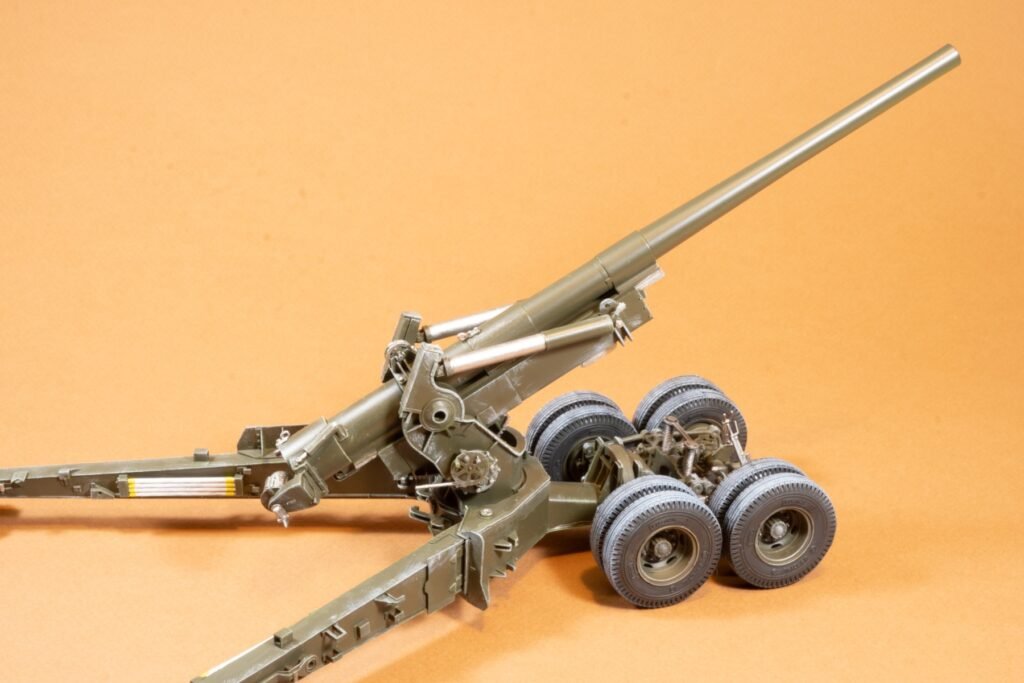
Off the Bench Dec 24, 2024. The 155 mm gun M1 was a 155 millimeter caliber field gun developed and used by the United States military. Nicknamed “Long Tom”. it was produced in M1 and M2 variants, later known as the M59. The gun was deployed as a heavy field weapon during World War II and the Korean War, and also classed as secondary armament for seacoast defense. The gun could fire a 100 lb (45 kg) shell to a maximum range of 14 mi (23 km), with an estimated accuracy life of 1,500 rounds.
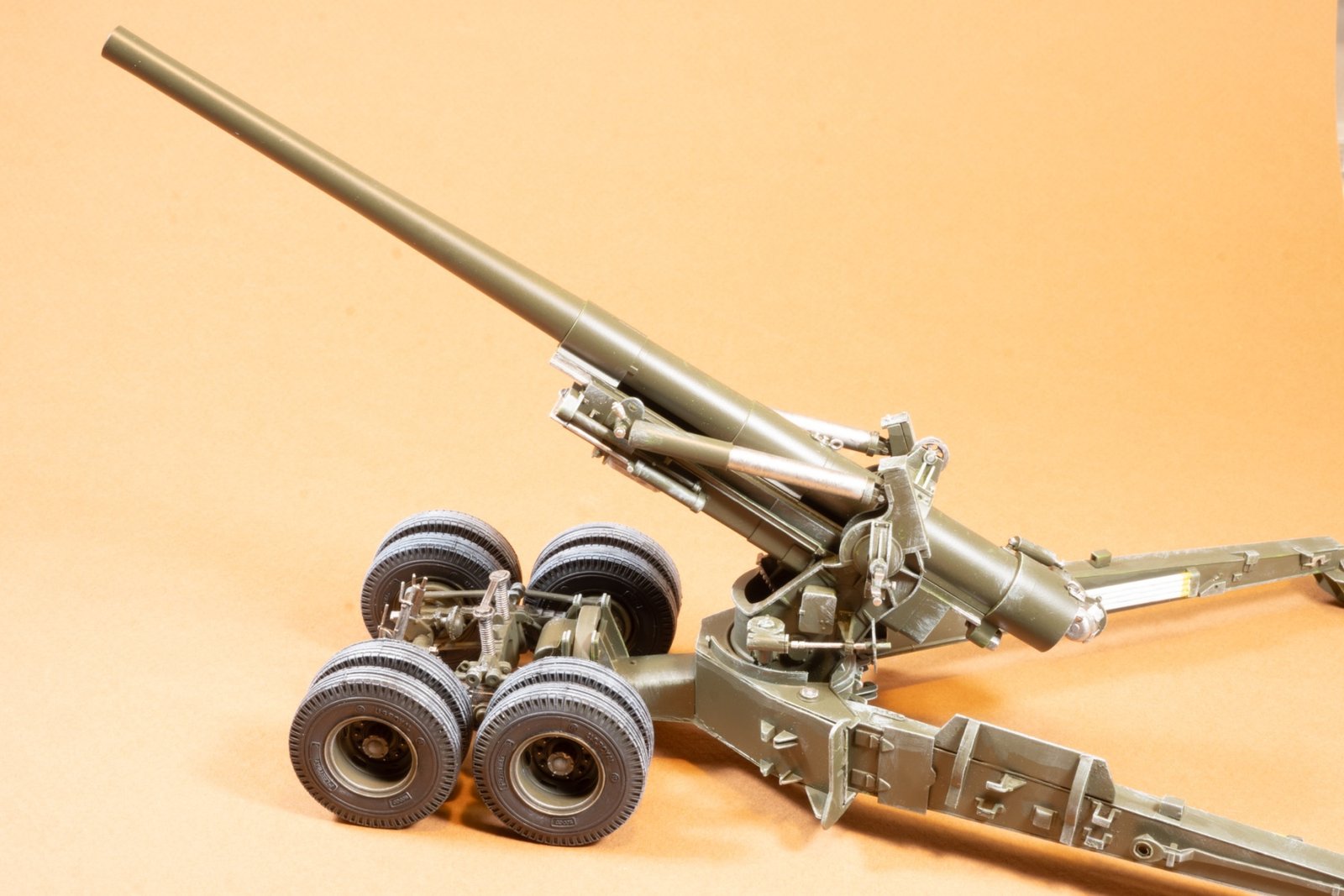
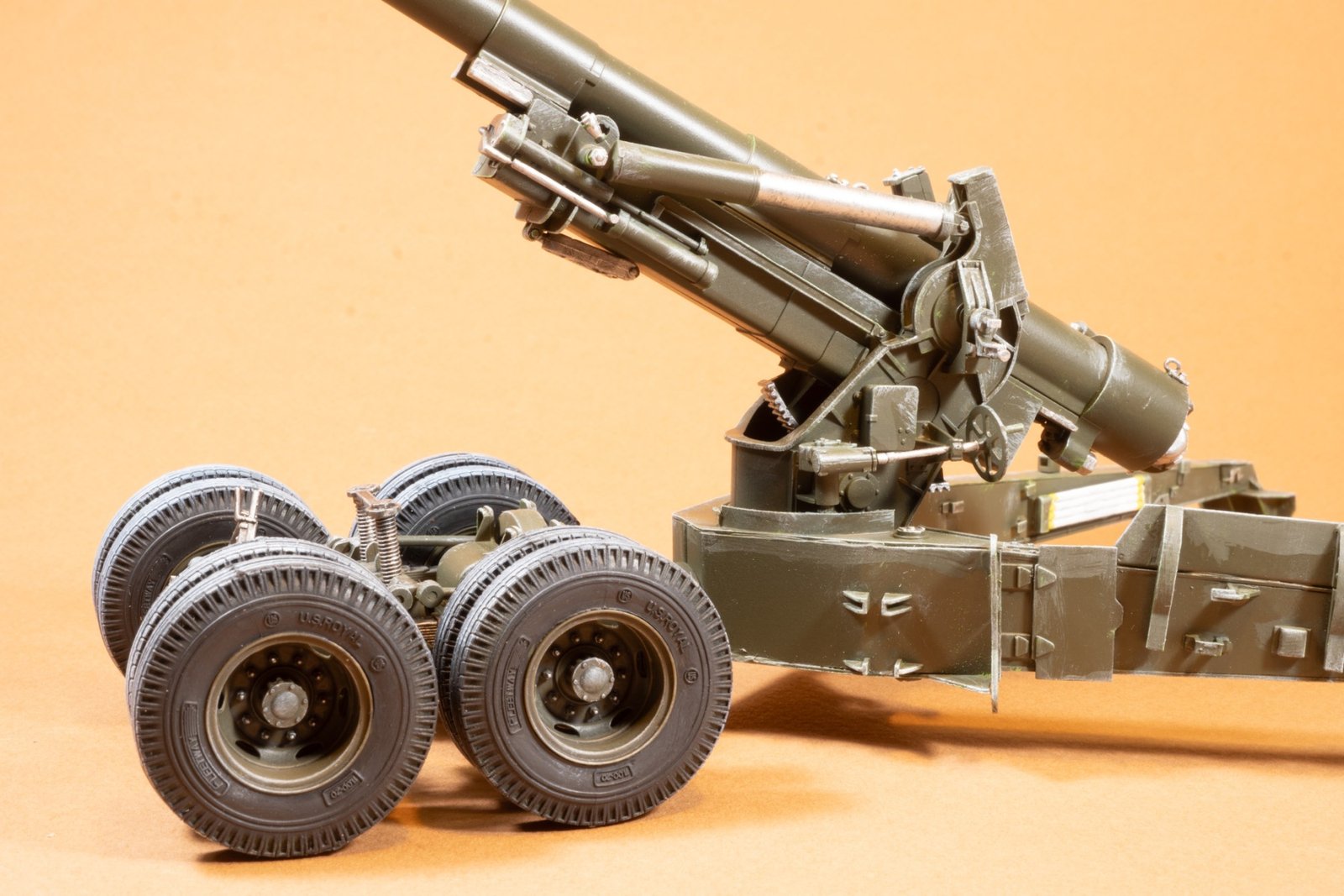
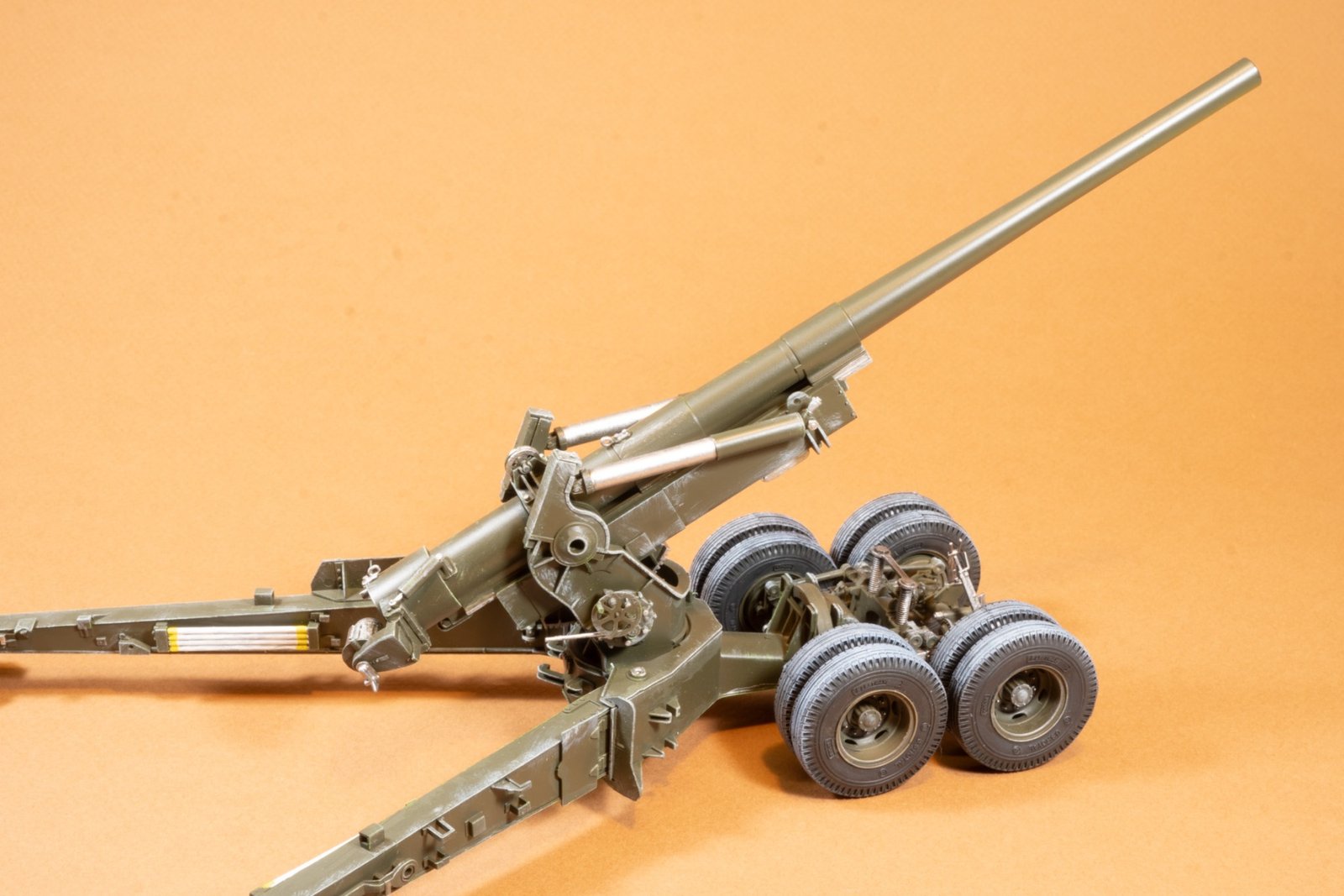
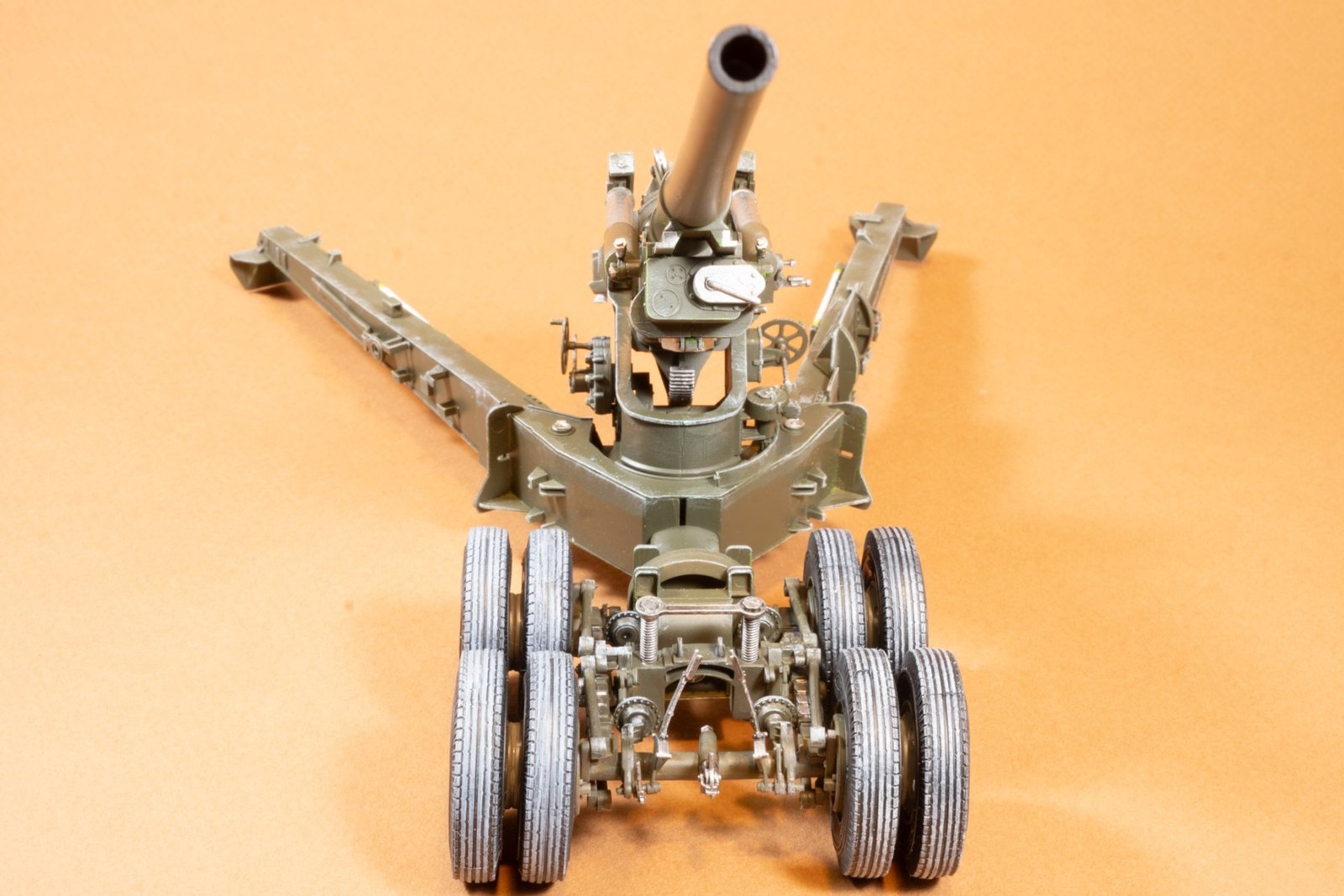
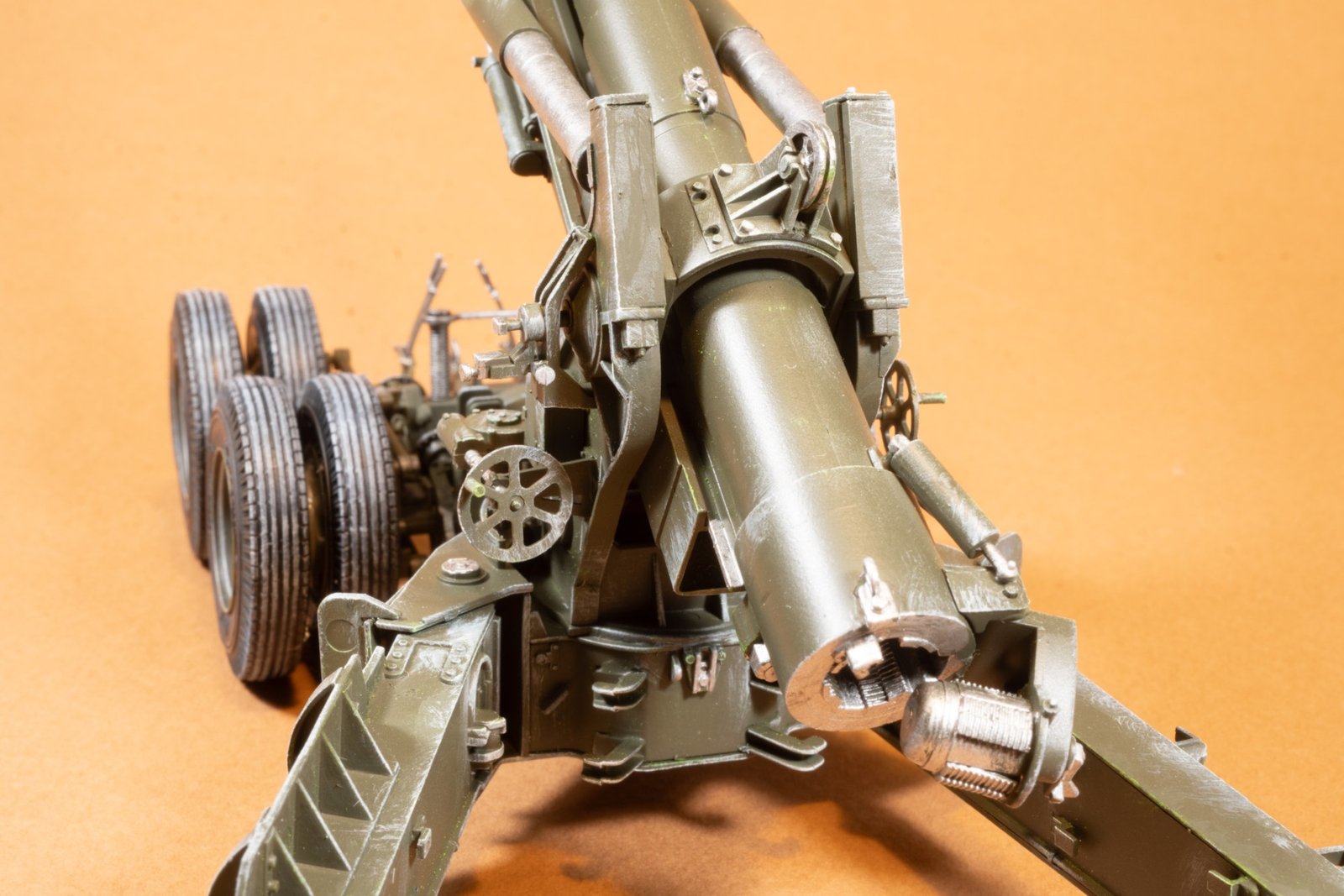
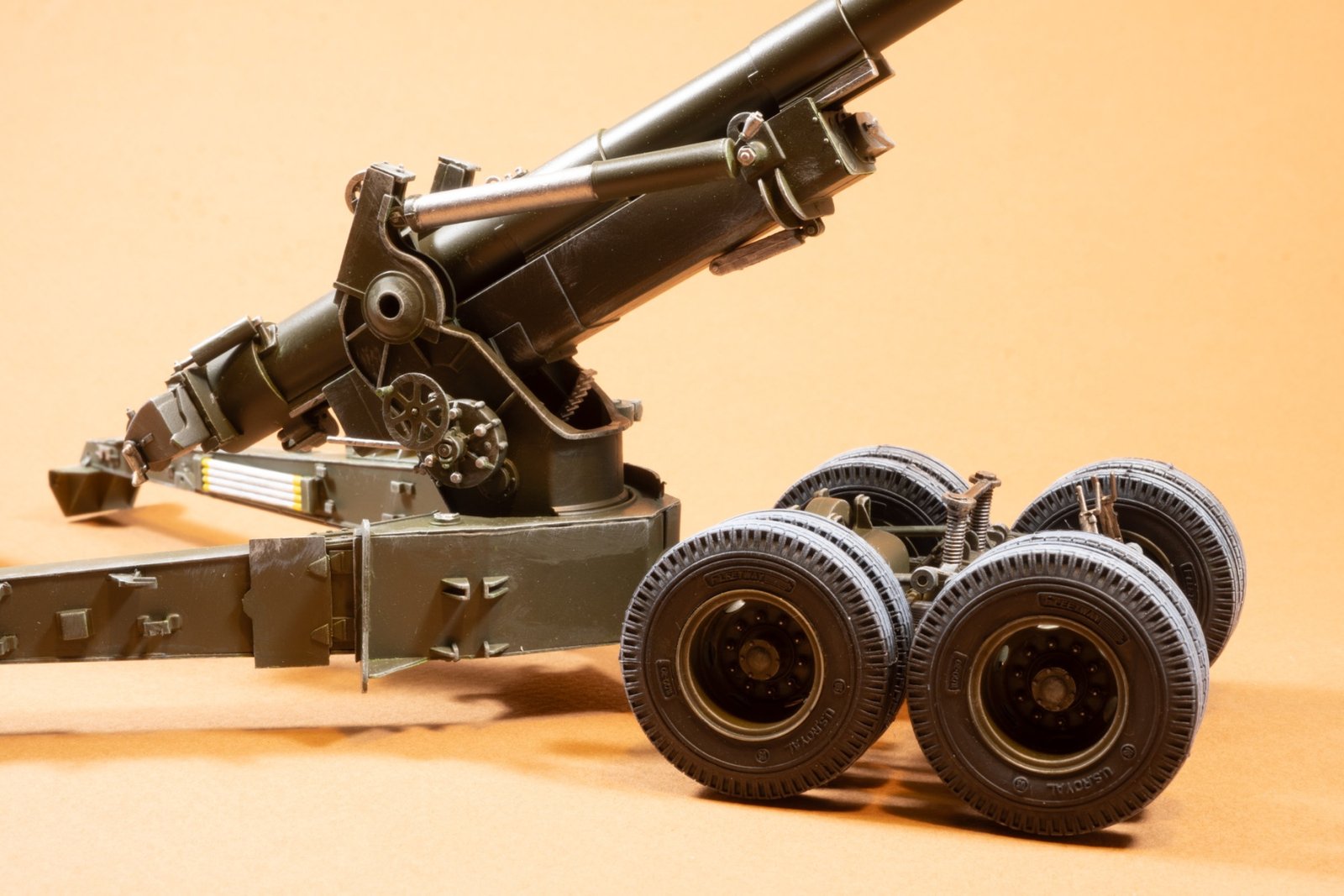
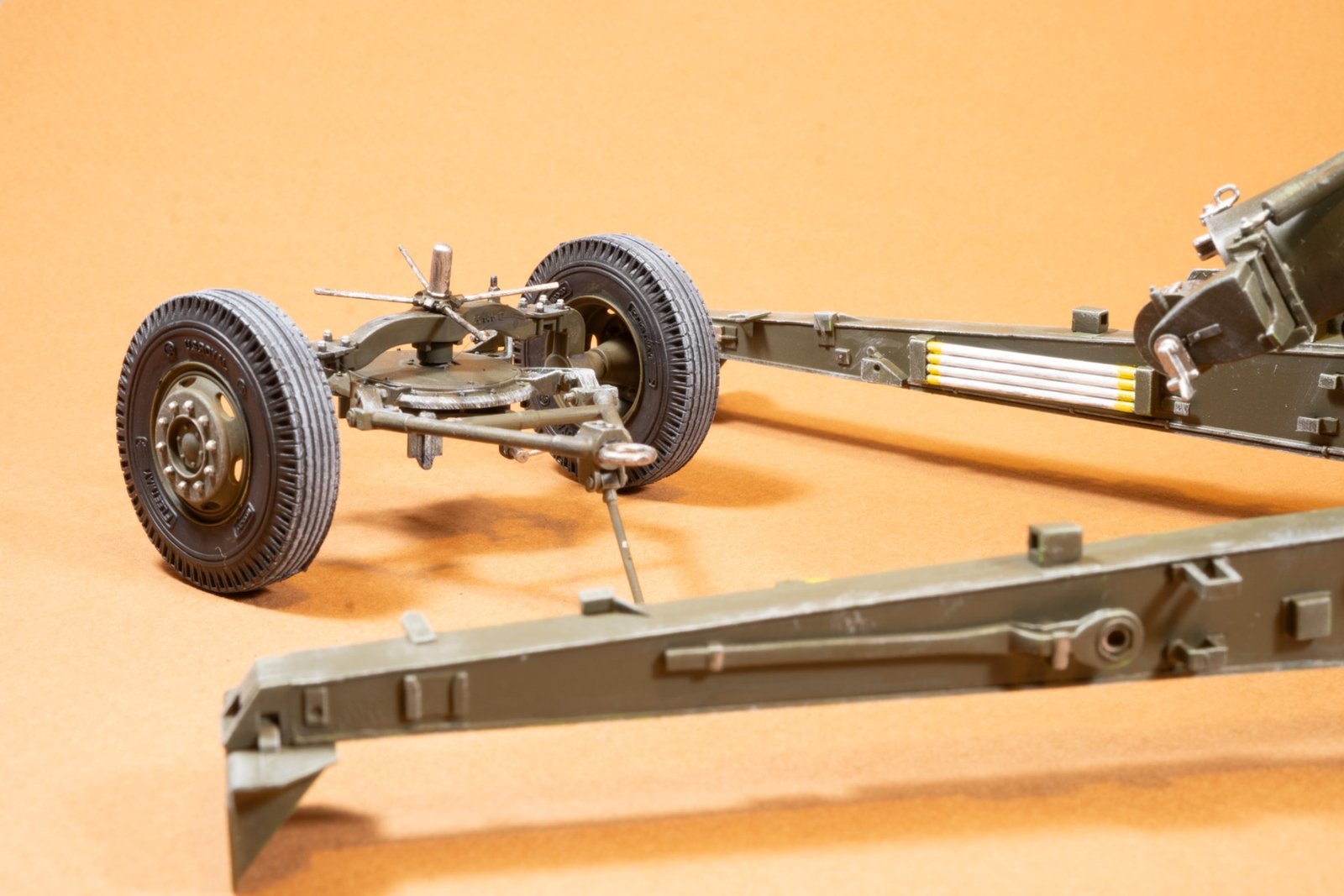
The ammunition for the 155 mm gun was “separate-loading”, that is with the shell and the powder charge packaged, shipped and stored separately. The shell is lifted into position behind the breech and then rammed into the chamber to engage the shell’s rotating band into the barrel rifling.
Ramming the shell home is followed by loading a number of powder bags, as required for the desired range. The powder charge could be loaded in up to seven charge settings. Once the powder is loaded, the breech plug is closed and locked, and a primer is placed in the breech plug’s firing mechanism. After setting the elevation and azimuth, the gun is ready to fire. The firing mechanism is a device for initiating the ammunition primer. The primer then sets off the igniter which ignites the propelling charge of the ammunition. A continuous-pull lanyard first cocks the firing pin, then fires the primer when pulled.
Carriage M1
The gun carriage provides a stable, yet mobile, base for the gun. The new split-trail carriage featured an eight-wheel integral two-axle bogie and a two-wheel limber that supported the trails for transport. The carriage was a two-piece design. The upper carriage included the side frames with trunnion bearings that supported the recoil mechanism that carried the gun cradle, slide and gun tube. The upper carriage also incorporated the elevating and azimuth gearing. The upper carriage pivoted in azimuth on the lower carriage. The lower carriage included the transport suspension and the split-trail that stabilized and absorbed recoil when the gun was fired.
After the gun was placed in a firing position with the gun pointing in the desired direction, the trails were lowered to the ground and the limber was removed. The carriage wheels would then be raised using built-in ratcheting screw-jacks, lowering the gun carriage to the ground. Once on the ground, the limber-end of the trail legs were separated to form a wide “vee” shape with its apex at the center of the carriage pivot point. A recoil spade at the limber-end of each trail leg required a correctly positioned hole to be dug for the spade, which was attached to the trail end, to transmit the recoil from gun carriage through the trails and into the earth. This made the gun very stable and assisted its accuracy. The removable spades were transported in brackets on the trail legs.