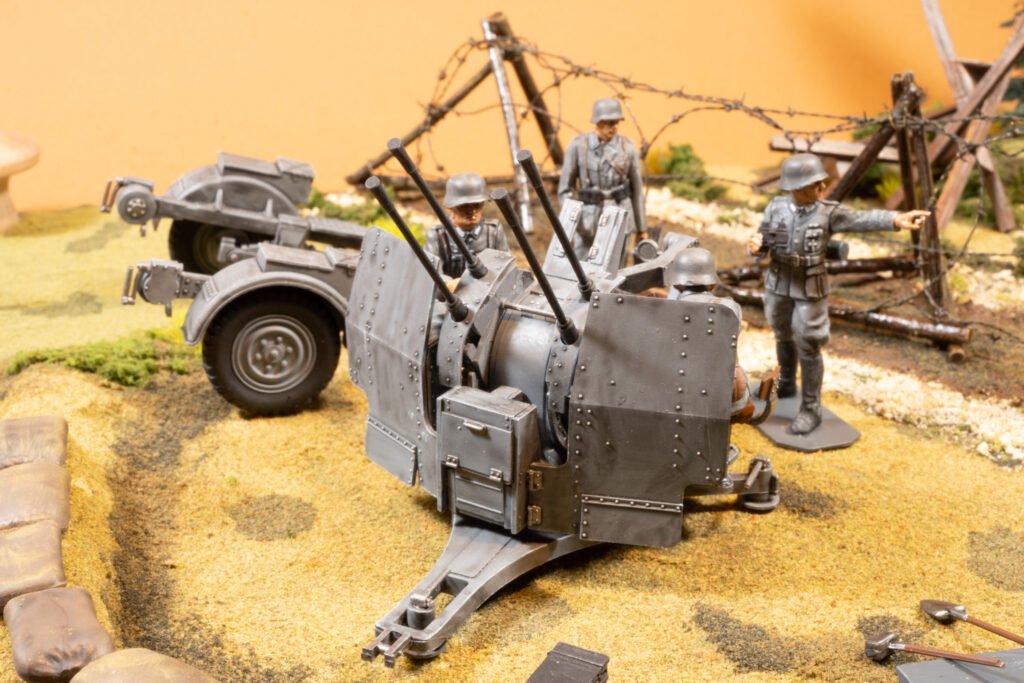
The 20 mm weapons had always had weak development perspectives, often being reconfigured or redesigned just enough to allow the weapons to find a use. Indeed, it came as a surprise when Rheinmetall introduced the 2 cm Flakvierling 38, which improved the weapon just enough to make it competitive again. The term Vierling literally translates to “quadruplet” and refers to the four 20 mm autocannon constituting the design.
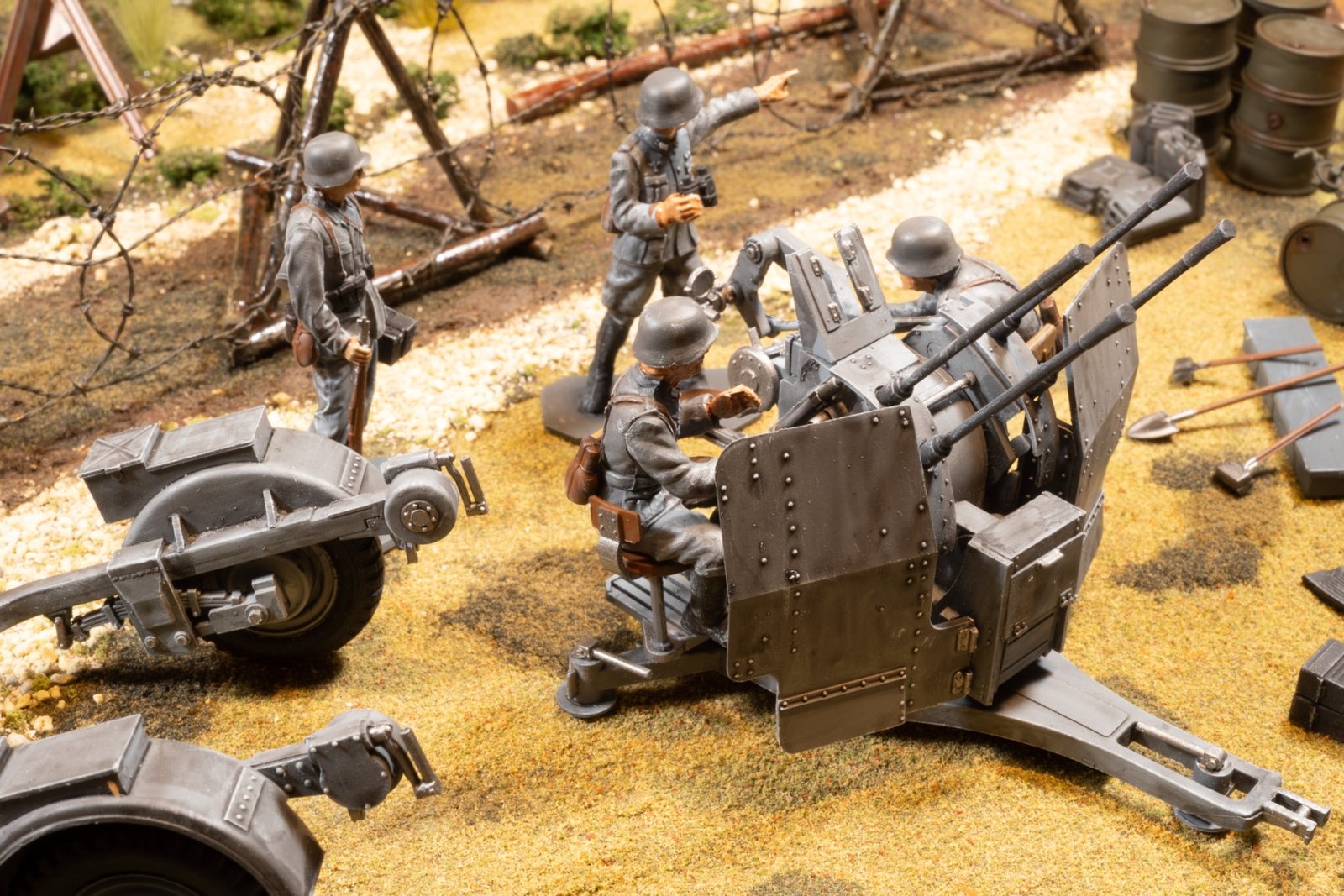
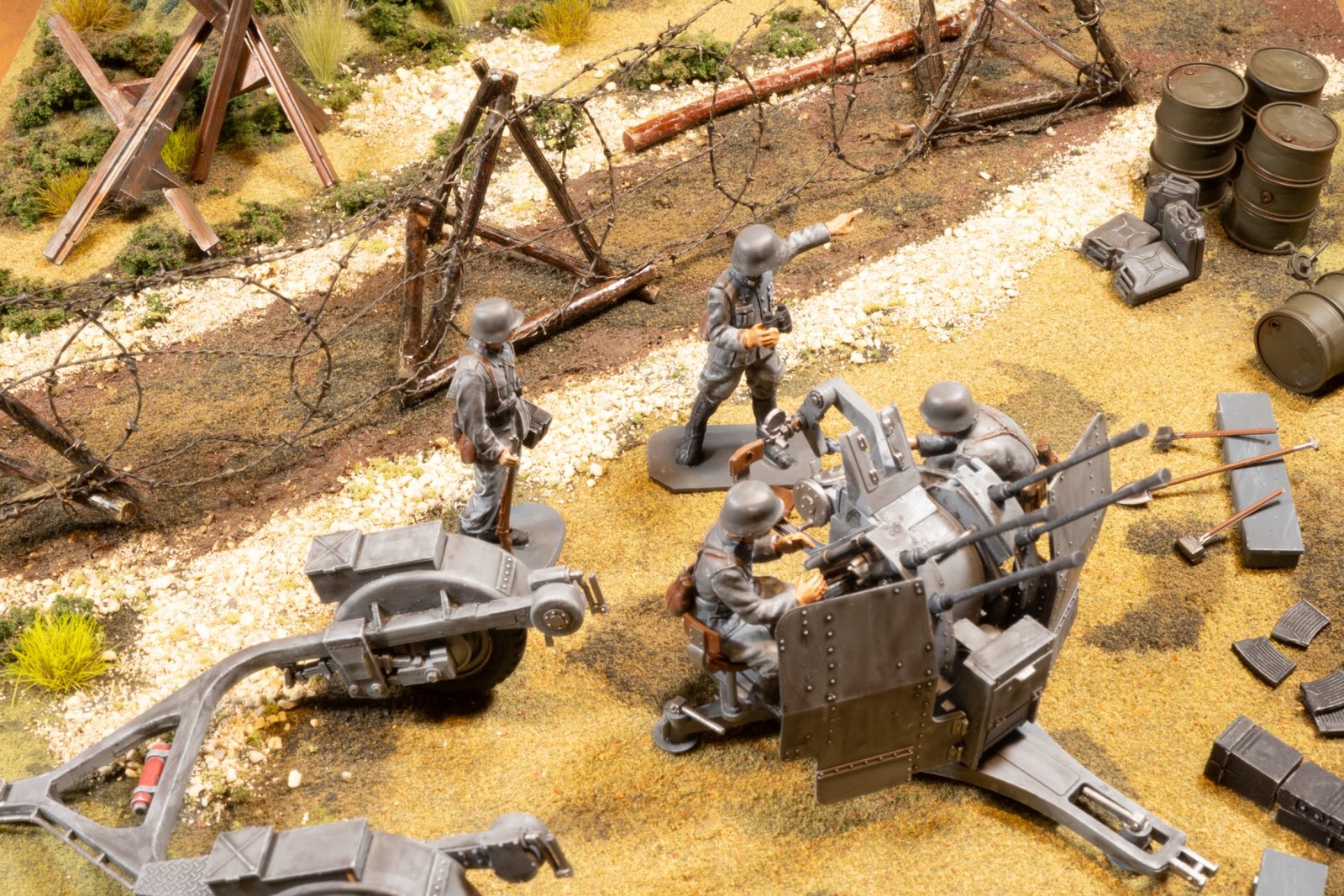
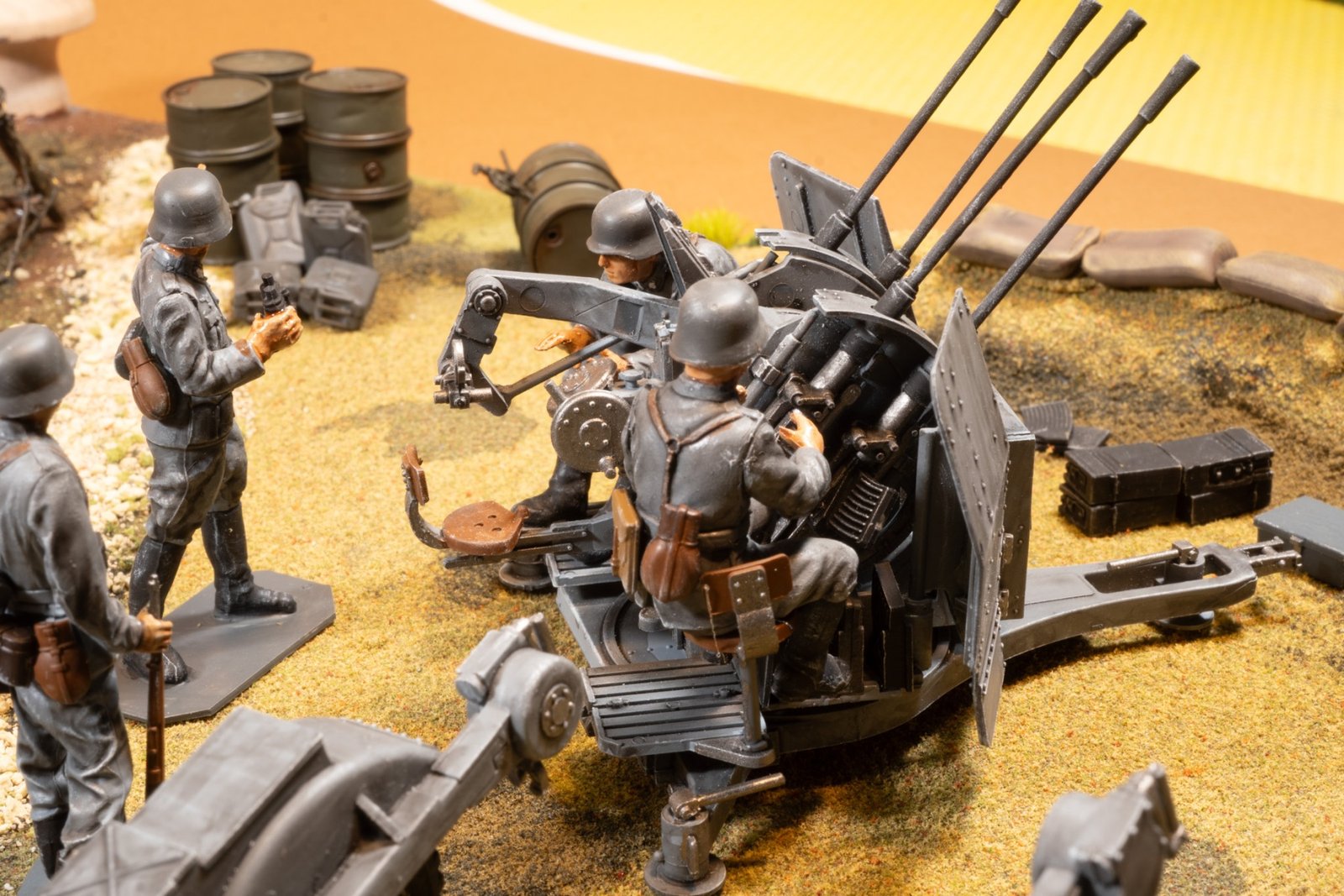
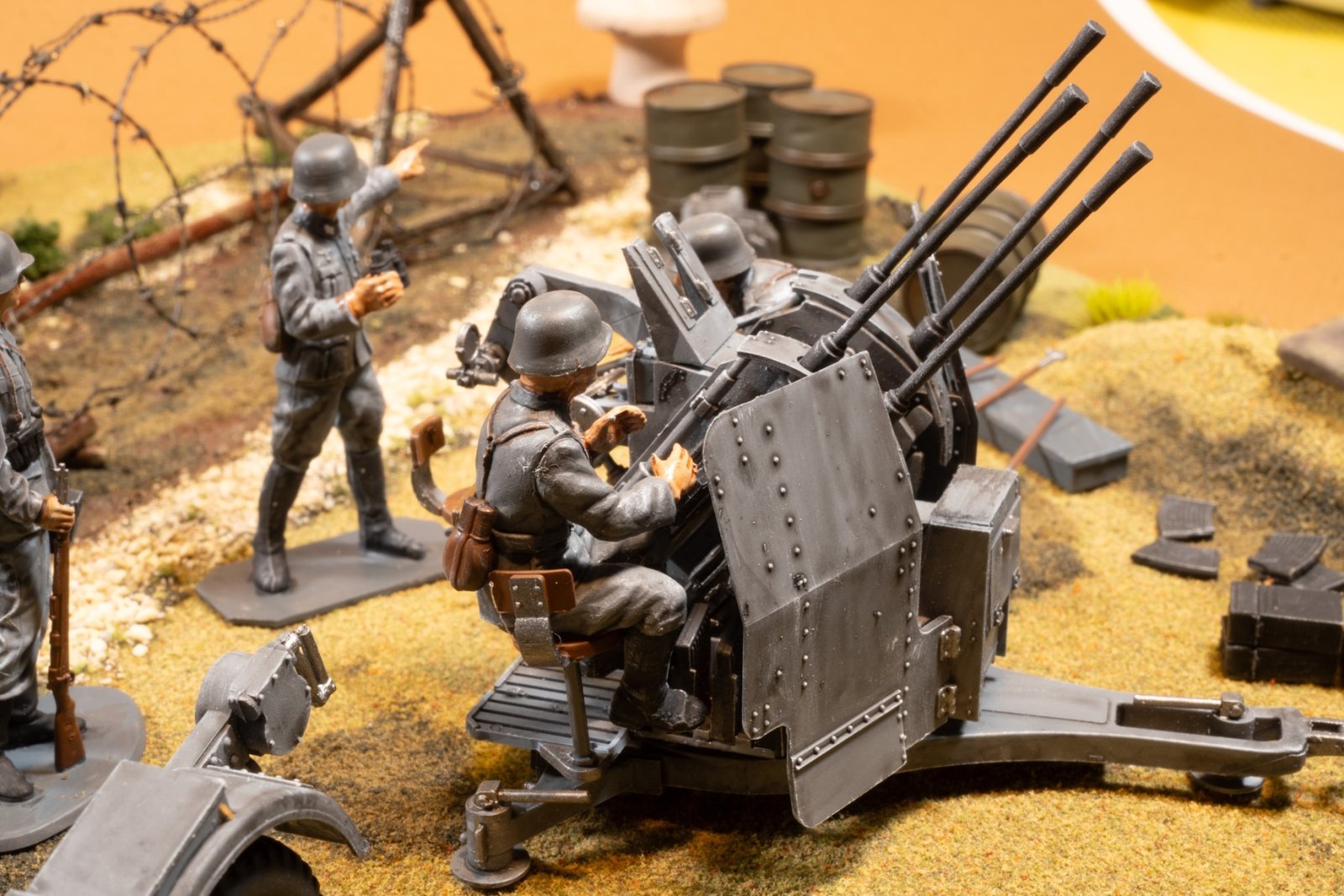
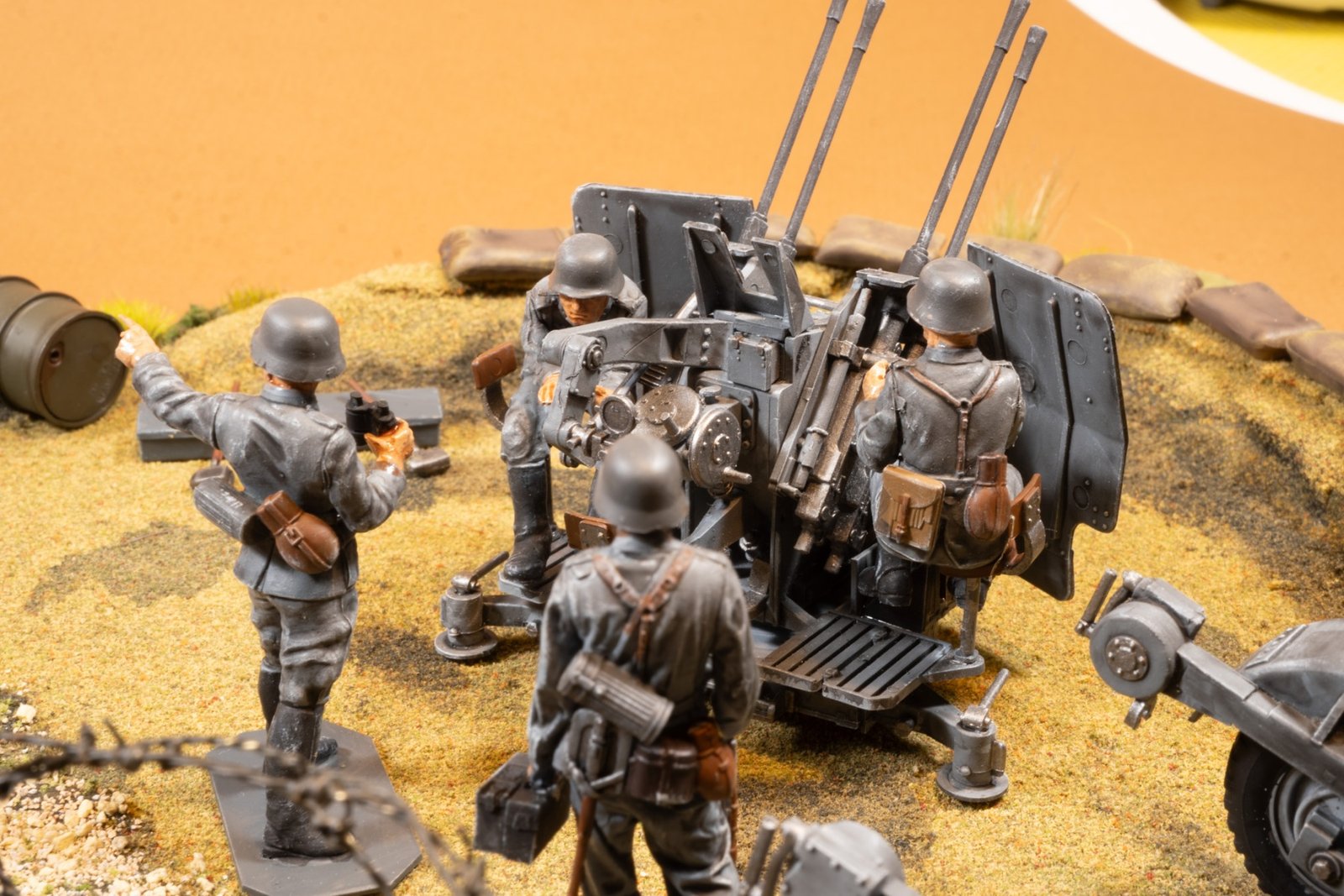
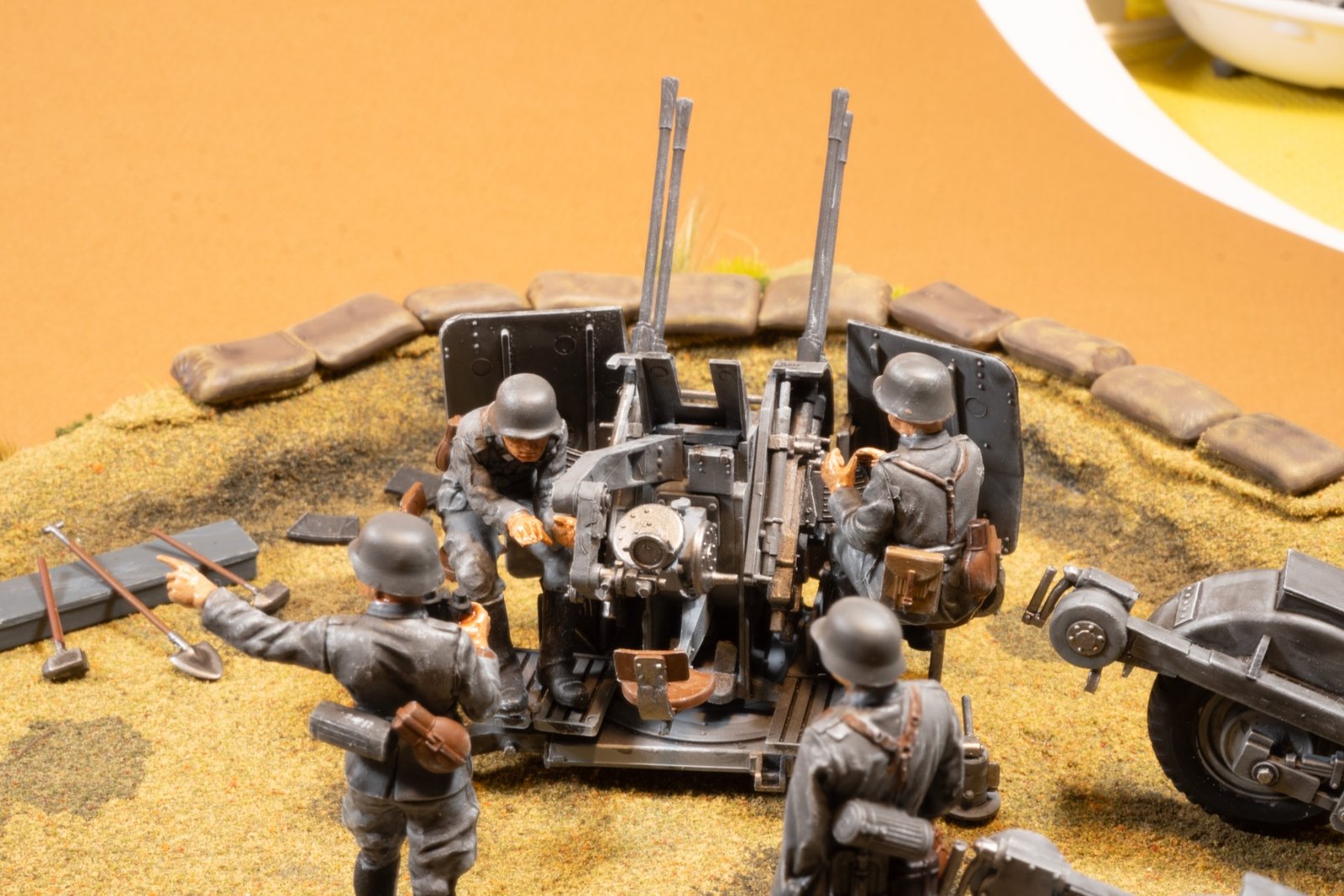
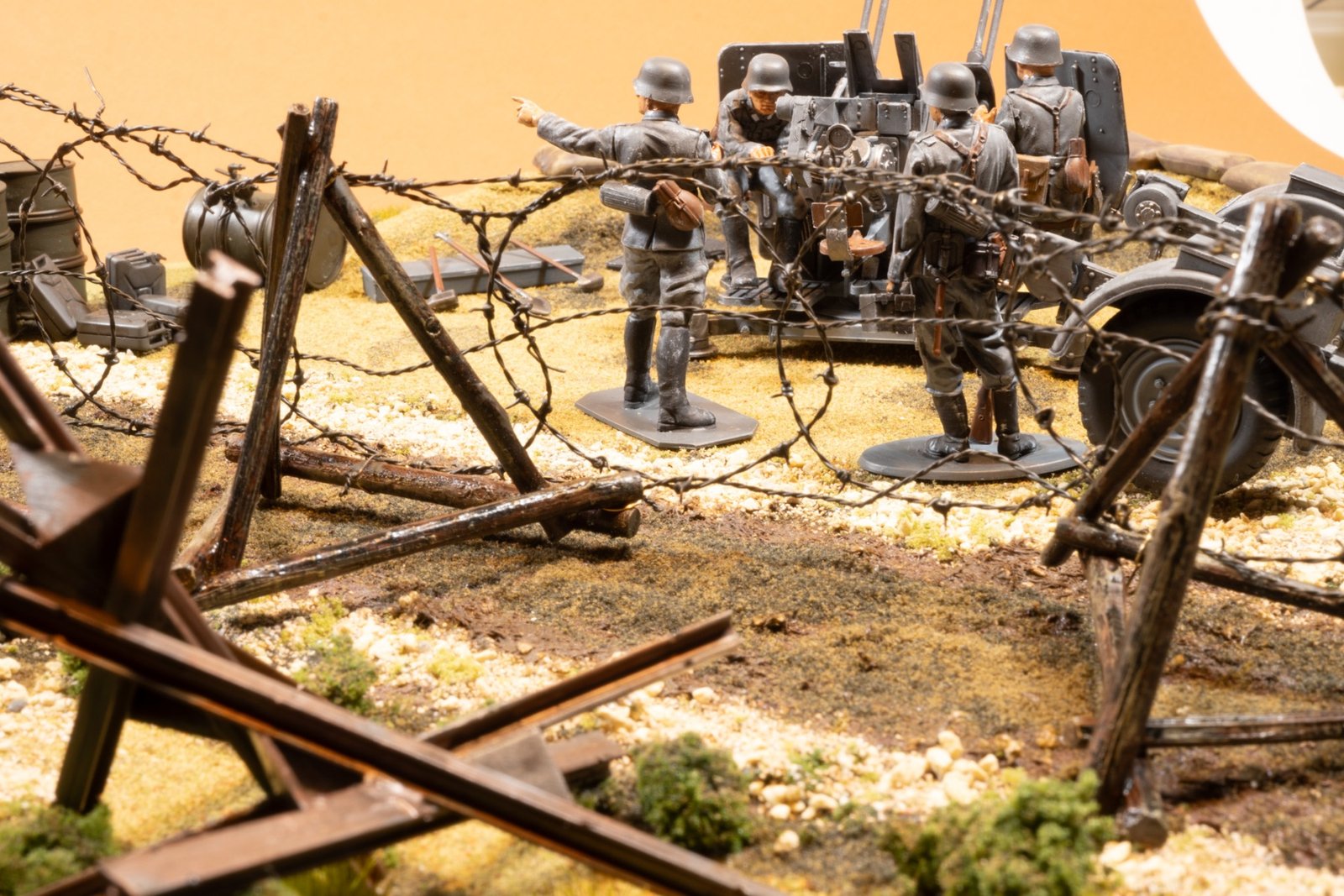
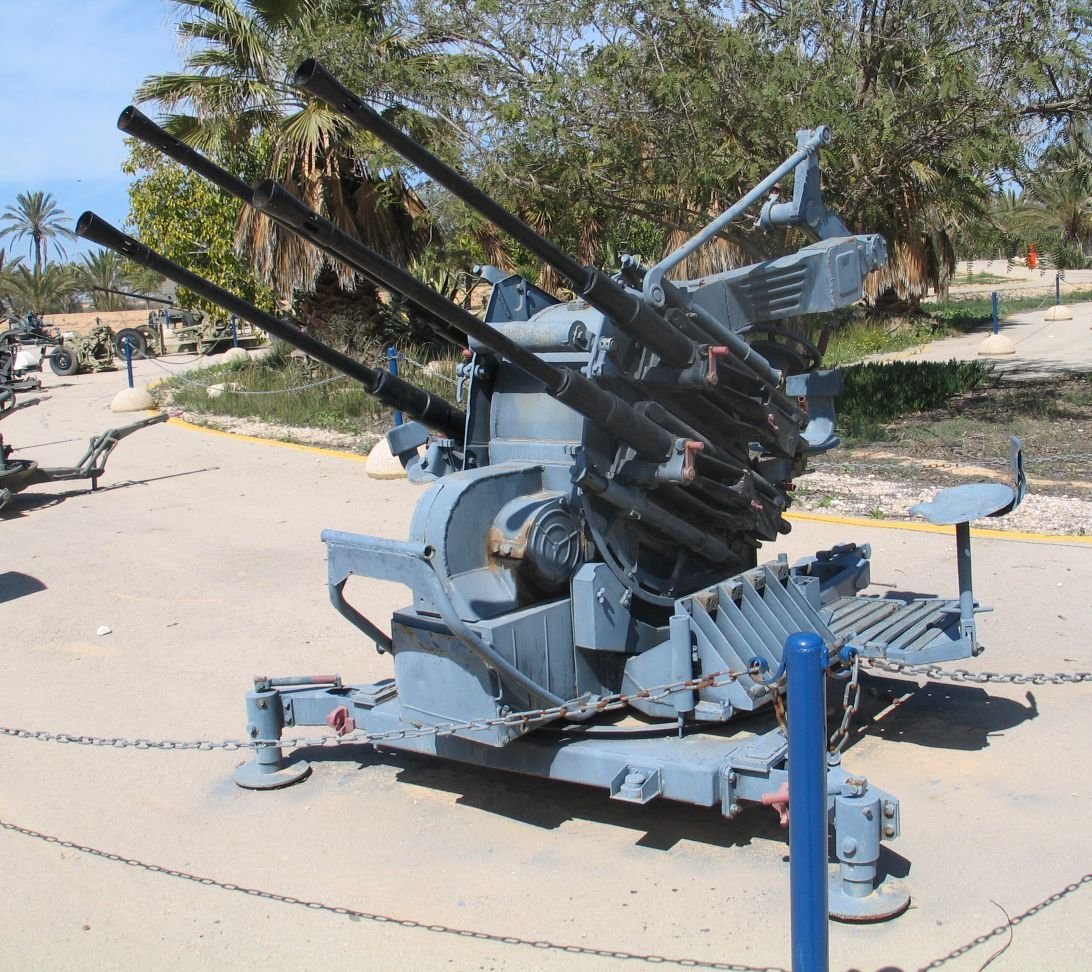
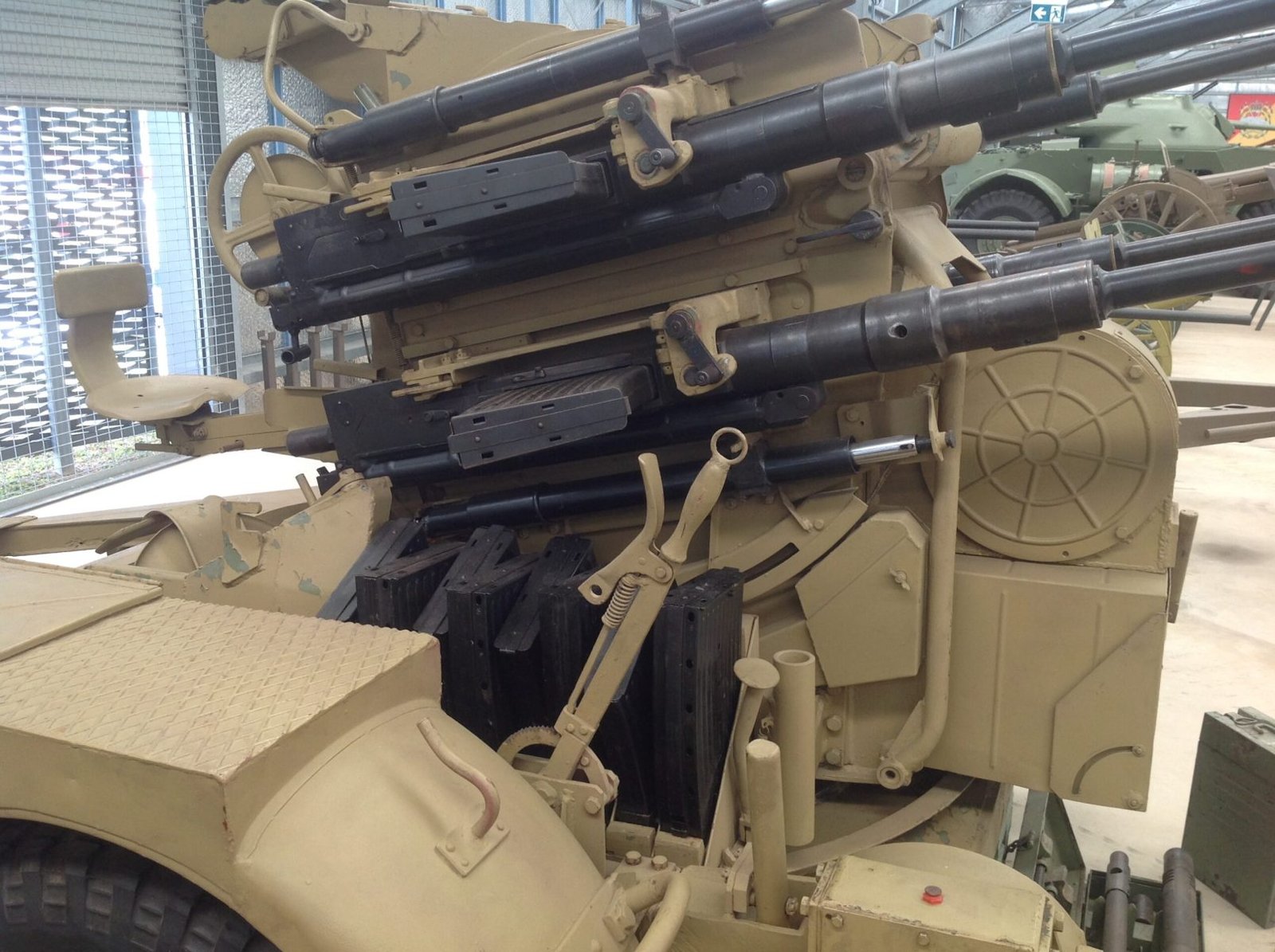
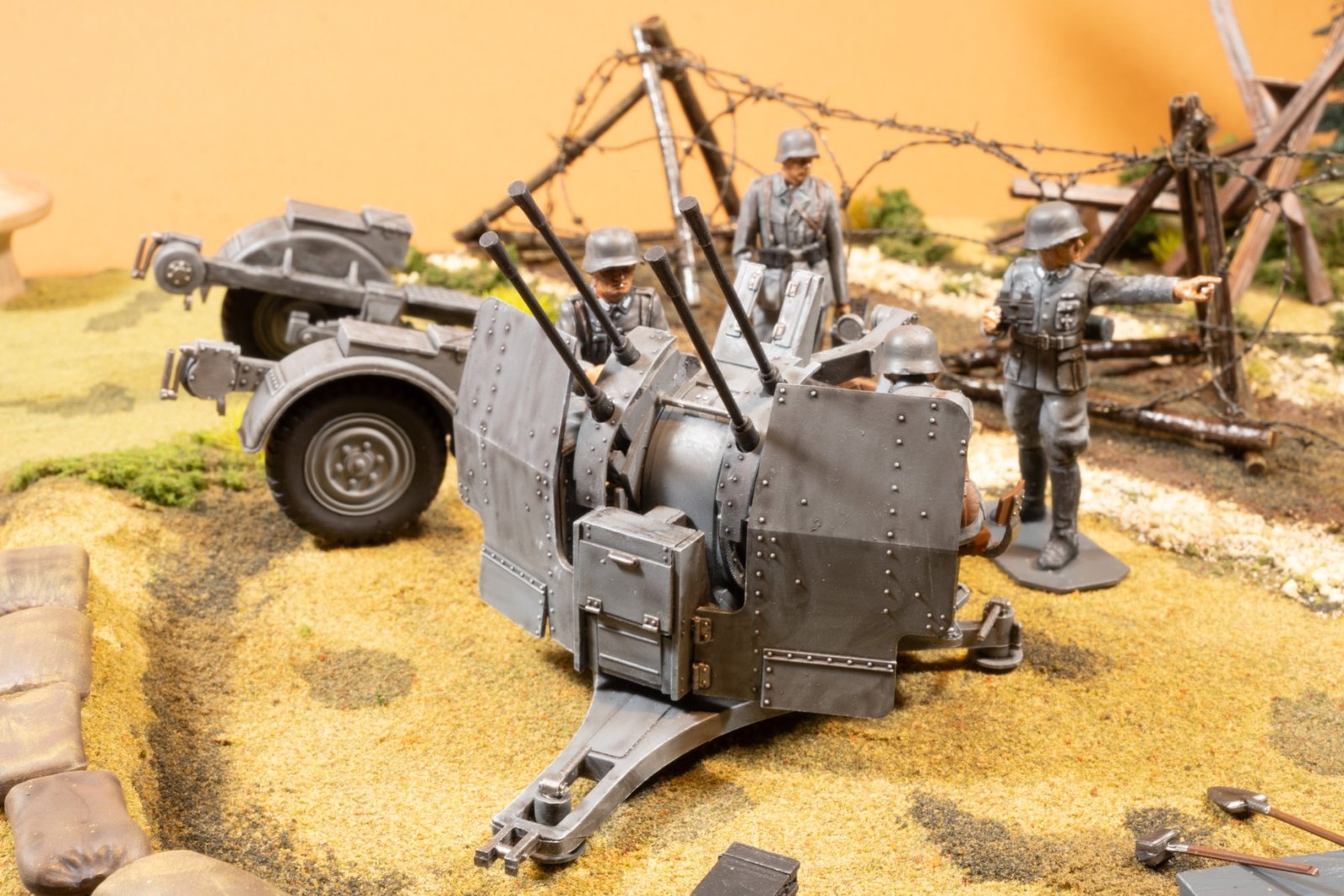
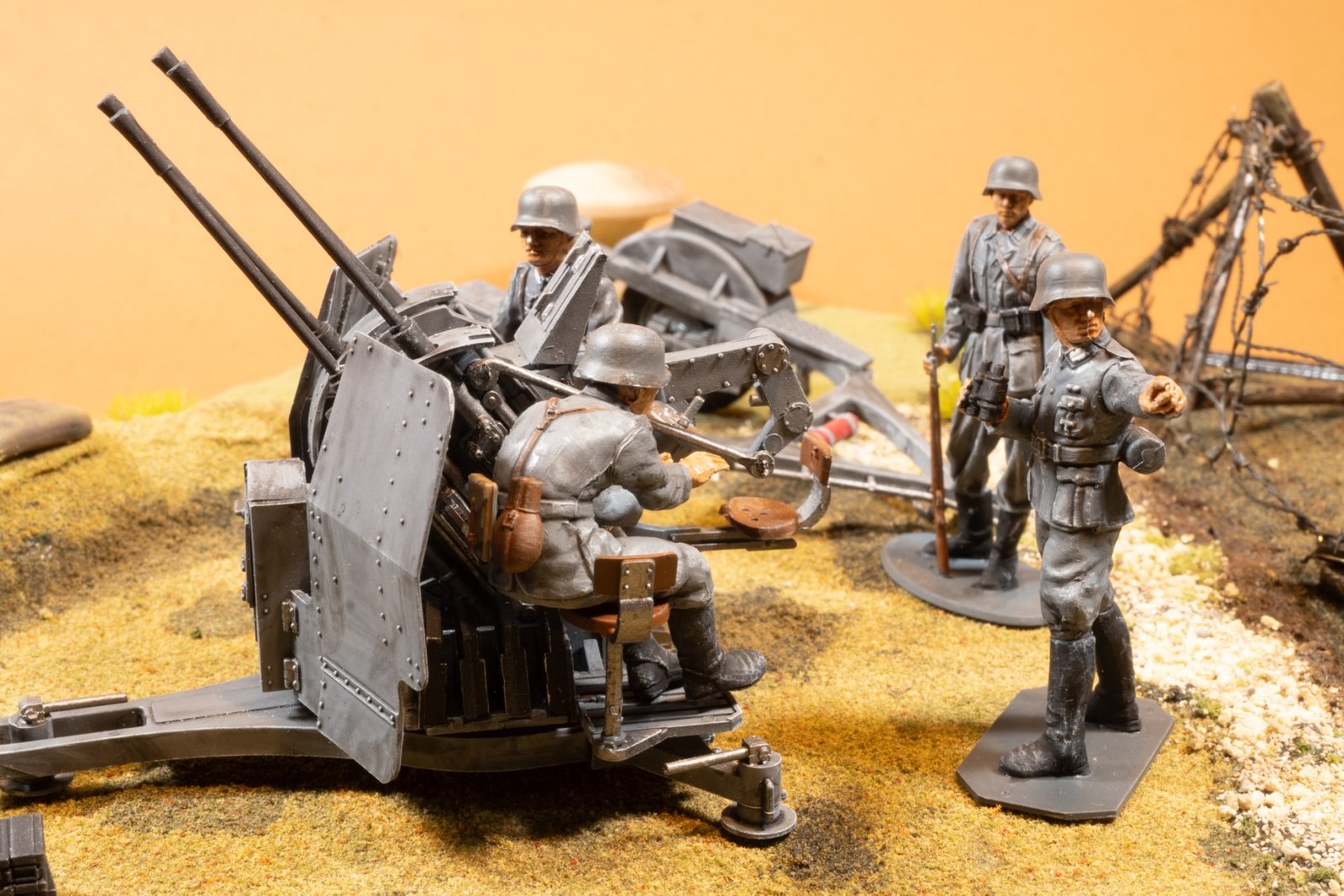
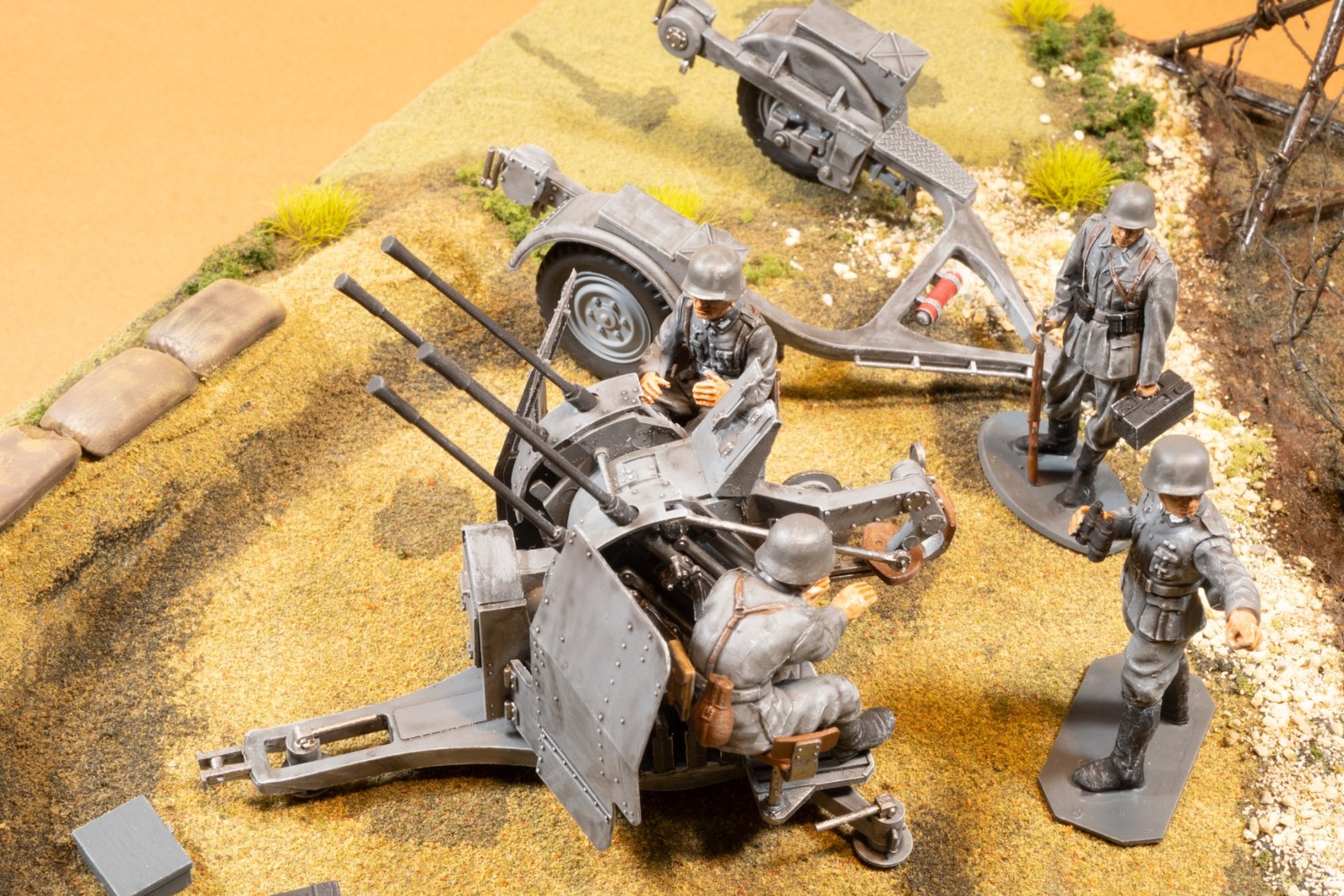
The Flakvierling weapon consisted of quad-mounted 2 cm Flak 38 AA guns with collapsing seats, folding handles, and ammunition racks. The mount had a triangular base with a jack at each leg for levelling the gun. The tracker traversed and elevated the mount manually using two handwheels. When raised, the weapon measured 307 cm (10 feet 1 inch) high.
Each of the four guns had a separate magazine that held only 20 rounds. This meant that a maximum combined rate of fire of 1,400 rounds per minute was reduced practically to 800 rounds per minute for combat use – which would still require that an emptied magazine be replaced every six seconds, on each of the four guns. This is the attainable rate of fire; the sustained rate of fire is significantly lower due to heat buildup and barrel erosion. Automatic weapons are typically limited to roughly 100 rounds per minute per barrel to give time for the heat to dissipate, although this can be exceeded for short periods if the firing window is brief.
The gun was fired by two pedals — each of which fired two diametrically opposite barrels — in either semi-automatic or automatic mode. The effective vertical range was 2,200 metres. It was also used just as effectively against ground targets as it was against low-flying aircraft.