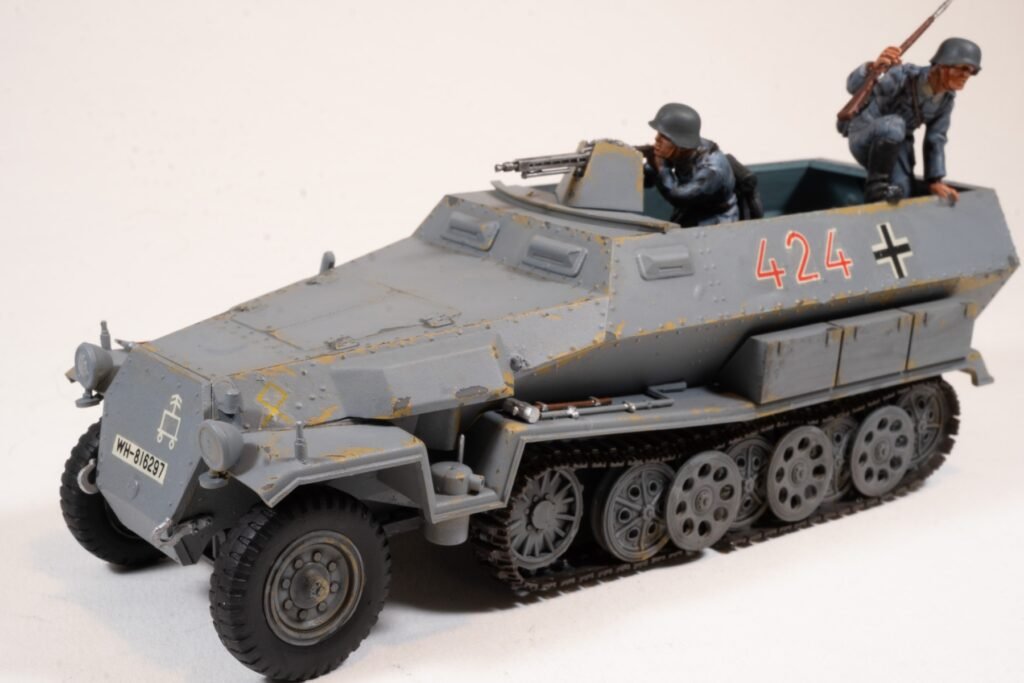
Off the Bench on Dec 25th, 2023
Hanomags Sd.Kfz. 251 half-track – was a World War II German armored personnel carrier designed by the Hanomag company. The Sd.Kfz. 251 was designed to transport the Panzergrenadier (German mechanized infantry) into battle. Sd.Kfz. 251s were the most widely produced German half-tracks of the war, with at least 15,252 vehicles and variants produced by seven manufacturers. The utility of this vehicle lead the German Army to develop the similar looking but shorter and lighter Sd.Kfz. 250 as a supplement.
Some sources state that the Sd.Kfz. 251 was commonly referred to simply as “Hanomags” by both German and Allied soldiers after the manufacturer of the vehicle; German officers referred to them as SPW (Schützenpanzerwagen, or armored infantry vehicle) in their daily orders and memoirs.
There were four main model modifications (Ausführung A through D), which formed the basis for at least 22 variants. The initial idea was for a vehicle that could be used to transport a single squad of 10 panzergrenadiers to the battlefield protected from enemy small arms fire, and with some protection from artillery fire. In addition, the standard mounting of at least one MG 34 or MG 42 machine gun allowed the vehicle to provide suppressive fire for the rifle squad both while they dismounted and in combat.
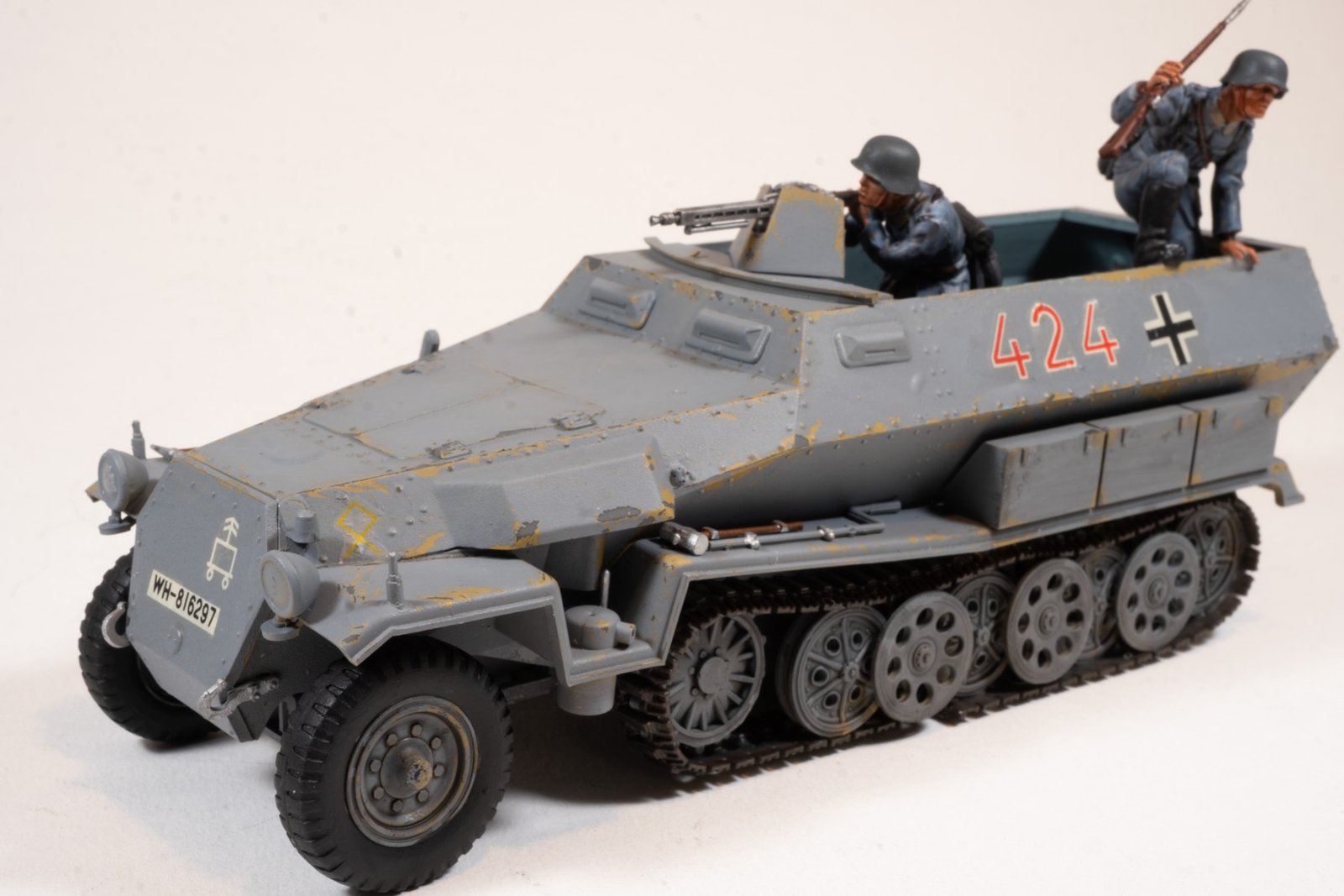
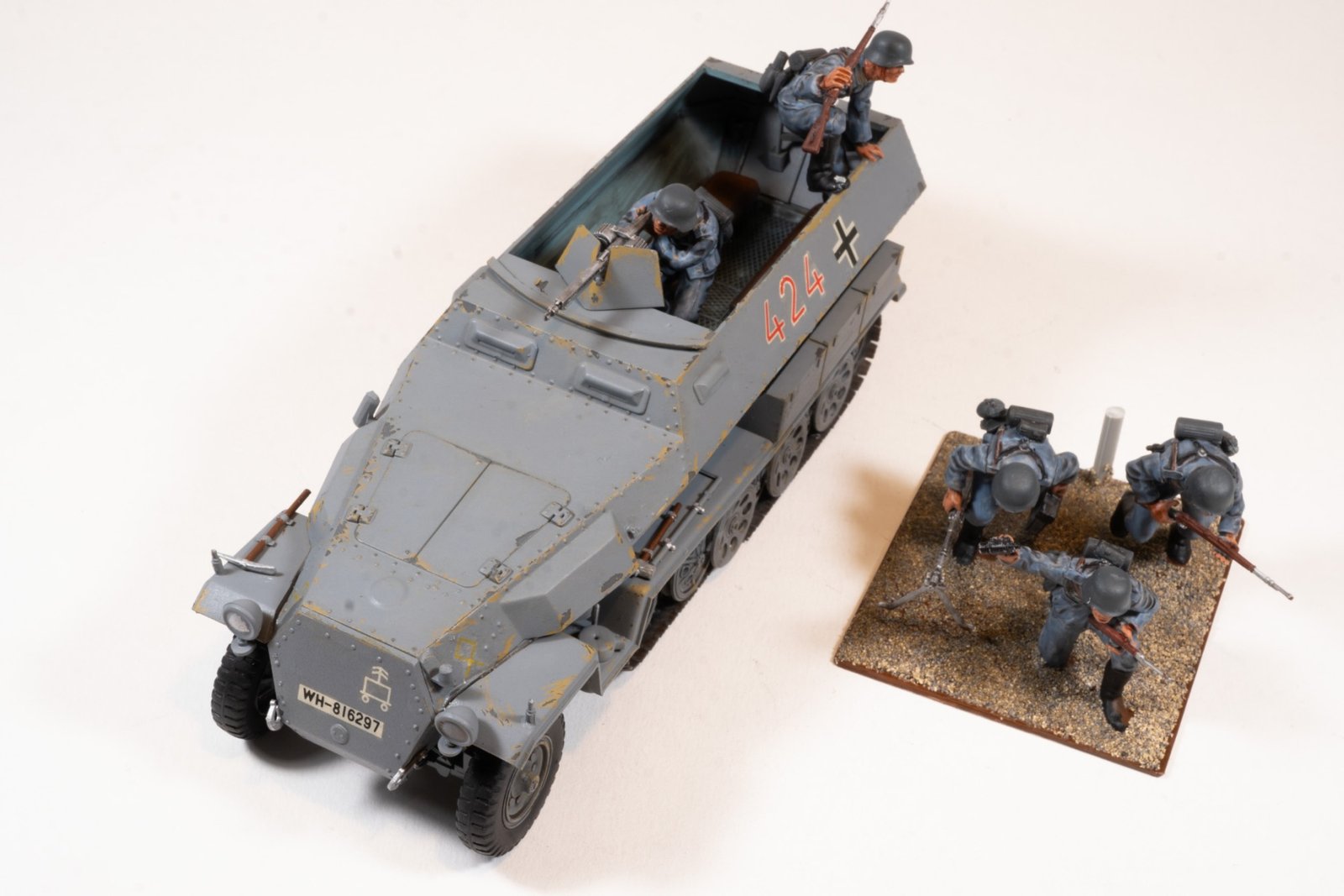
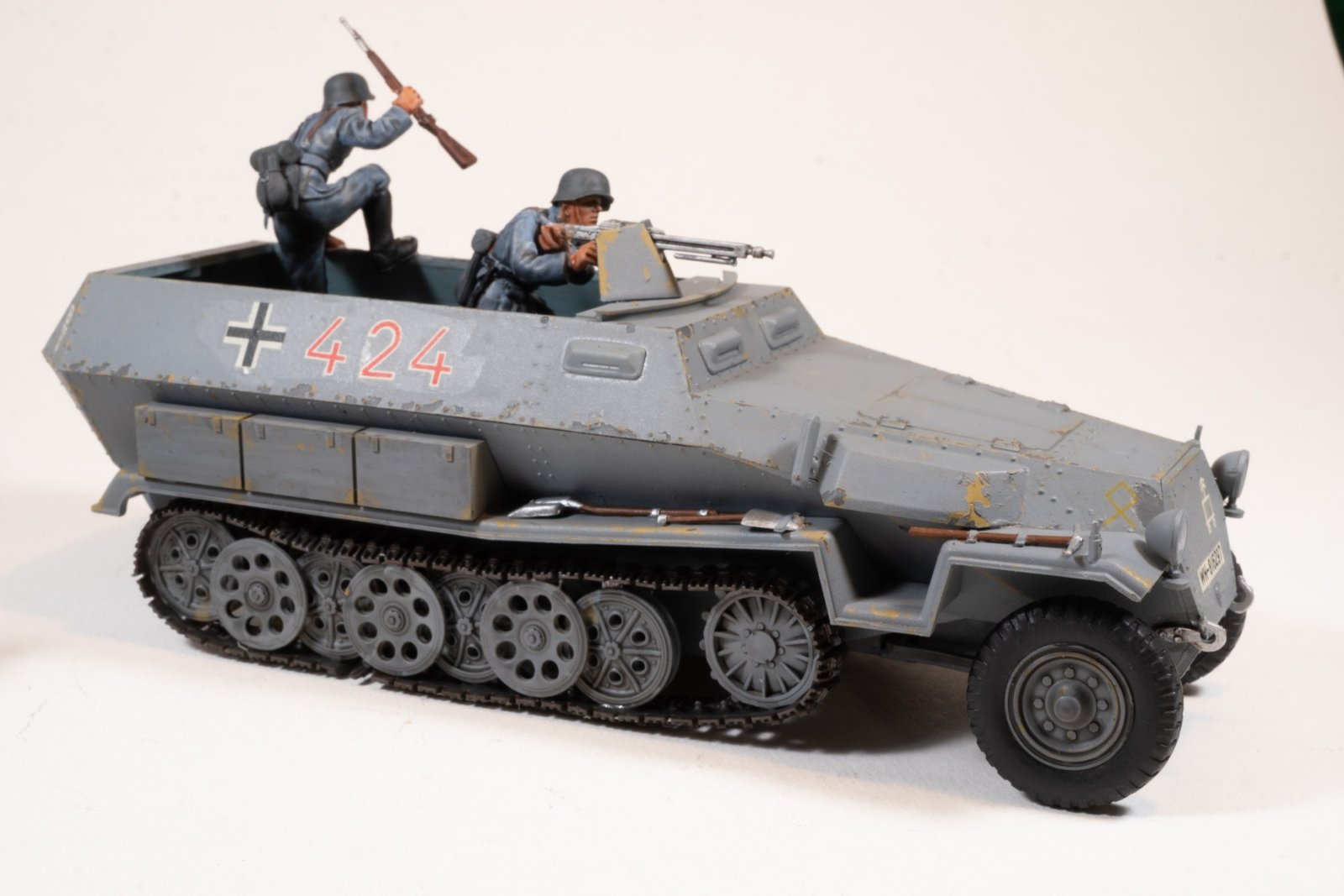
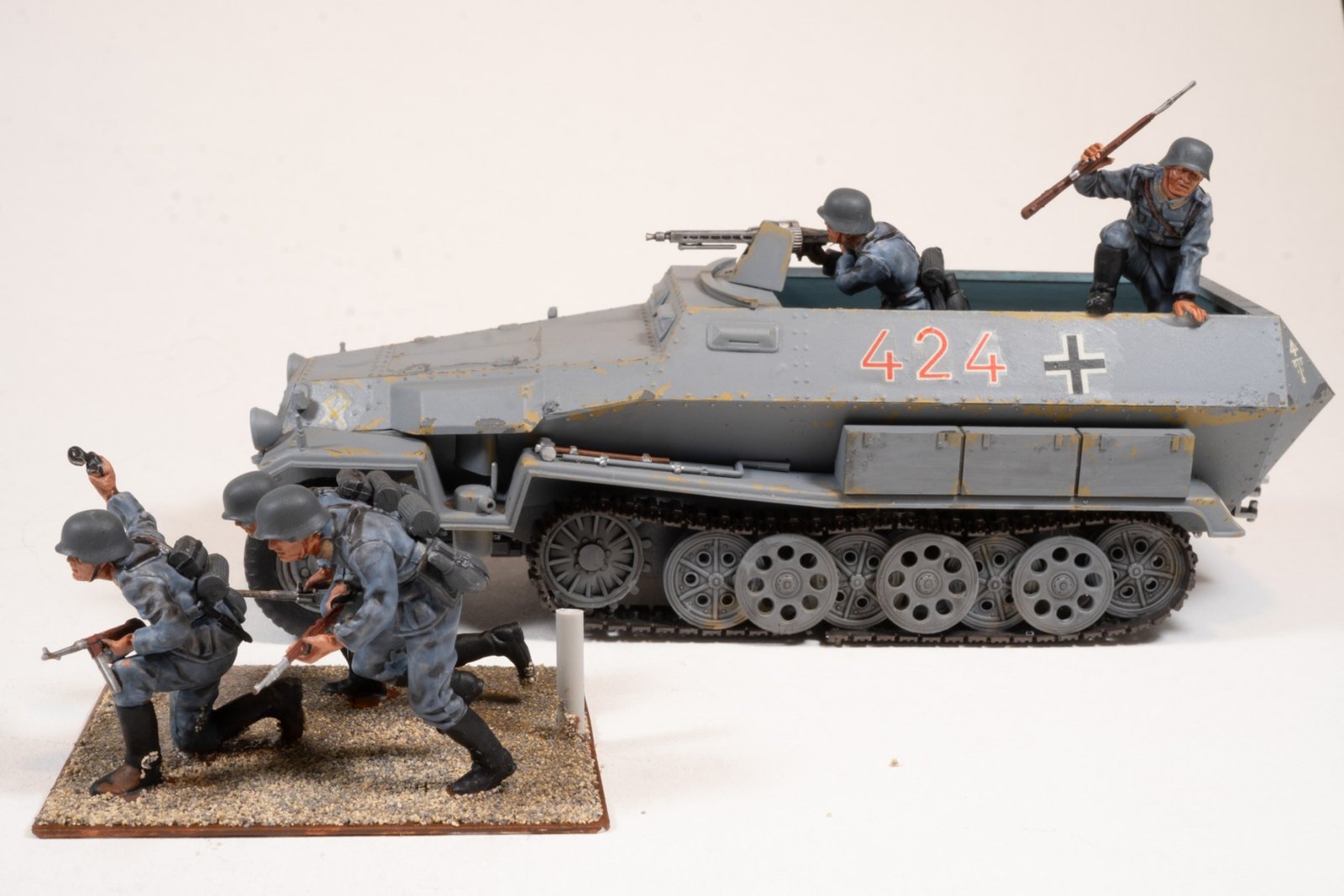
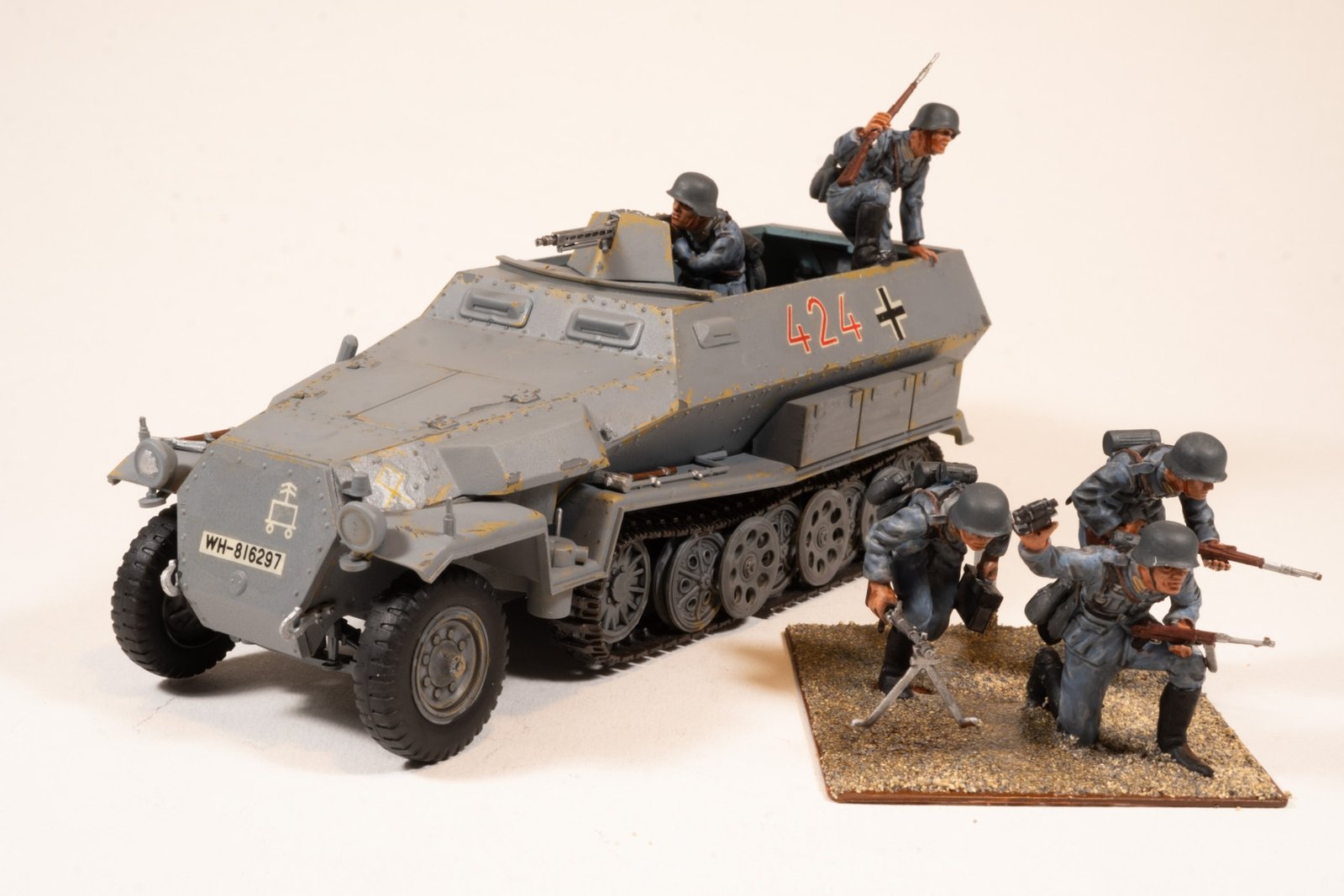
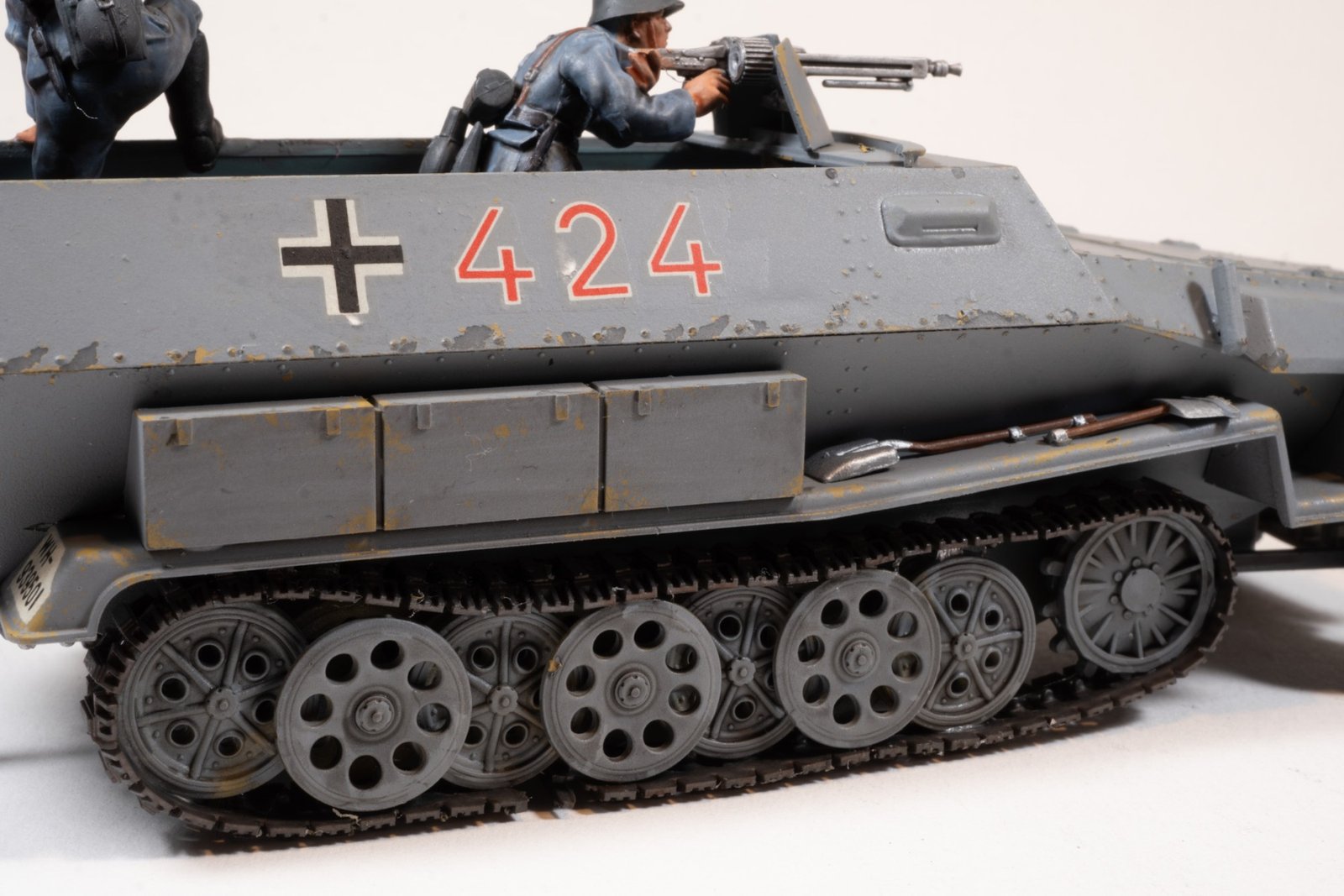
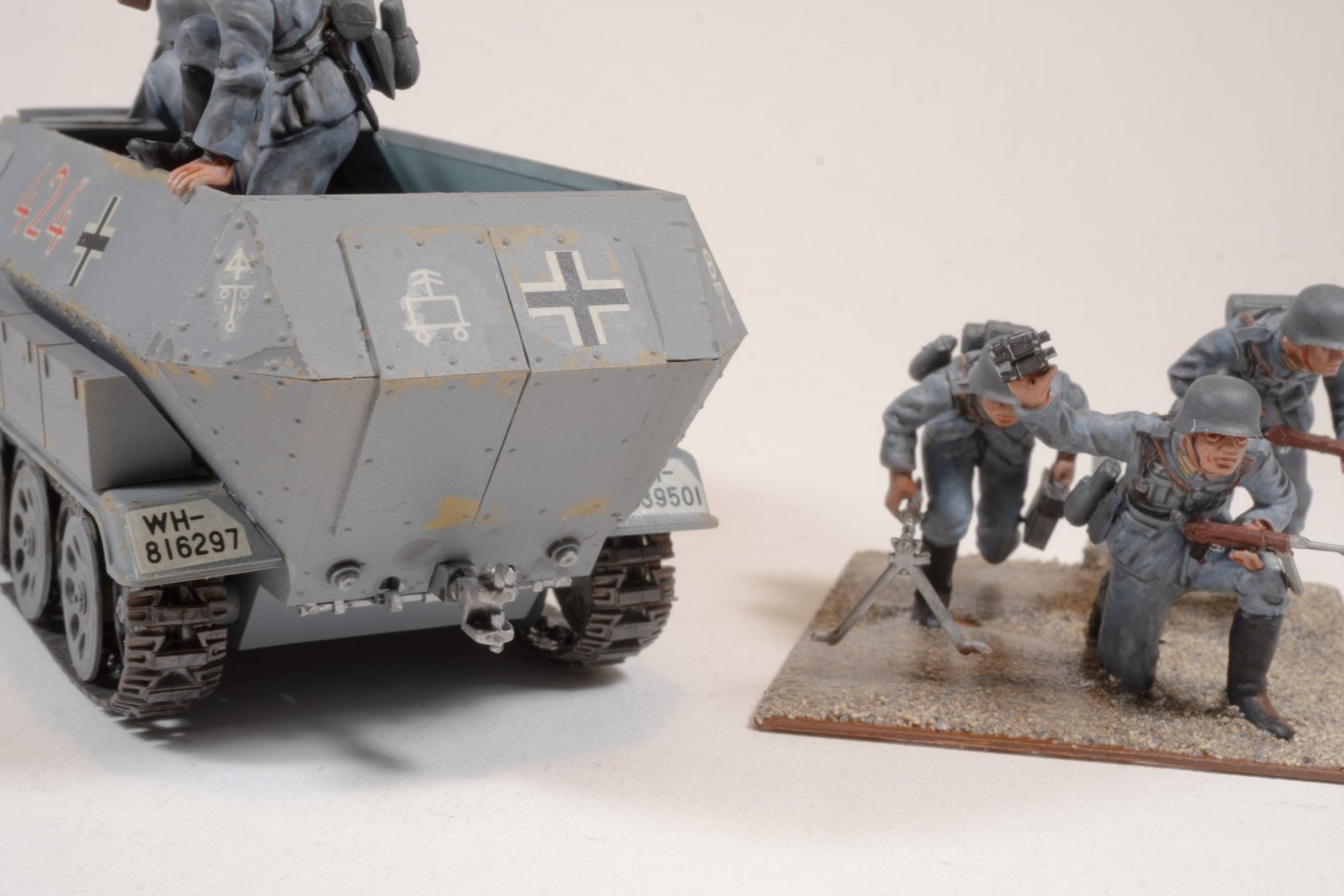
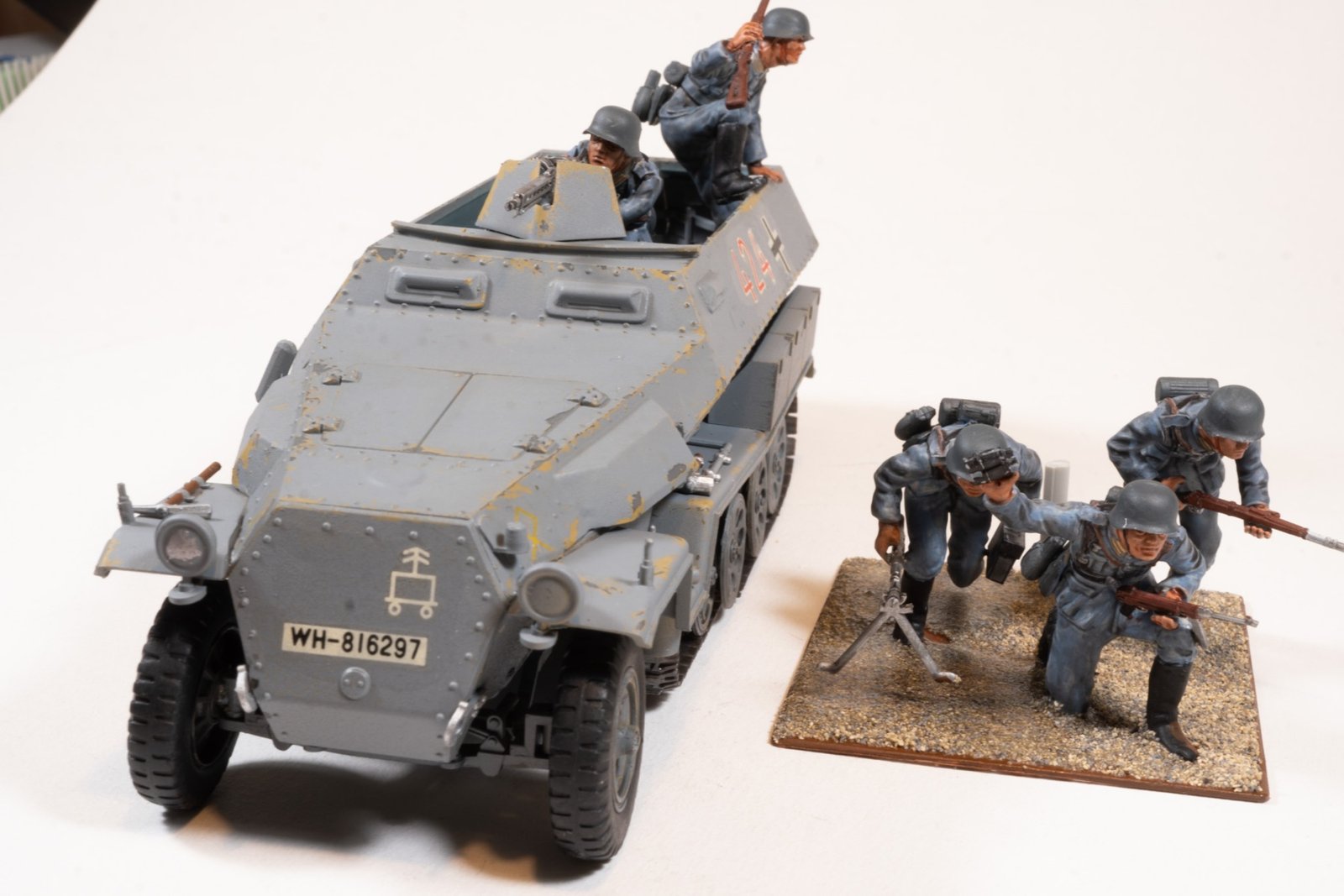
The armour plates were designed to provide protection against standard rifle/ machine gun bullets. The front-facing plates were 14.5mm thick; the sides were steeply angled, V-shape 8mm thick plates. This level of armour provided protection against normal (non-tungsten) rifle AP round, which could pierce about 8mm of vertical armour.
Positive aspects of the open top included greater situational awareness and faster egress by the infantry, as well as the ability to throw grenades and fire over the top of the fighting compartment as necessary while remaining under good horizontal cover. The downside, as with all armored personnel carriers of the era, was a major vulnerability to all types of plunging fire; this included indirect fire from mortars and field artillery, as well as small arms fire from higher elevated positions, lobbed hand grenades, Molotov cocktails, and strafing by enemy aircraft.
The standard personnel carrier version was equipped with a 7.92 mm MG 34 or MG 42 machine gun mounted at the front of the open compartment, above and behind the driver. A second machine gun could be mounted at the rear on an anti-aircraft mount.
Variants were produced for specialized purposes, including with anti-aircraft guns, light howitzers, anti-tank guns and mortars or even large unguided artillery rockets, as well as a version with an infrared search light used to spot potential targets for associated Panther tanks equipped with infrared detectors.
A strong design feature of the Sd.Kfz. 251 was the large track area, with the characteristic “slack track” design with no return rollers for the upper run of track. The Sd.Kfz. 251 also had the Schachtellaufwerk system of overlapping and interleaved main road wheels common to virtually all German halftracks of the period. This lowered the ground pressure and provided better traction, at the cost of much greater complexity in maintenance. The Sd.Kfz. 251 also had tank steering, whereby the normal steering wheel moved the front wheels, but after more turning of the steering wheel, the tracks are braked to cause turning, like on a tank. However, the interleaved and overlapping main road wheels shared a major problem with the Tiger I and Panther tanks that also used such roadwheel configurations – in muddy or winter weather conditions, such as those during a mud season or the winter conditions, accumulated mud and snow could freeze solid between the road wheels, immobilizing the vehicle.