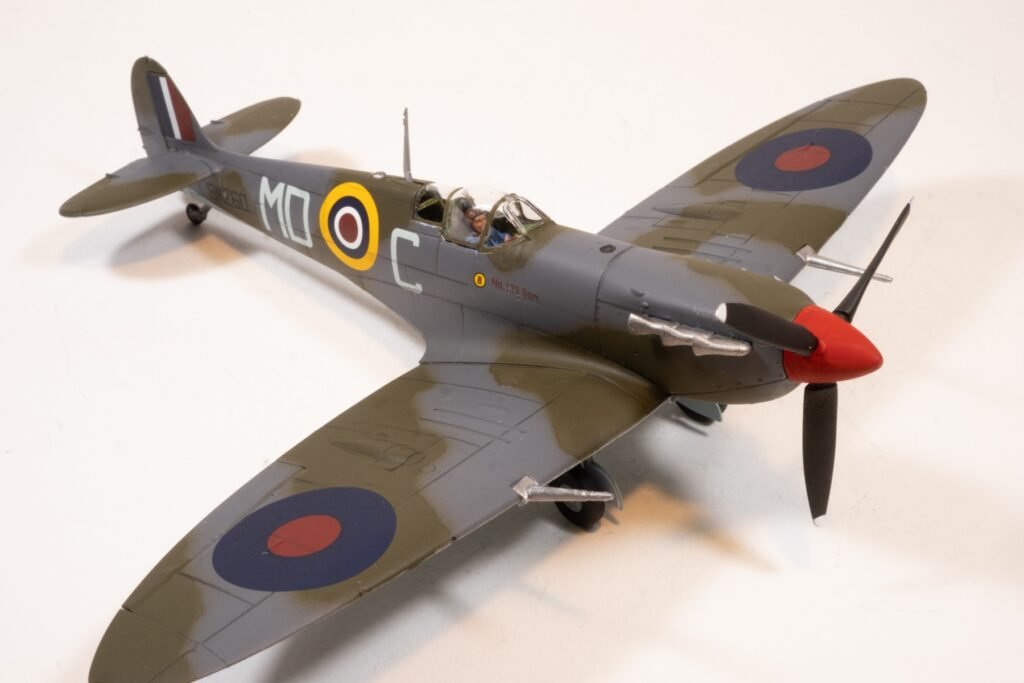
Off the bench on June 20, 2023
The Supermarine Spitfire is a British single-seat fighter aircraft used by the Royal Air Force and other Allied countries before, during, and after World War II. Many variants of the Spitfire were built, from the Mk 1 to the Rolls-Royce Griffon-engined Mk 24 using several wing configurations and guns. It was the only British fighter produced continuously throughout the war. The Spitfire remains popular among enthusiasts; around 70 remain airworthy, and many more are static exhibits in aviation museums throughout the world.
The Spitfire was designed as a short-range, high-performance interceptor aircraft. The Spitfire has a distinctive elliptical wing innovative sunken rivets to have the thinnest possible cross-section, achieving a potential top speed greater than that of several contemporary fighter aircraft, including the Hawker Hurricane.
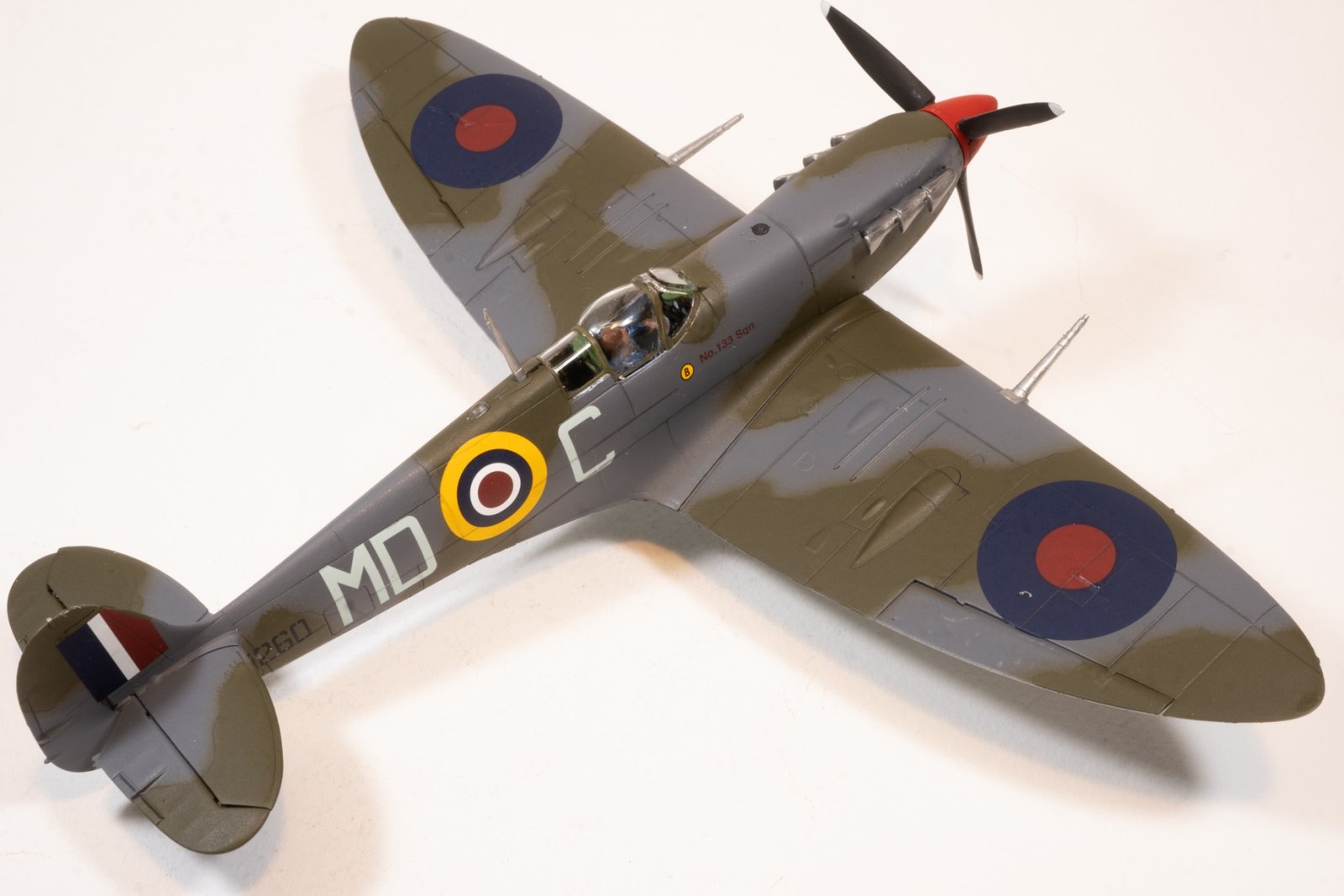
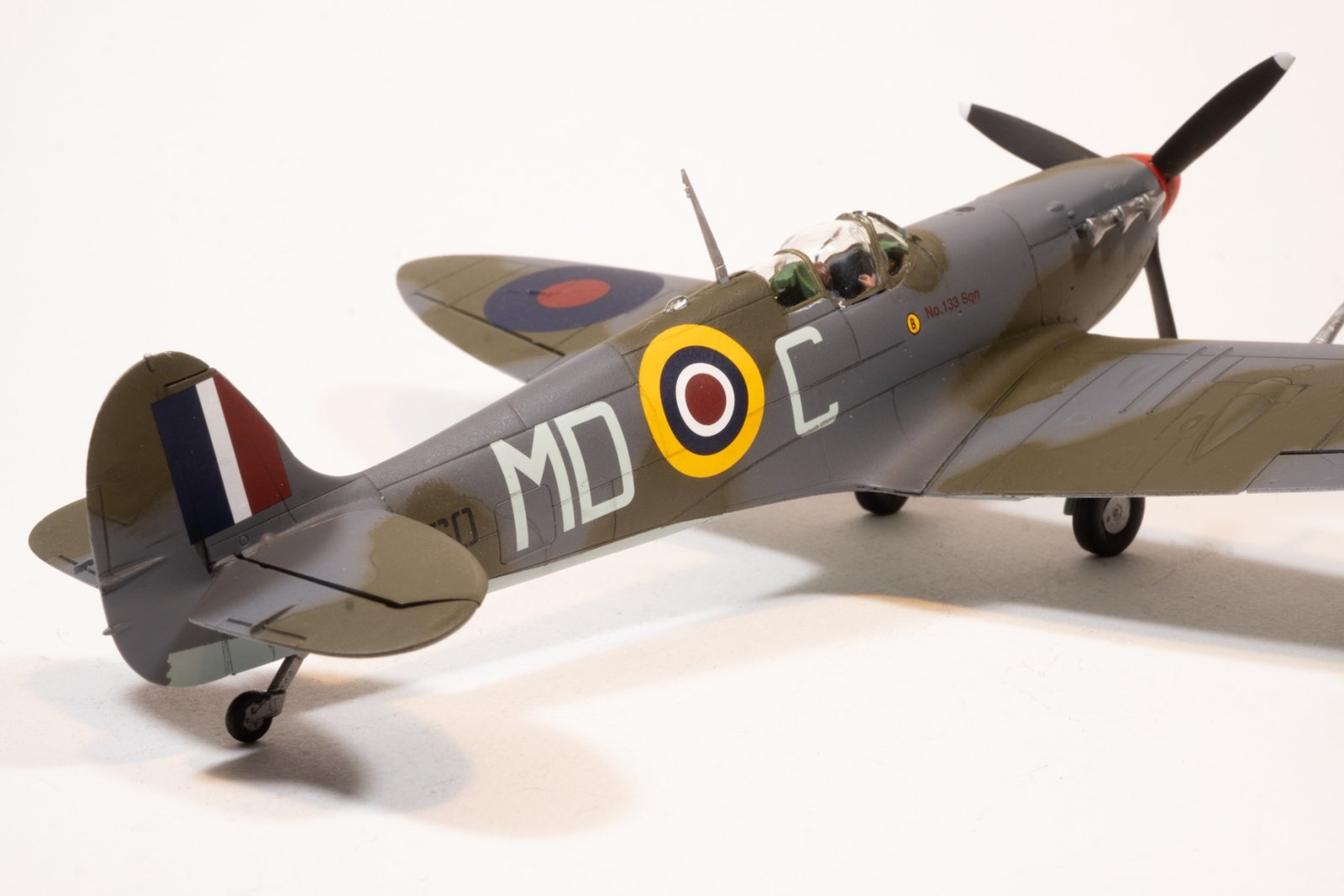
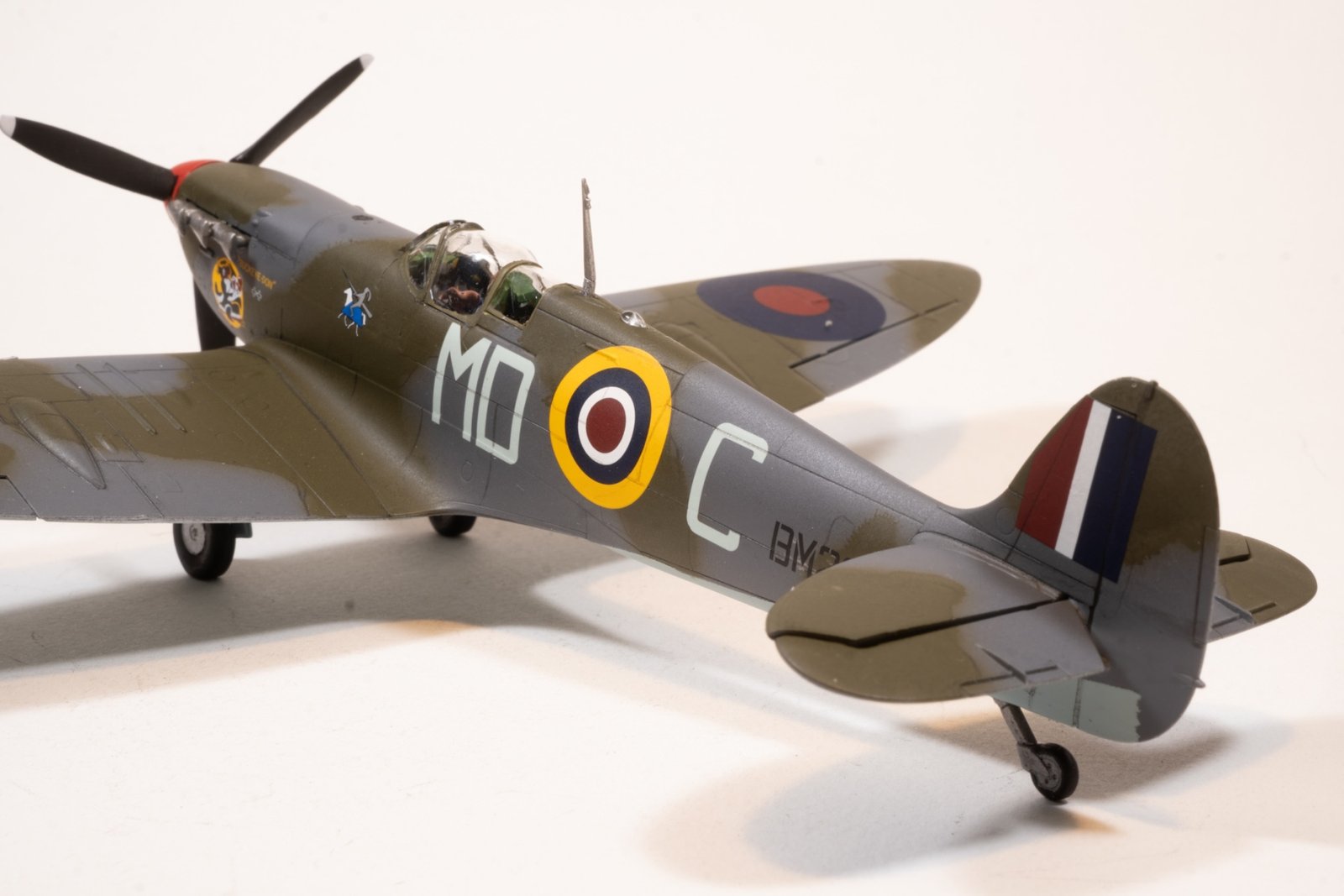
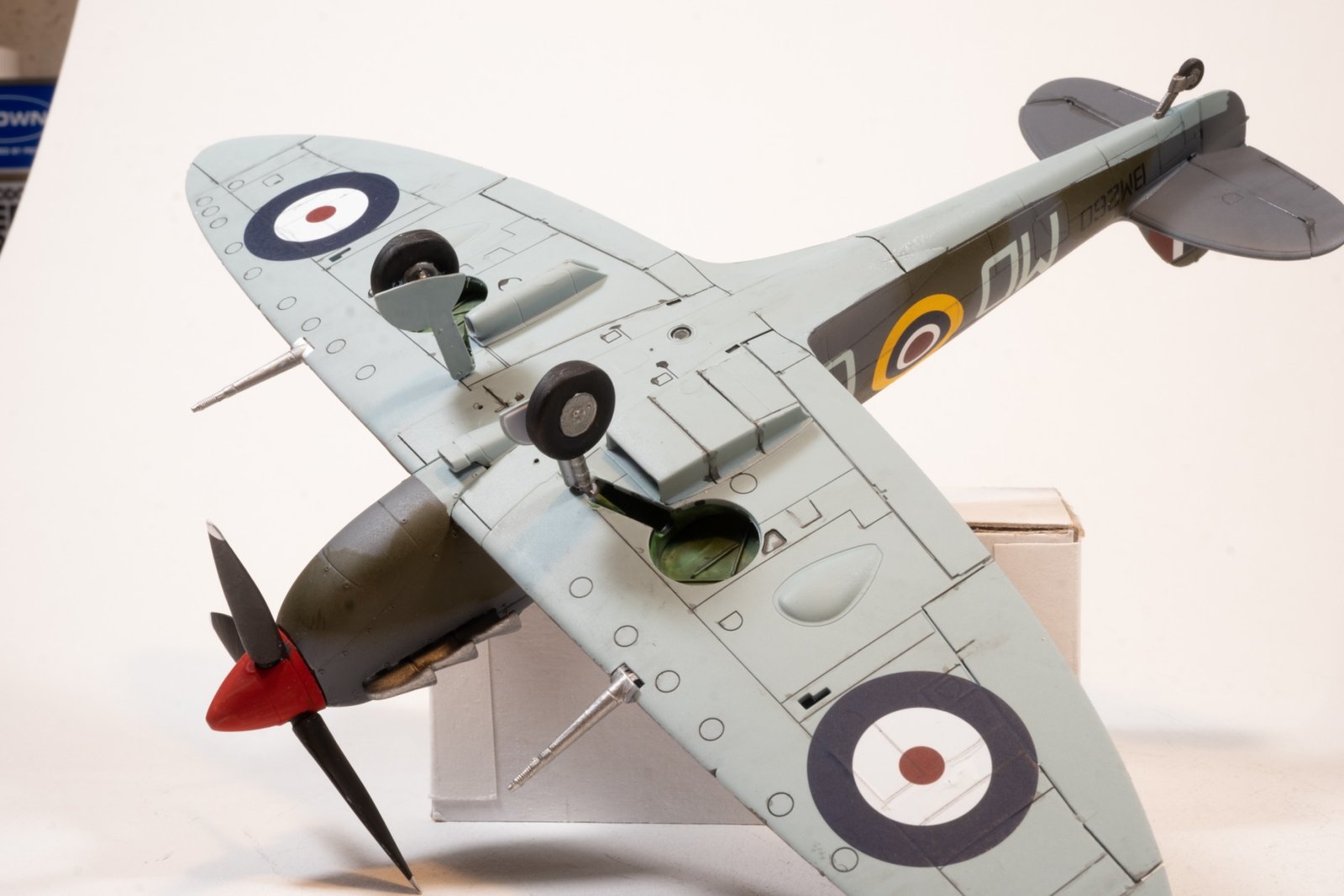
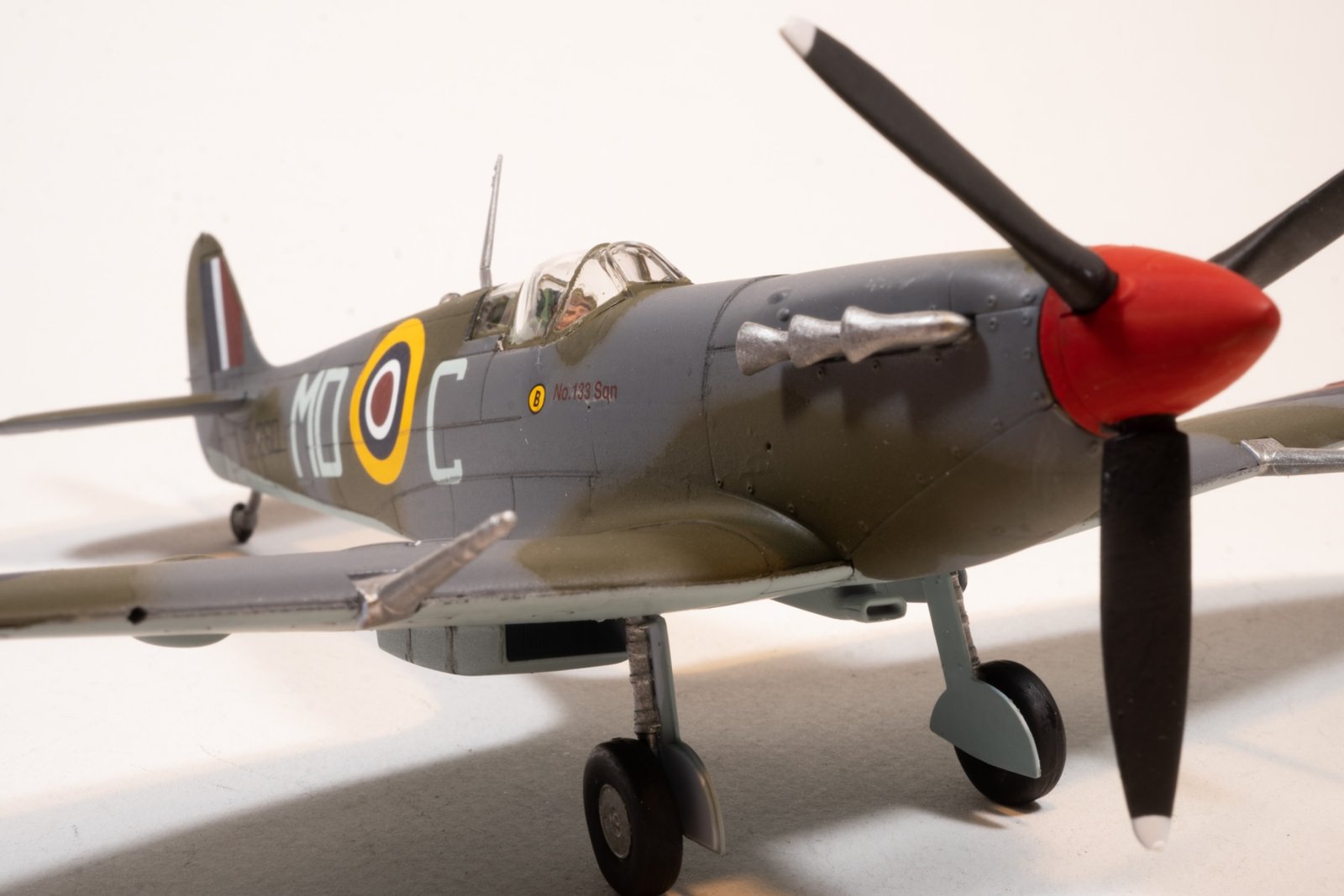
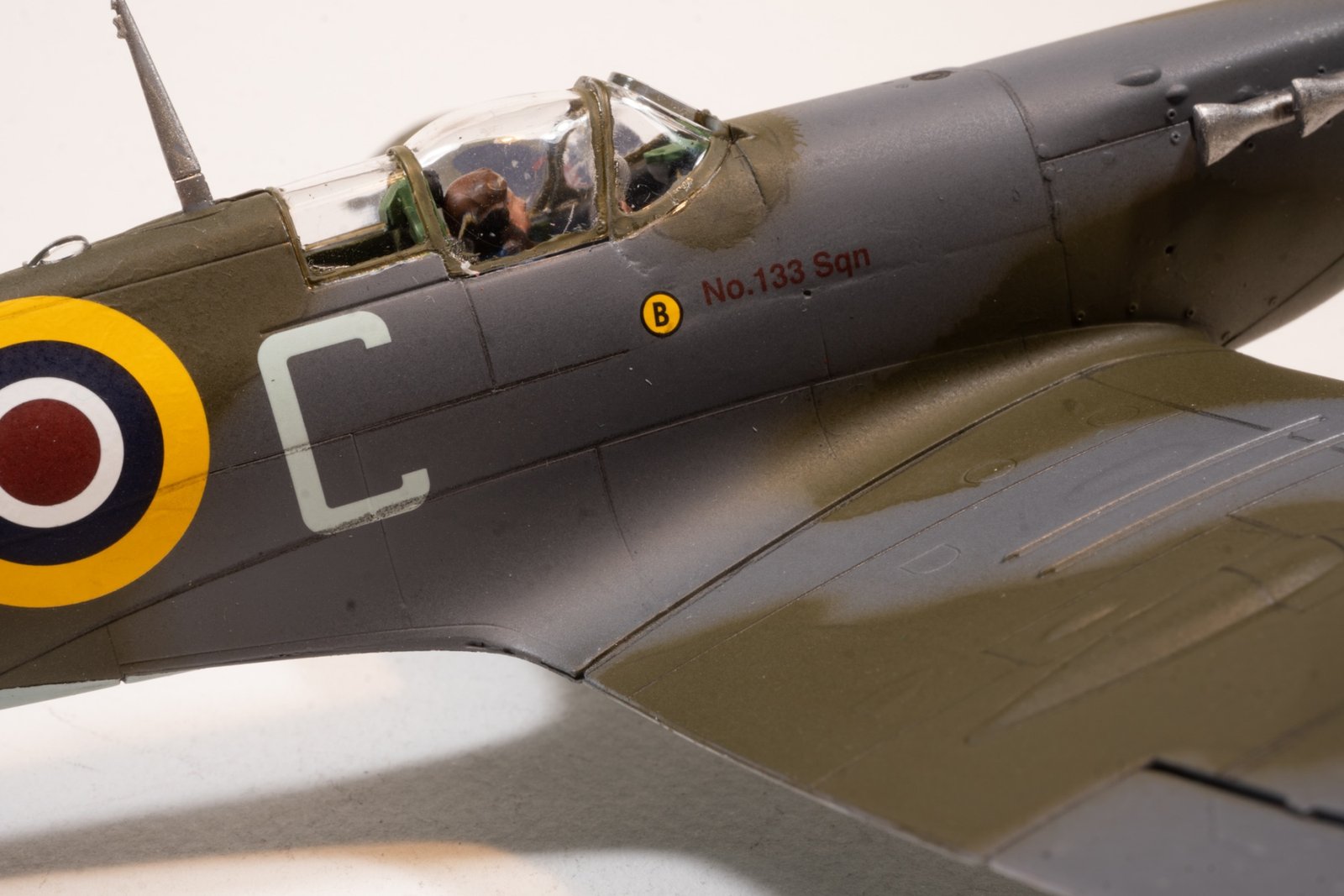
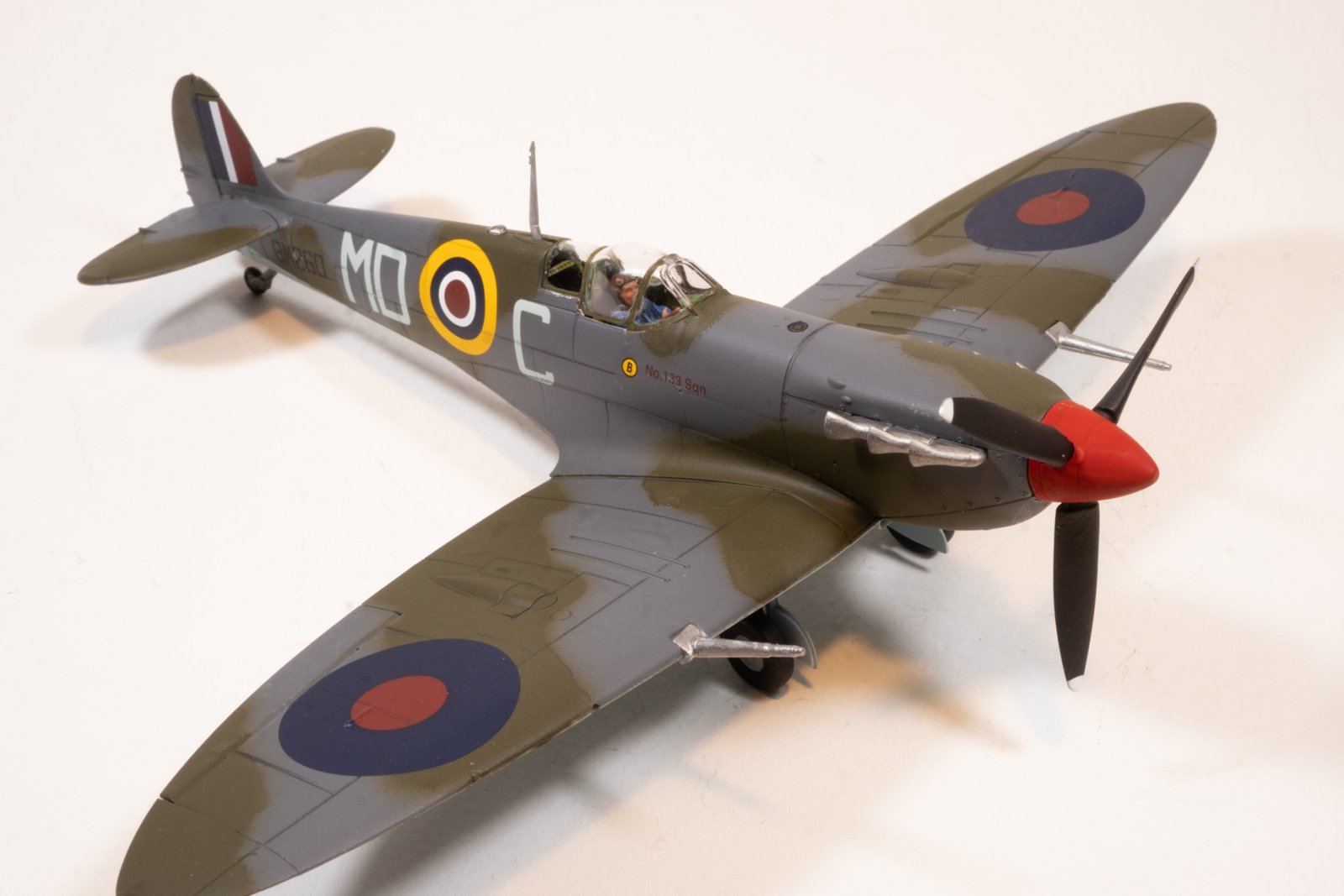
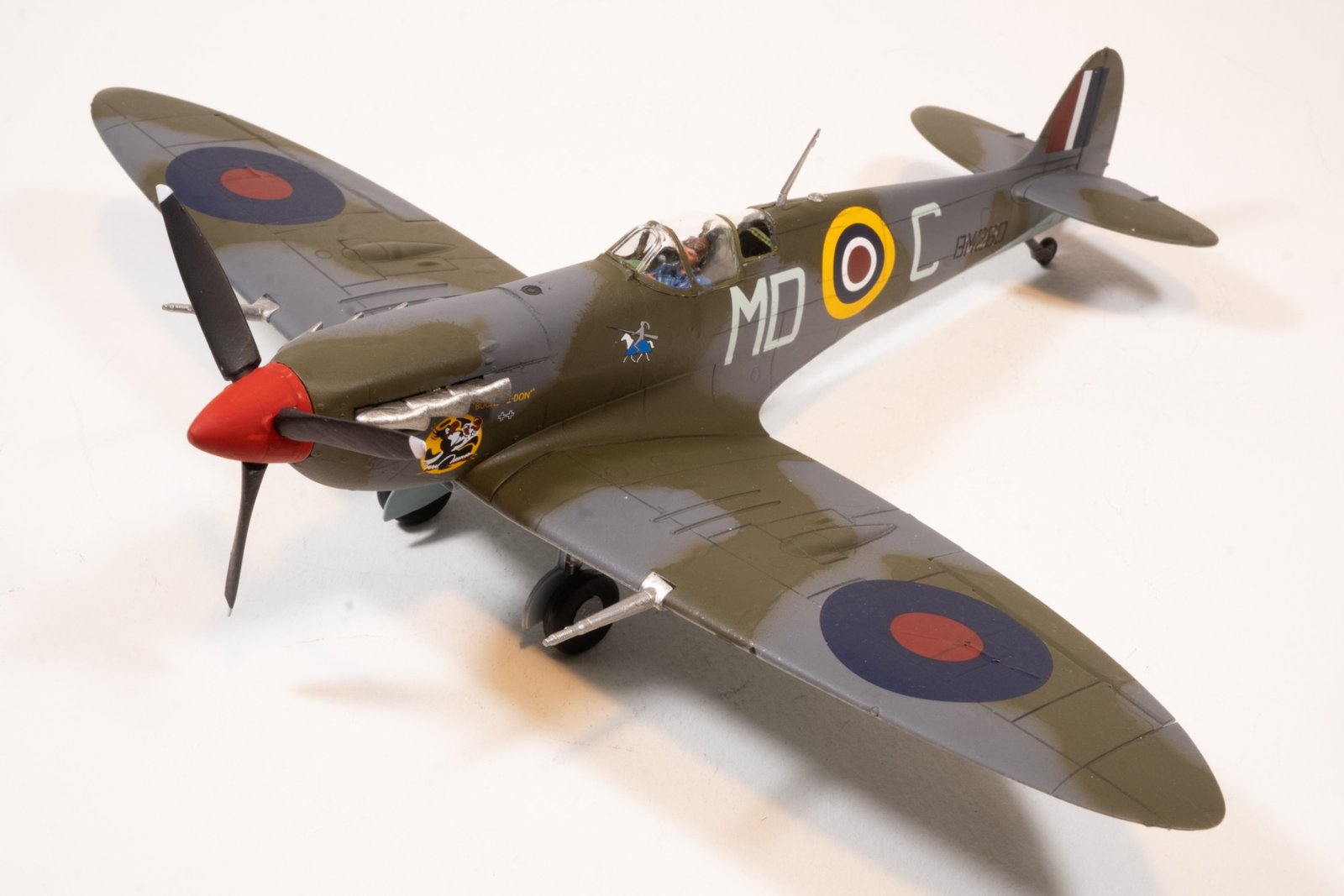
During the Battle of Britain (July–October 1940), the public perceived the Spitfire to be the main RAF fighter; however, the more numerous Hurricane shouldered more of the burden of resisting the Luftwaffe. Nevertheless, the Spitfire was a better fighter aircraft than the Hurricane. Spitfire units had a lower attrition rate and a higher victory-to-loss ratio than those flying Hurricanes, probably because of the Spitfire’s higher performance metrics. During the battle, Spitfires generally engaged Luftwaffe fighters—mainly Messerschmitt Bf 109E-series aircraft, which were a close match for them.
After the Battle of Britain, the Spitfire superseded the Hurricane as the principal aircraft of RAF Fighter Command, and it was used in the European, Mediterranean, Pacific, and Southeast Asian theatres. Much loved by its pilots, the Spitfire operated in several roles, including interceptor, photo-reconnaissance, fighter-bomber, and trainer, and it continued to do so until the 1950s. The original airframe was designed to be powered by a Rolls-Royce Merlin engine producing 1,030 hp (768 kW). It was strong enough and adaptable enough to use increasingly powerful Merlins, and in later marks, Rolls-Royce Griffon engines producing up to 2,340 hp (1,745 kW). As a result, the Spitfire’s performance and capabilities improved over the course of its service life.
General characteristics
Crew: 1
Length: 29 ft 11 in (9.12 m)
Wingspan: 36 ft 10 in (11.23 m)
Height: 11 ft 5 in (3.48 m)
Empty weight: 5,065 lb (2,297 kg)
Max takeoff weight: 6,700 lb (3,039 kg)
Powerplant: 1 × Rolls-Royce Merlin 45 V-12 liquid-cooled piston engine, 1,470 hp (1,100 kW) [nb 14]
Propellers: 3-bladed Rotol constant-speed propeller
Performance
Maximum speed: 370 mph (600 km/h, 320 kn)
Range: 479 mi (771 km, 416 nmi)
Combat range: 248 mi (399 km, 216 nmi)
Ferry range: 1,100 mi (1,800 km, 960 nmi) with fuel tank
Service ceiling: 36,500 ft (11,100 m)
Rate of climb: 2,600 ft/min (13 m/s)
Armament
Guns:
A wing 8 × .303 in Browning Mk II* machine guns (350 rounds per gun)
B wing 2 × 20 mm Hispano Mk II (60 rounds per gun)
C wing 4 × 20 mm Hispano Mk II cannon (120 rounds per gun)
E wing 2 × 20 mm Hispano Mk II cannon (120 rounds per gun)
Rockets: 2 RP-3 rockets (1 under each wing)