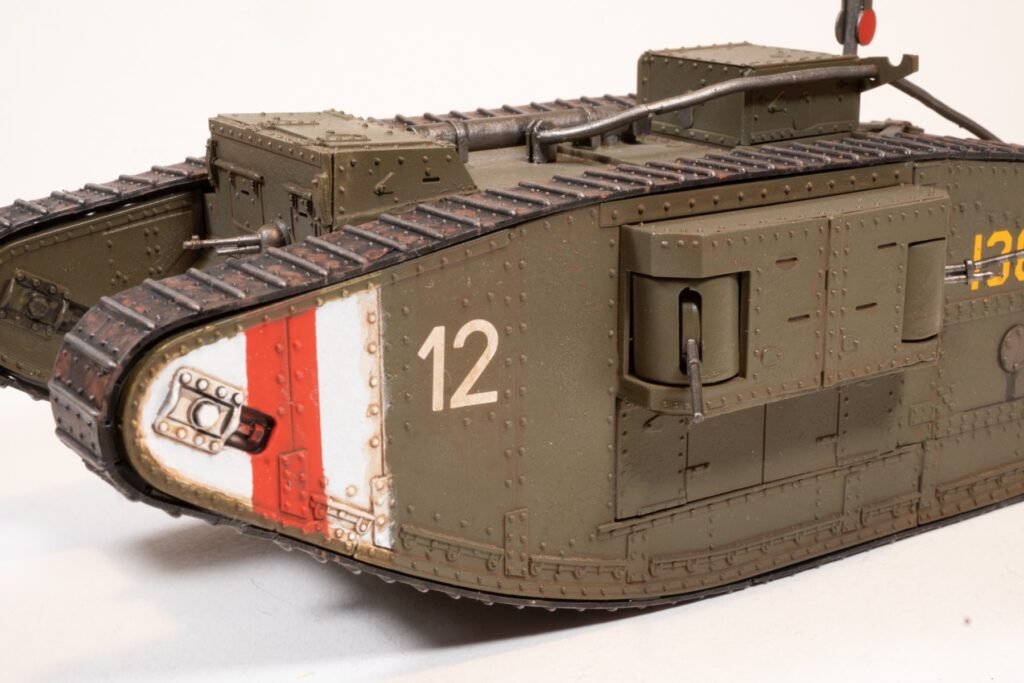
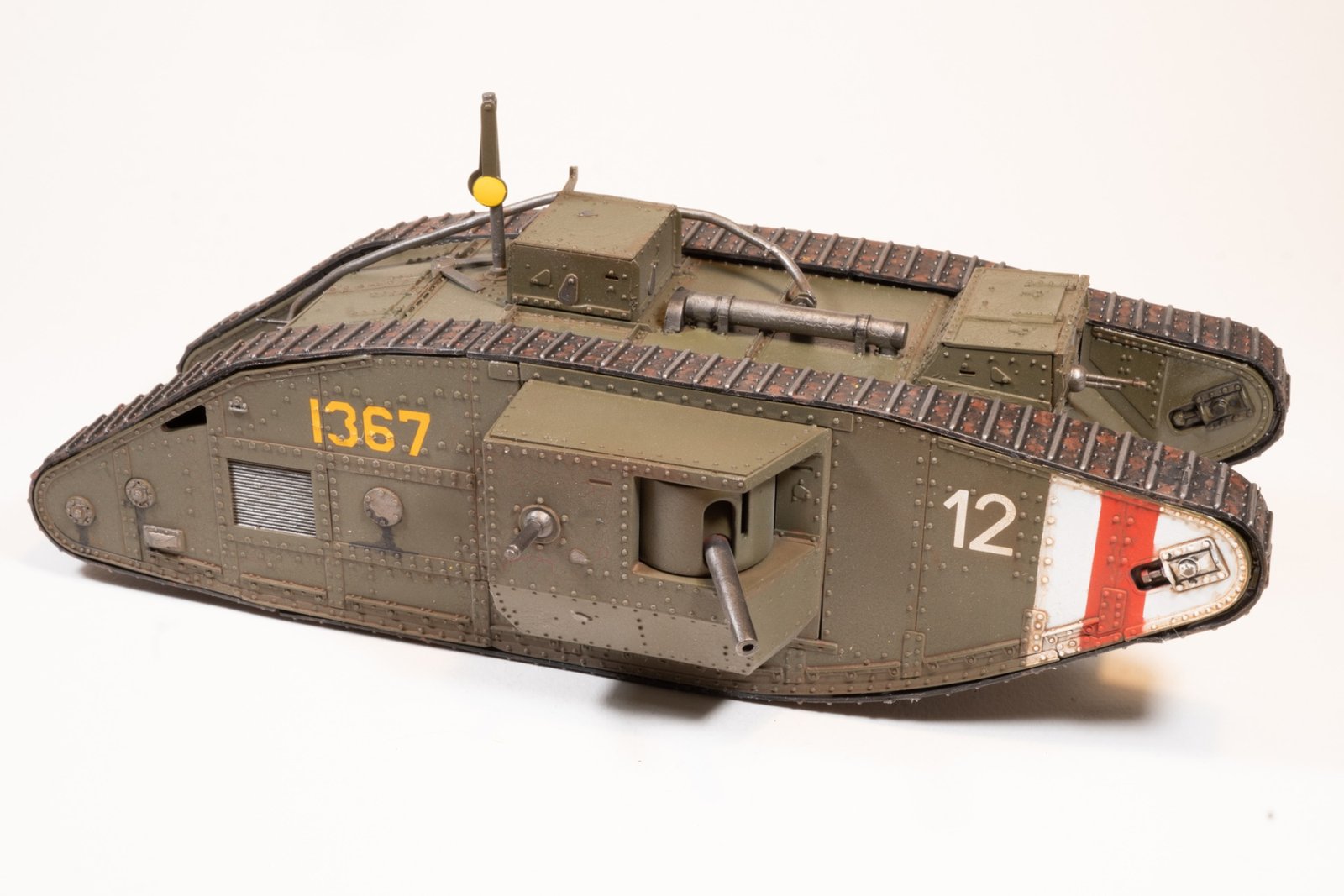
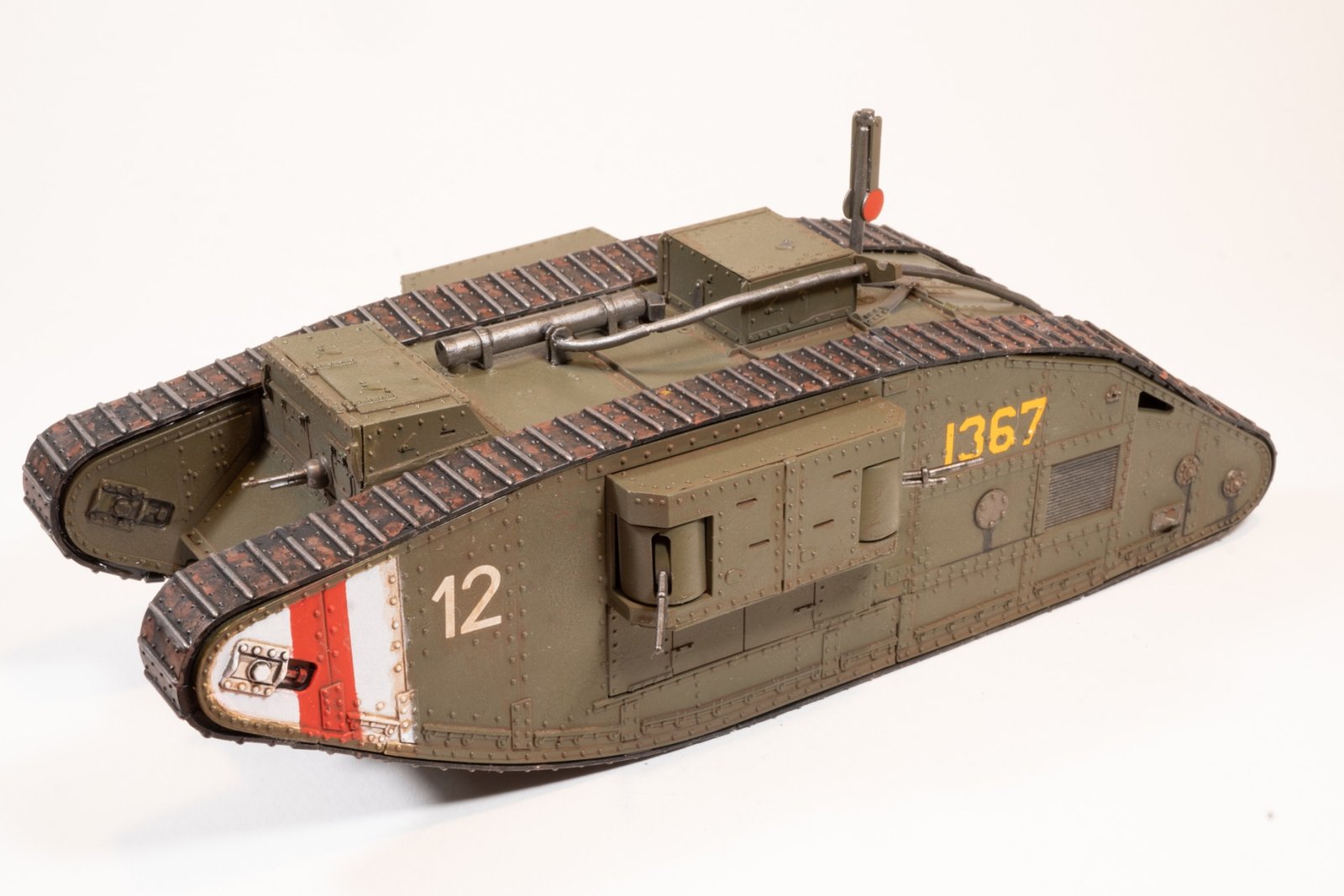
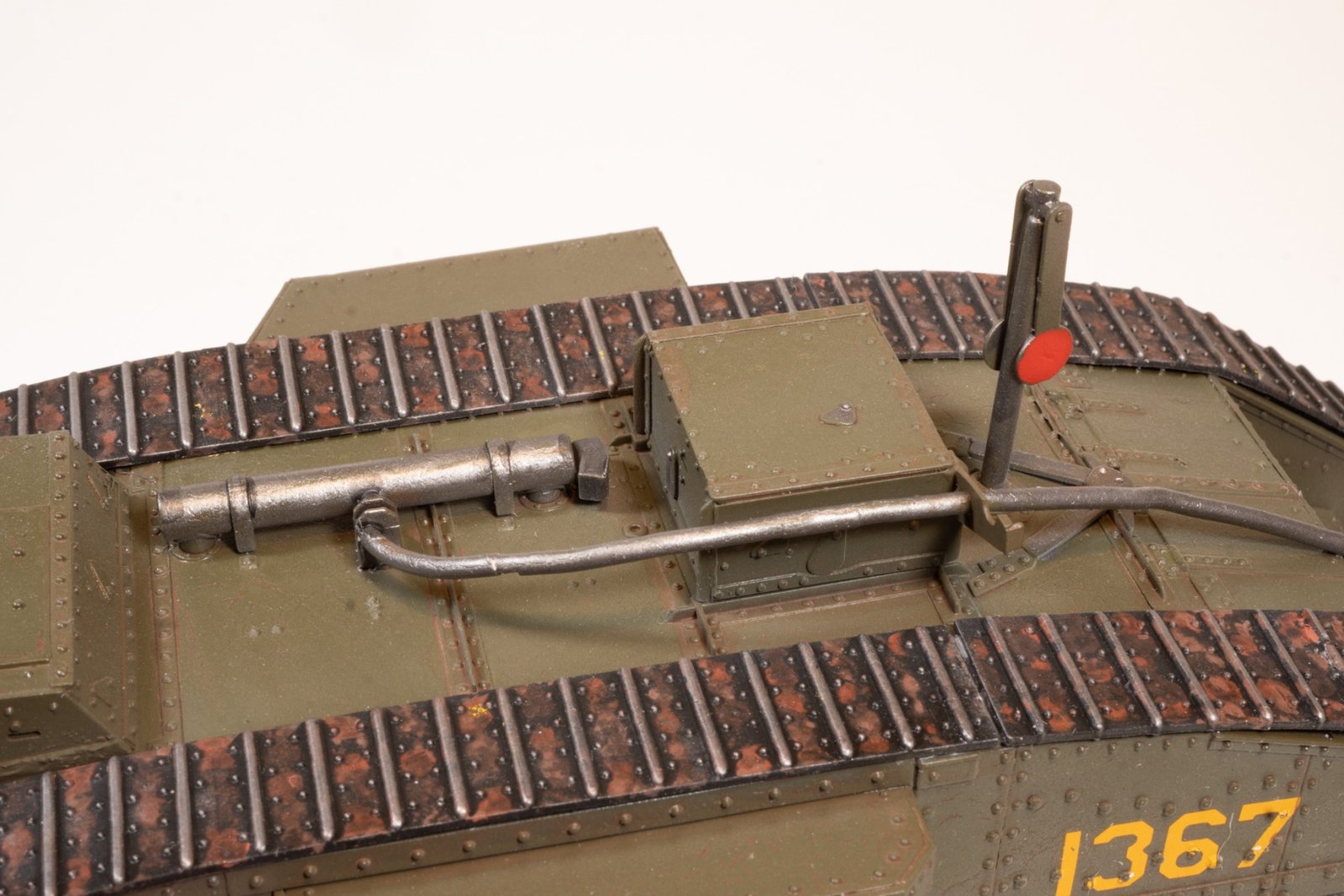
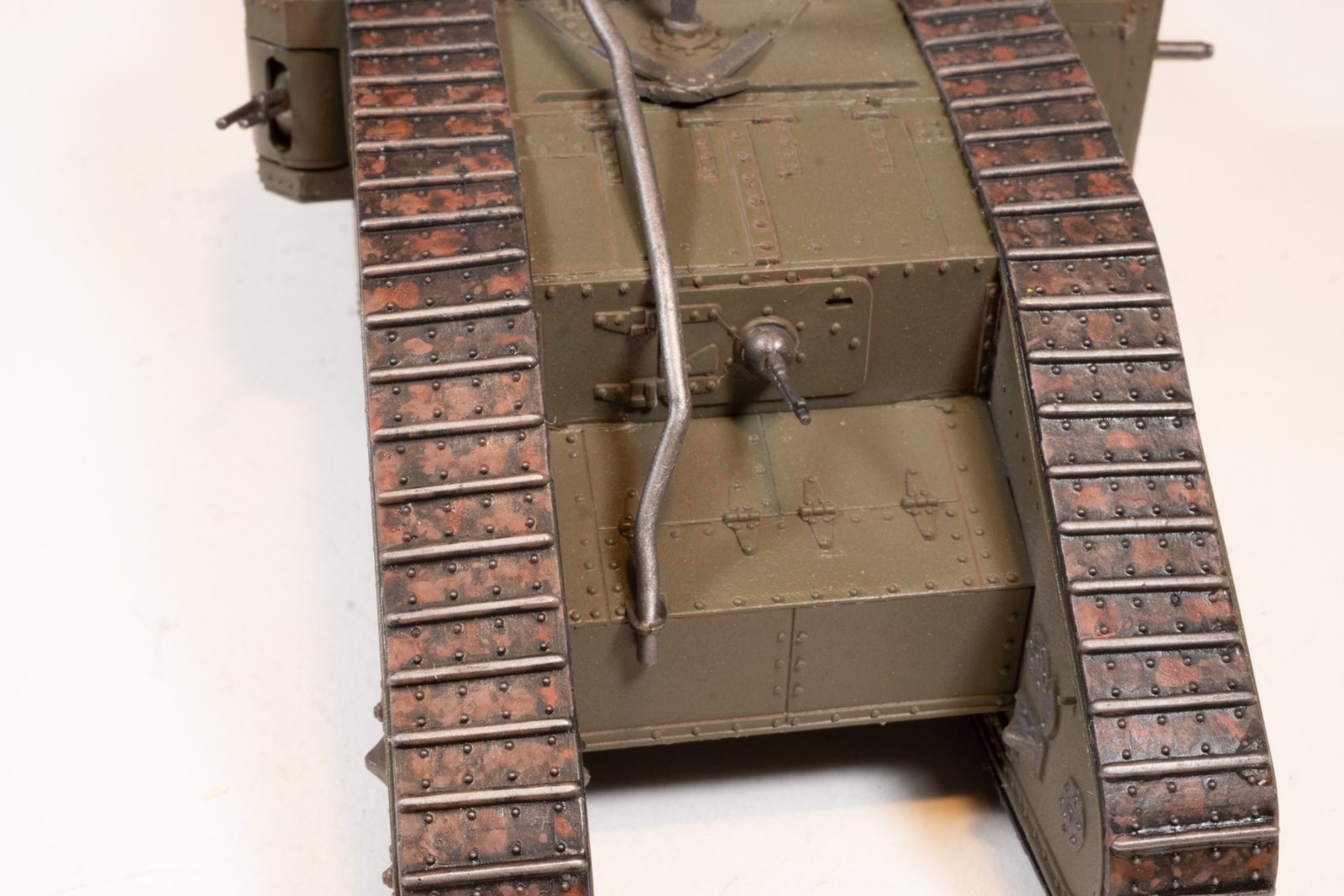
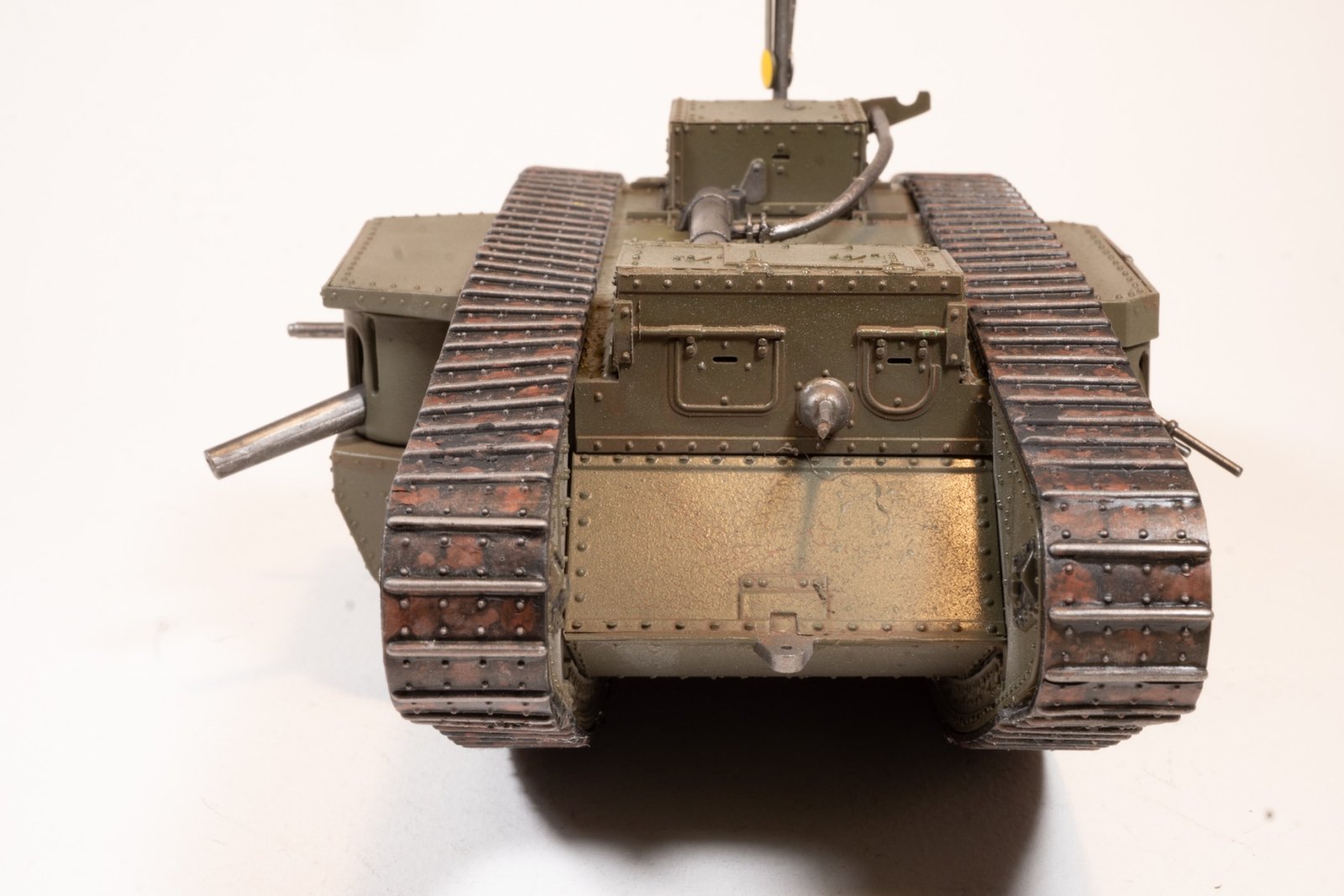
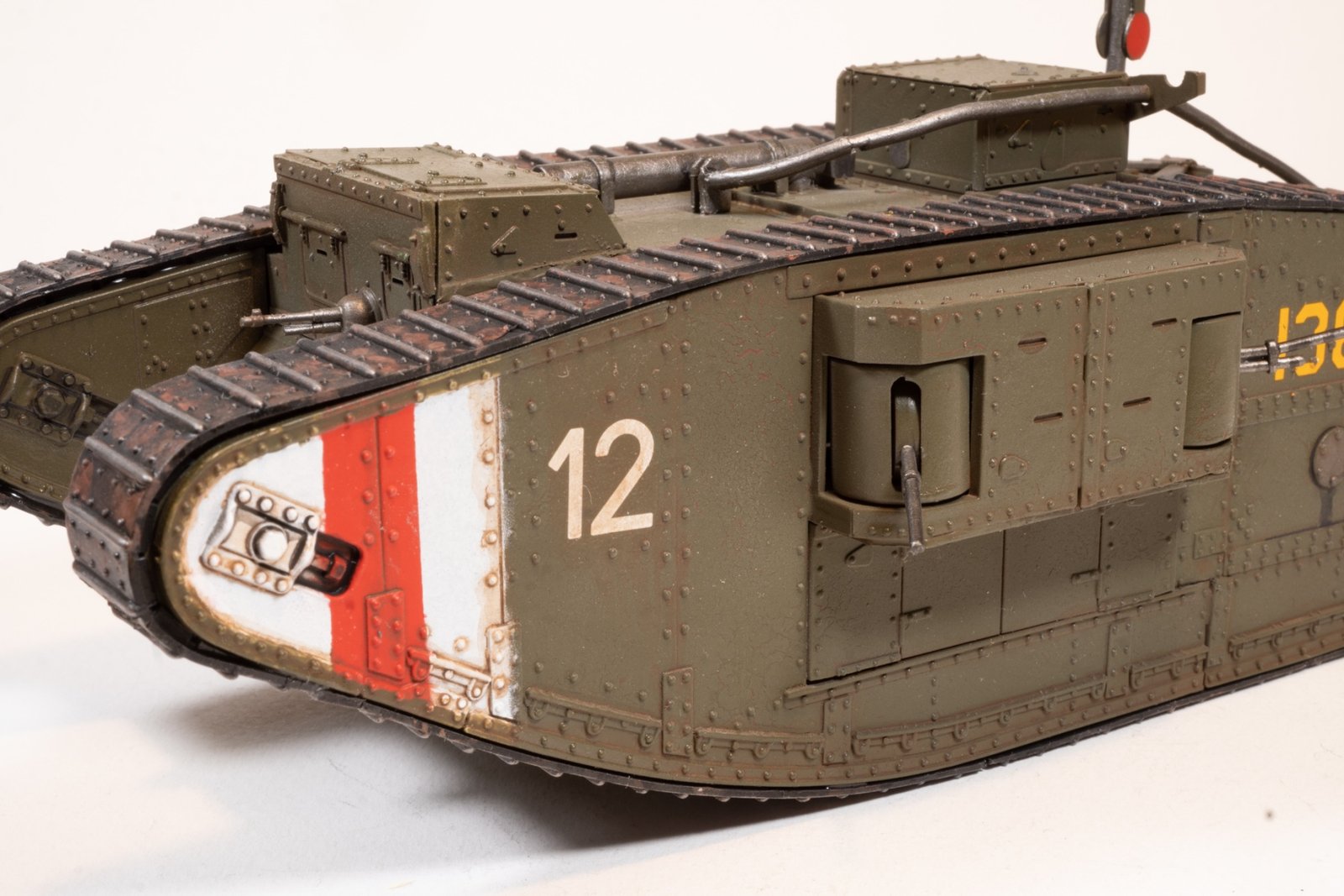
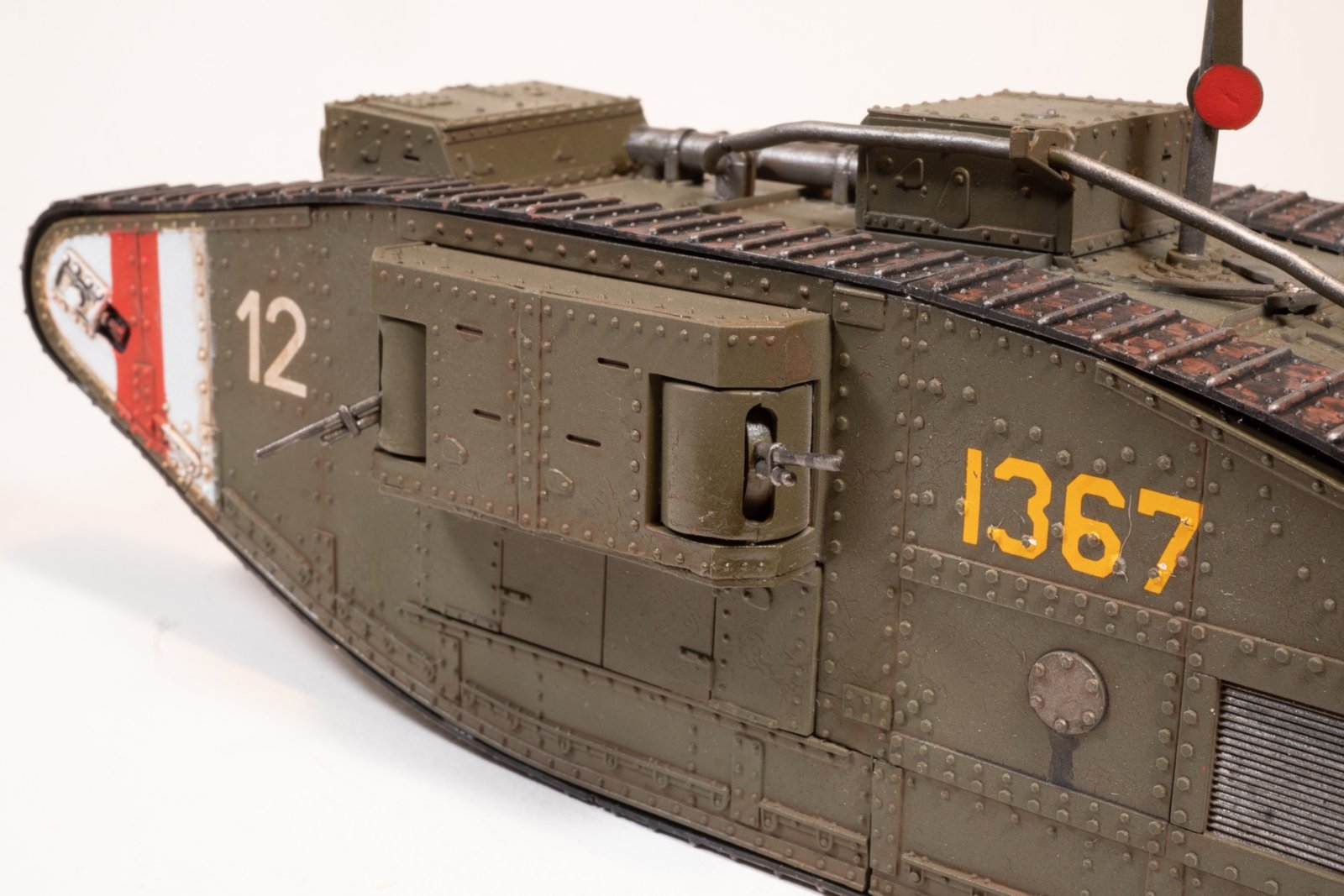
Off the Bench on April 9, 2023 – British Mark V Tank
The British Mark V tank was an upgraded version of the Mark IV tank.
The tank was improved in several aspects over the Mark IV, chiefly the new steering system, transmission and 150 bhp engine, but it fell short in other areas, particularly its insufficient ventilation leading to carbon monoxide poisoning for the crew. Various versions were fitted with a variety of armament including 6-pounder guns and machine guns.
It was first deployed in July 1918 on the Western Front at the Battle of Hamel; then at the Battle of Amiens, and on the Hindenburg Line during the closing months of World War I.
During the Allied intervention in the Russian Civil War on the White Russian side, four Mark Vs were delivered to Archangelsk, four to Tallinn, Estonia, and around 70 were delivered to Novorossiysk in southern Russia. The survivors were captured and used by the Red Army.
There were two main further variants, the lengthened Mark V* and a few Mark Vs with a more powerful engine and wider tracks. A planned Mark V* was never built. There are eleven surviving Mark V tanks. The Mark VIII tank was an enlarged Mark V with greater power: only those with the Liberty engine saw post-war service in the US. A further unarmed development was the Mark IX tank, one of the first armoured personnel carriers, which saw limited use in Britain after the war.
In general the Mark V was successful, especially given its limited service history, and somewhat primitive design dating back to 1915.
History
The Mark V was, at first, intended to be a completely new design of tank, of which a wooden mock-up had been completed; however, when the new engine and transmission originally planned for the Mark IV became available in December 1917, the first, more advanced Mark V design was abandoned to avoid disrupting production. The designation “Mark V” was switched to an improved version of the Mark IV, equipped with the new systems. The original design of the Mark IV was to have been a large improvement on the Mark III, but had been scaled back due to technical delays. The Mark V thus turned out very similar to the original design of the Mark IV – i.e. a greatly modified Mark III.
Production of the Mark V started at Metropolitan Carriage & Wagon at the end of 1917; the first tanks arrived in France in May 1918. Four hundred were built, 200 Males and Females; the “Males” armed with 6-pounder (57 mm) guns and machine guns, the “Females” with machine guns only. Several were converted to Hermaphrodites (sometimes known as “Mark V Composite”) by fitting one male and one female sponson. This measure was intended to ensure that female tanks would not be outgunned when faced with captured British male tanks in German use, or the Germans’ own A7V.
The Mark V was to be followed by the more advanced Tank Mark VI, but this was abandoned in December 1917, to ensure sufficient production by British, American, and French factories of the Tank Mark VIII for a planned 1919 offensive. However, the war ended in November 1918, and few Mark VIIIs would be built (most of those completed in Britain were immediately scrapped). After the war, most of the British Army’s tank units were disbanded, leaving five tank battalions equipped with either the Mark V or the Medium Mark C. The British Army’s interest shifted more to lighter, faster tanks, and the Mark V was partially replaced by the Vickers Medium Mark I during the mid-1920s. The Vickers A1E1 Independent reached prototype stage in 1926, but it was abandoned for lack of funds. The remaining Mark Vs appear to have been replaced by medium tanks by the end of the decade.[9]
Modifications
The huge differential gear at the rear of a Mark IV tank
Diagram of the Wilson epicyclic transmission
In early 1917, some British tanks were tested with various experimental powerplant and transmissions ordered by Albert Stern. These included petrol-electric schemes, hydraulic systems, a multiple clutch system, and an epicyclic gearbox designed by Major W. G. Wilson. Though the petrol-electrics had advantages, Wilson’s design was capable of production and was selected for use in future tanks.
The use of Wilson’s epicyclic steering gear in the Mark V meant that the driver could control all aspects of the transmission: three extra crew members had been required in previous versions of the tank, two gearsmen to change low and high gears on either side of the tank, and the commander who operated the brakes and skid steering.[8] There was much more space at the rear after the removal of the massive differential gear (originally designed for the Daimler-Foster agricultural tractor) fitted to all the earlier tanks. On the roof towards the rear of the tank, behind the engine, was a second raised cabin, with hinged sides that allowed the crew to attach the unditching beam without exiting the vehicle. An additional machine-gun mount was fitted at the rear of the hull.
The Mark V had a new, more powerful six cylinder engine (also ordered by Stern) designed by Harry Ricardo, displacing 19 litres and developing 150 bhp (110 kW).[11] According to J. F. C. Fuller, the Ricardo engine was of a “somewhat unorthodox design”, but it was highly efficient and, with proper care and attention, gave very little trouble. This ‘unorthodox’ description related to Ricardo’s use of crosshead pistons which separated the lubricating oil from the heat of combustion, with the crosshead and gudgeon pin running in its own separate guide. The engine used conventional poppet valves, unlike the Daimler sleeve valve engines used in the previous tanks; because very few men or officers had any experience of adjusting valve mechanisms, extra instruction was needed for tank personnel. The Ricardo engine could have been considerably more powerful, but its design was restricted by two considerations. Firstly, it needed to fit in the exact same footprint as the original Daimler 105 hp engine in the older tanks Marks I–IV, resulting in a taller engine; secondly, Wilson had advised Ricardo that the proposed 200 bhp (150 kW) would place too much strain on the transmission, and it was limited to 150 bhp.
Operating issues
The Ricardo engine was still in the centre of the crew compartment which led to miserable crew conditions from its heat output. The noise also interfered with crew communication.
The ventilation was the area in which the Mark V suffered its largest weakness. The previous Marks I–IV drew cooling air from inside the tank, through the radiator, and then expelled the air through a vent, which provided a constant supply of moving air for the crew. In contrast, the Mark V, drew air from outside the tank, across the radiator, and then expelled the air though a vent, which left the air inside the crew compartment stagnant. The only ventilation for the crew compartment, other than the driver and gunner view-ports, located on all sides of the tank, was a roof-mounted Keith fan. This fan was inadequate for maintaining a stable supply of clean air for the crew of a Mark V; exhaust and gun-smoke were trapped with the crew, which caused many crewmen to grow ill and, in the most extreme cases, was enough to render them unconscious; either way the crew was practically unfit for combat within a few hours.
An extra sliding shutter was later fitted which drew foul air out of the fighting compartment, which is thought to have made some improvement.