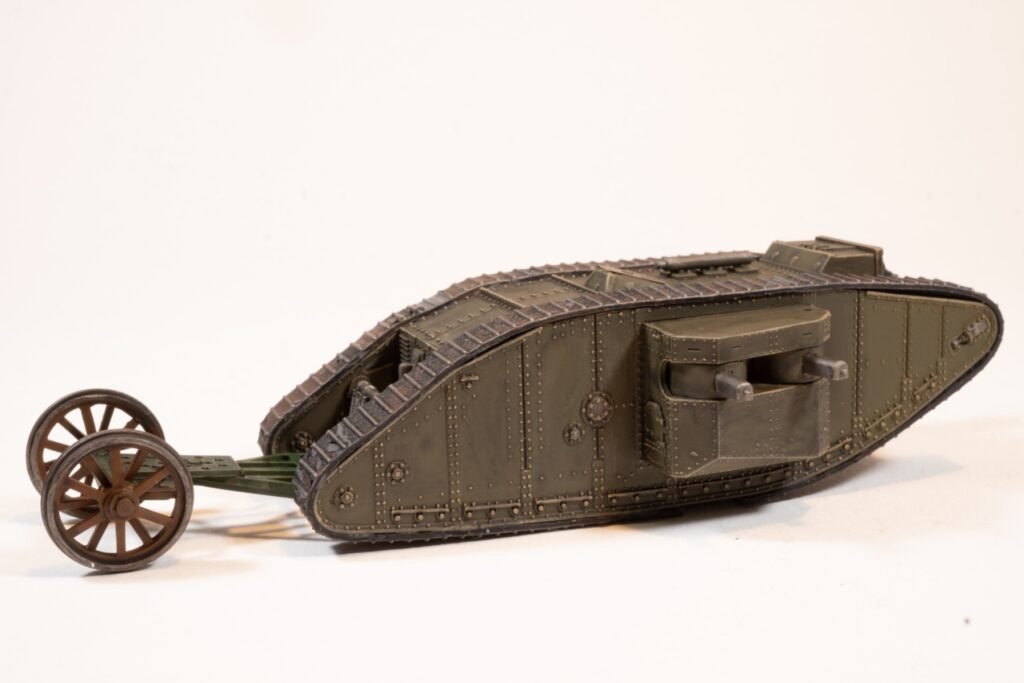
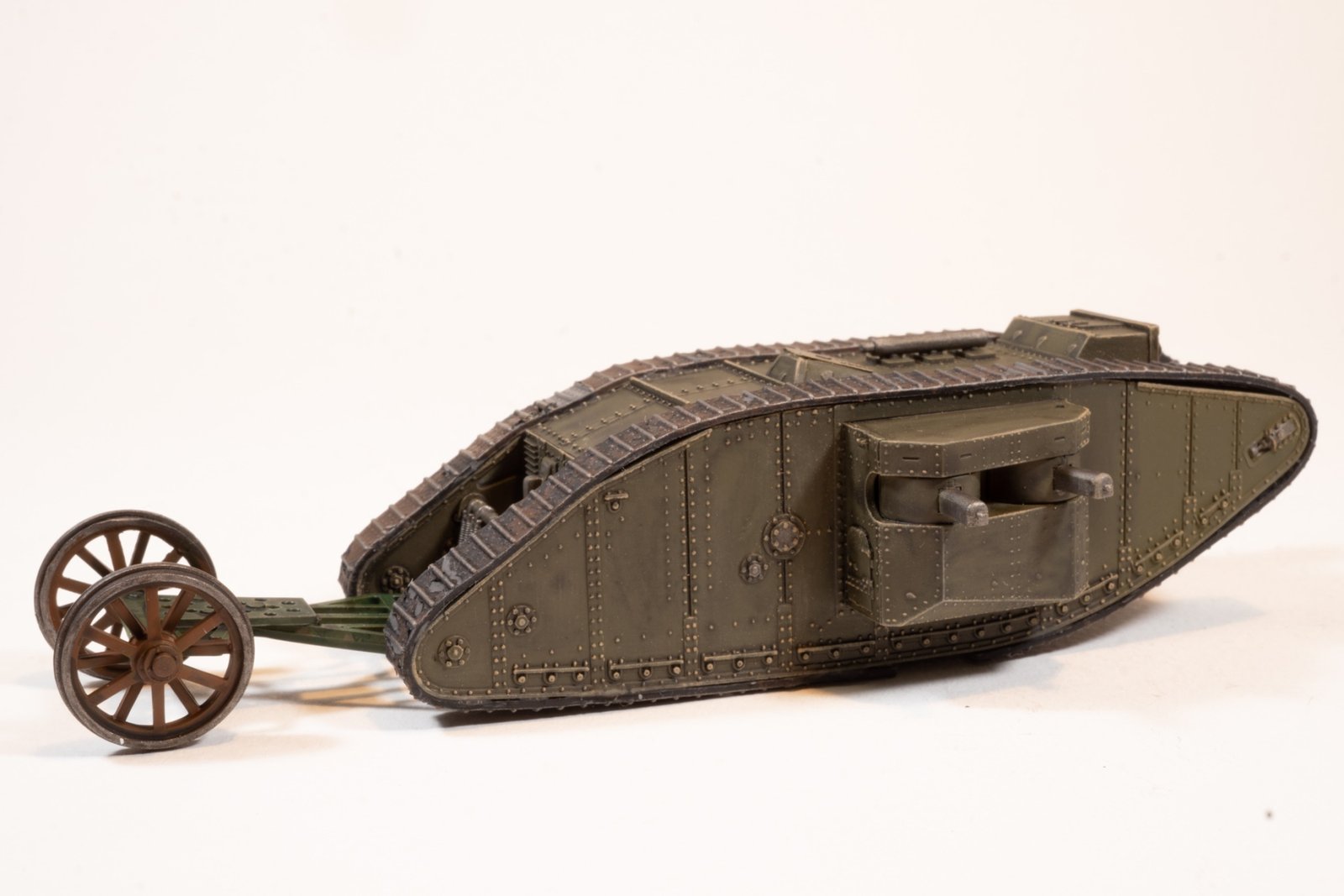
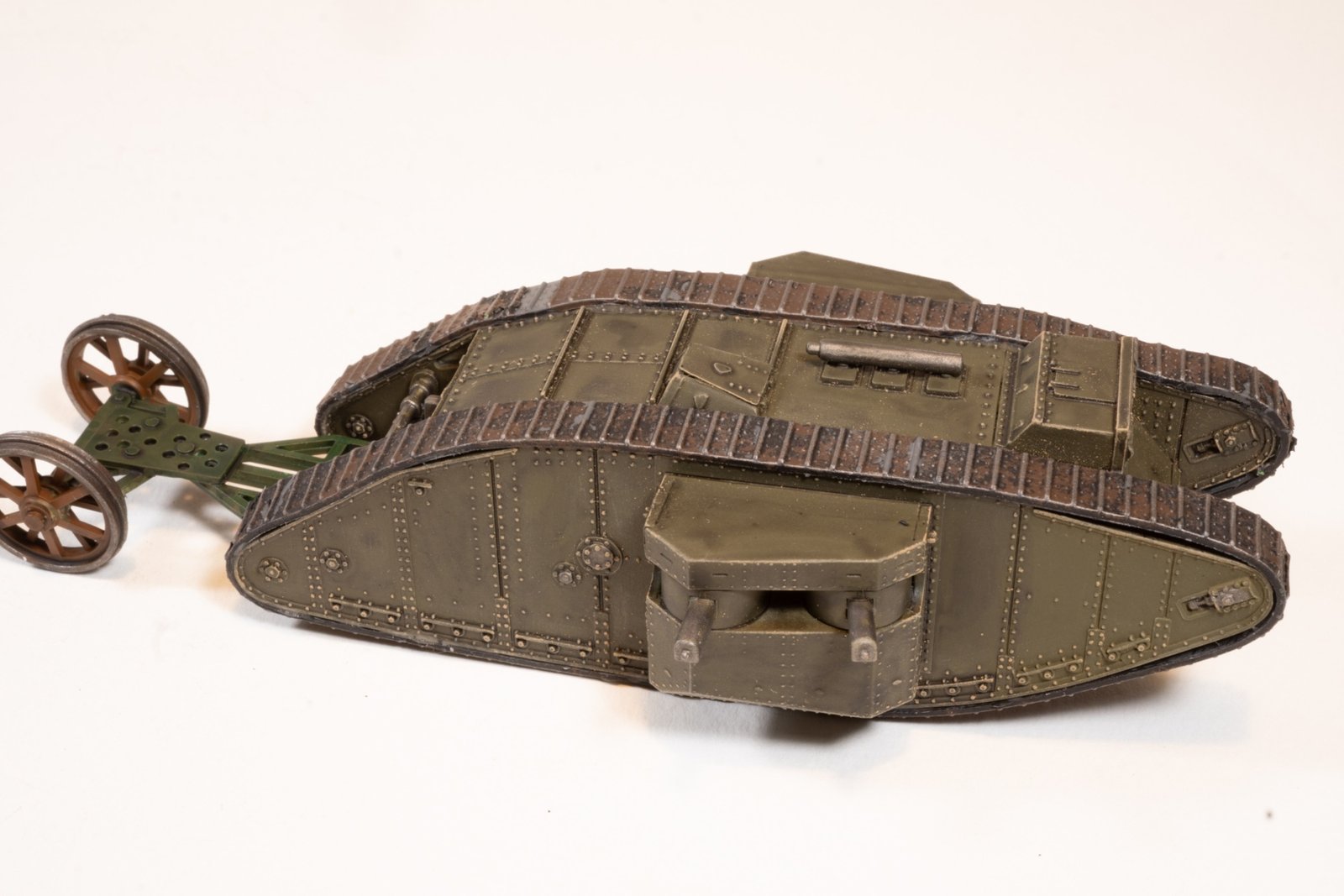
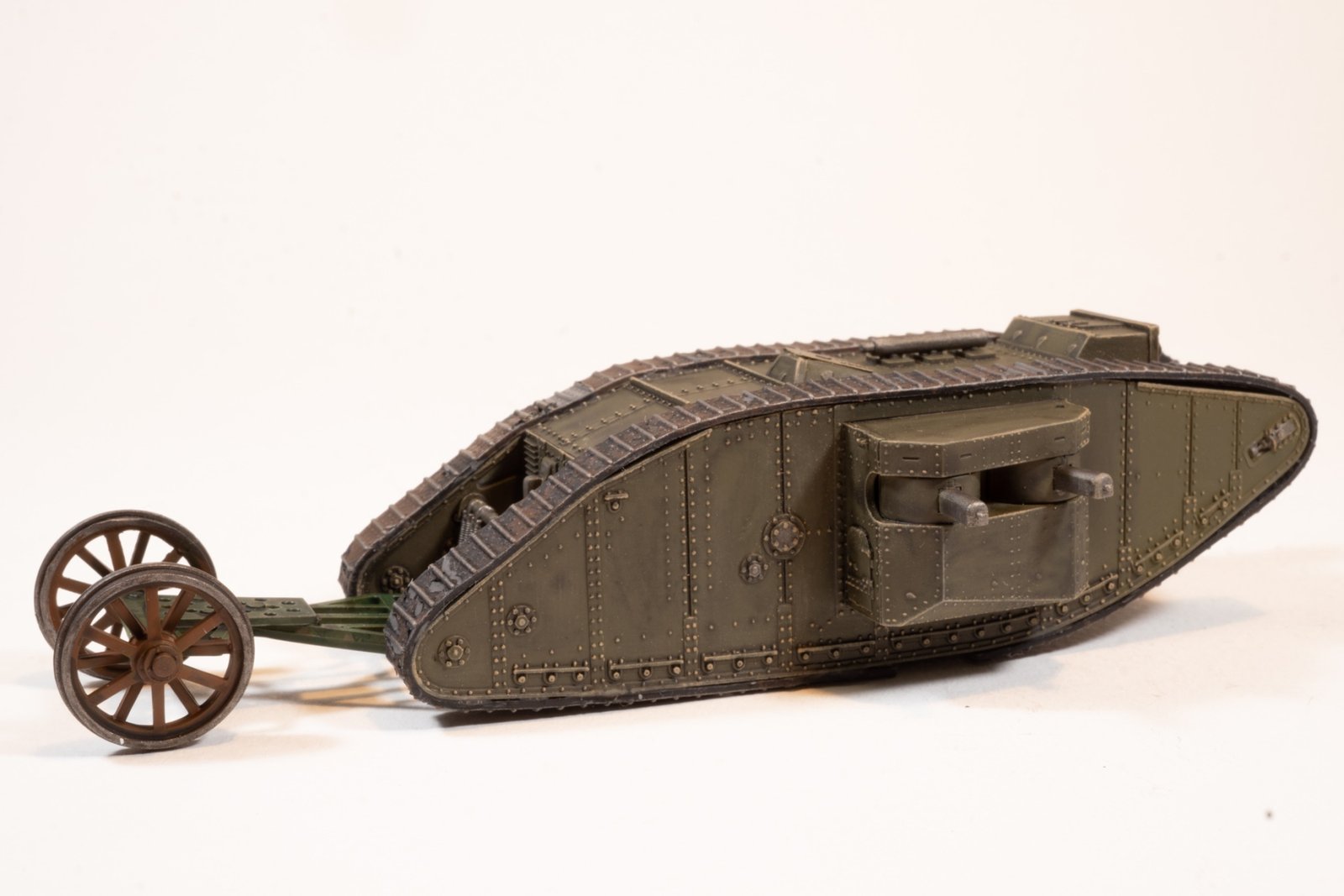
British Mark I – the first Tanks
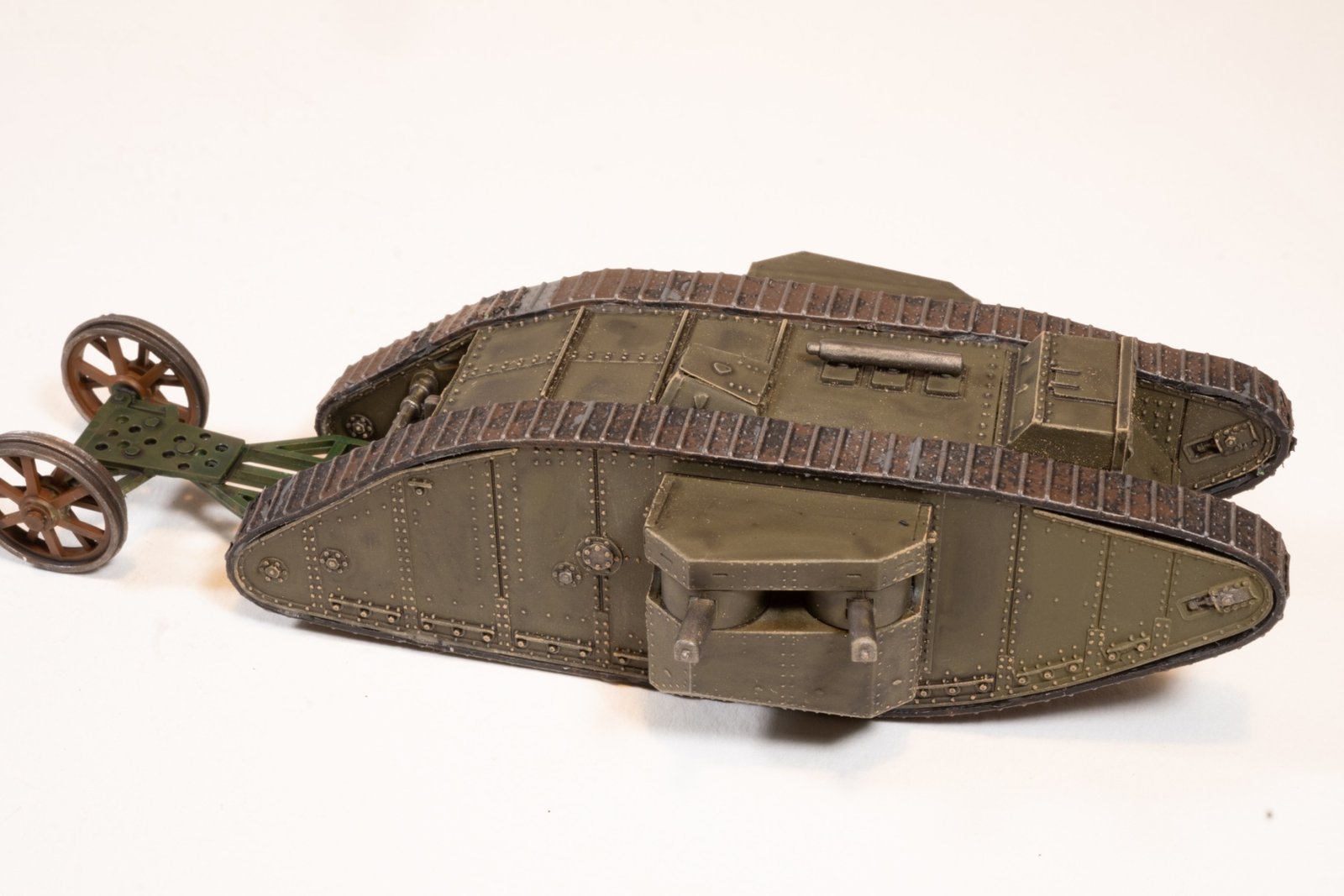
British heavy tanks were a series of related armored fighting vehicles developed by the UK during the First World War. The Mark I was the world’s first tank, a tracked, armed, and armored vehicle, to enter combat. The name “tank” was initially a code name to maintain secrecy and disguise its true purpose by making it appear to be a water transport vehicle for bringing water to the troops at the front line. The tank was developed in 1915 to break the stalemate of trench warfare. It could survive the machine gun and small-arms fire in “no man’s land”, travel over difficult terrain, crush barbed wire, and cross trenches to assault fortified enemy positions with powerful armament. Tanks also carried supplies and troops.
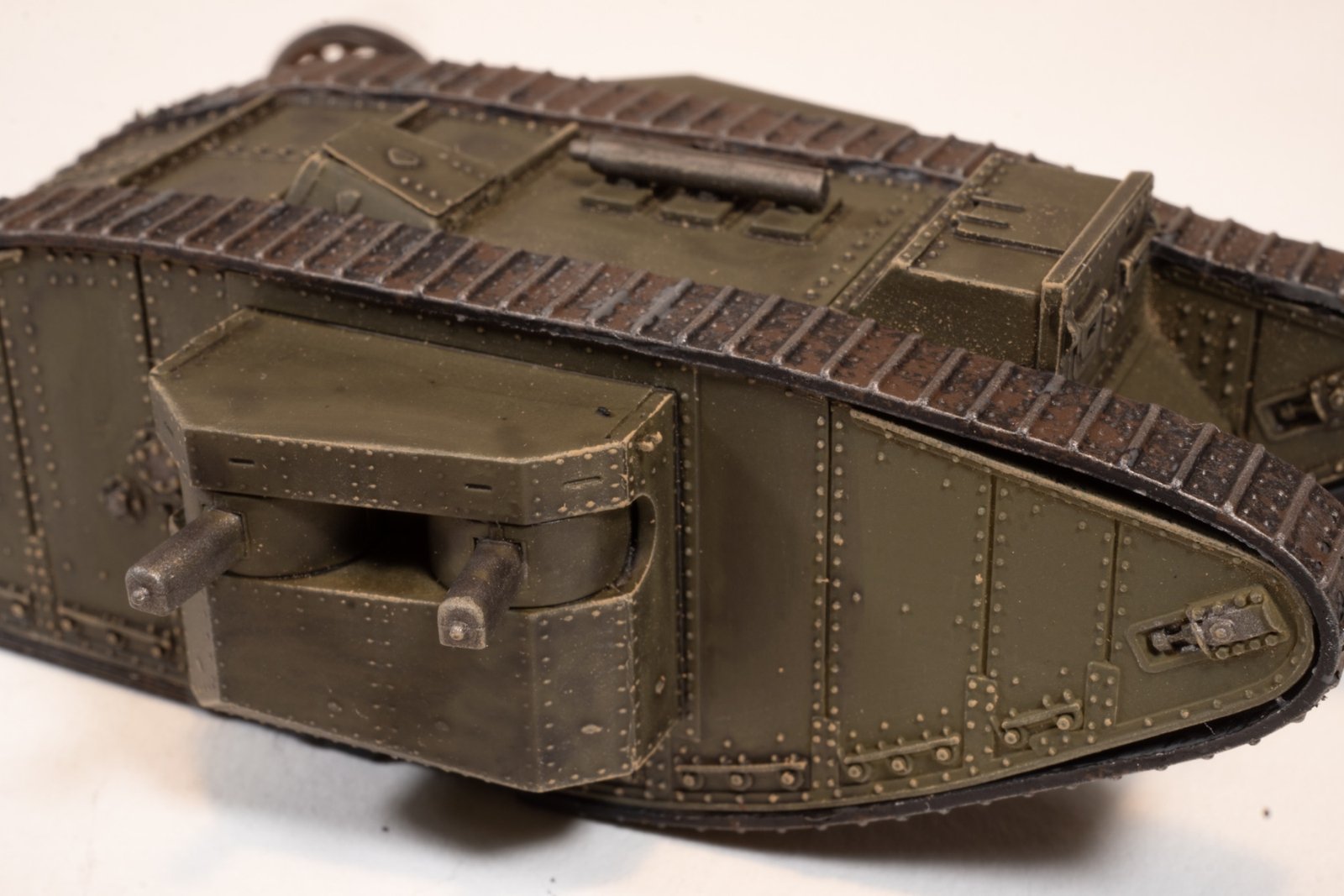
The Mark I was a rhomboid vehicle with a low centre of gravity and long track length, able to negotiate broken ground and cross trenches. The main armament was carried in sponsons on the hull sides.
The hull was undivided internally; the crew shared the same space as the engine. The environment inside was extremely unpleasant; since ventilation was inadequate, the atmosphere was contaminated with poisonous carbon monoxide, fuel and oil vapors from the engine, and cordite fumes from the weapons. Temperatures inside could reach 50 °C (122 °F). Men sometimes lost consciousness inside the tank but more often collapsed when getting out into fresh air. The symptoms were suggestive of carbon monoxide poisoning but the high temperatures inside together with humidity were also identified as a possible cause[9]
To counter the danger of bullet splash or fragments knocked off the inside of the hull, crews were issued with leather-and-chainmail masks. A leather helmet[10] was also issued, to protect the head against projections inside the tank. Gas masks were standard issue as well, as they were to all soldiers at this point in the war due to use of chemical weapons by both sides. The side armor of 8 mm initially made them largely immune to small arms fire, but could be penetrated by the recently developed armor-piercing K bullets (introduced mid-1917). There was also the danger of being overrun by infantry and attacked with grenades. The next generation had thicker armor, making them nearly immune to the K bullets. In response, the Germans developed the 13.2 mm Mauser 1918 T-Gewehr anti-tank rifle (introduced in mid-1918), and also a Geballte Ladung (“bunched charge”) – several Stielhandgranate stick grenades bundled together for a much bigger explosion.[citation needed]
A near hit by an artillery or mortar shell could cause the fuel tanks (which were placed high in the front horns of the track frames either side of the drivers’ area, to allow gravity feed[citation needed]) to burst open; a direct hit by any sort of artillery shell was more than enough to penetrate the armor and destroy the vehicle. Incinerated crews were removed by special Salvage Companies, who also salvaged damaged tanks.
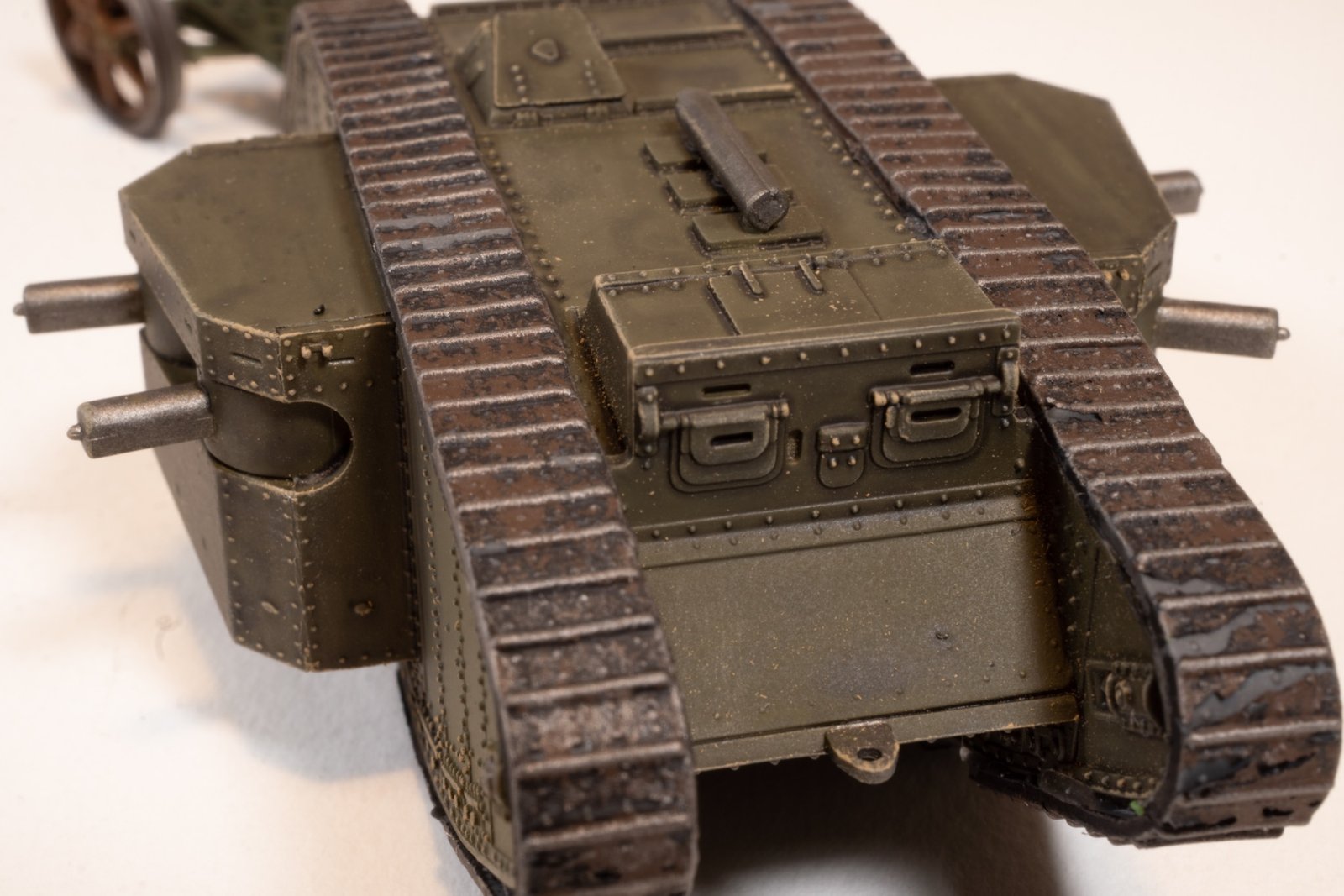
British heavy tanks are distinguished by an unusual rhomboidal shape with a high climbing face of the track, designed to cross the wide and deep trenches prevalent on the battlefields of the Western Front. Due to the height necessary for this shape, an armed turret would have made the vehicle too tall and unstable. Instead, the main armament was arranged in sponsons at the side of the vehicle. The prototype, named “Mother”, mounted a 6-pounder (57 mm) cannon and a Hotchkiss machine gun at each side. Later, subtypes were produced with machine guns only, which were designated “Female”, while the original version with the protruding 6-pounder was called “Male”.
The Mark I entered service in August 1916, and was first used in action on the morning of 15 September 1916 during the Battle of Flers-Courcelette, part of the Somme Offensive. With the exception of the few interim Mark II and Mark III tanks, it was followed by the largely similar Mark IV, which first saw combat in June 1917. The Mark IV was used en masse, about 460 tanks, at the Battle of Cambrai in November 1917. The Mark V, with a much improved transmission, entered service in mid-1918. More than two thousand British heavy tanks were produced. Manufacture was discontinued at the end of the war.
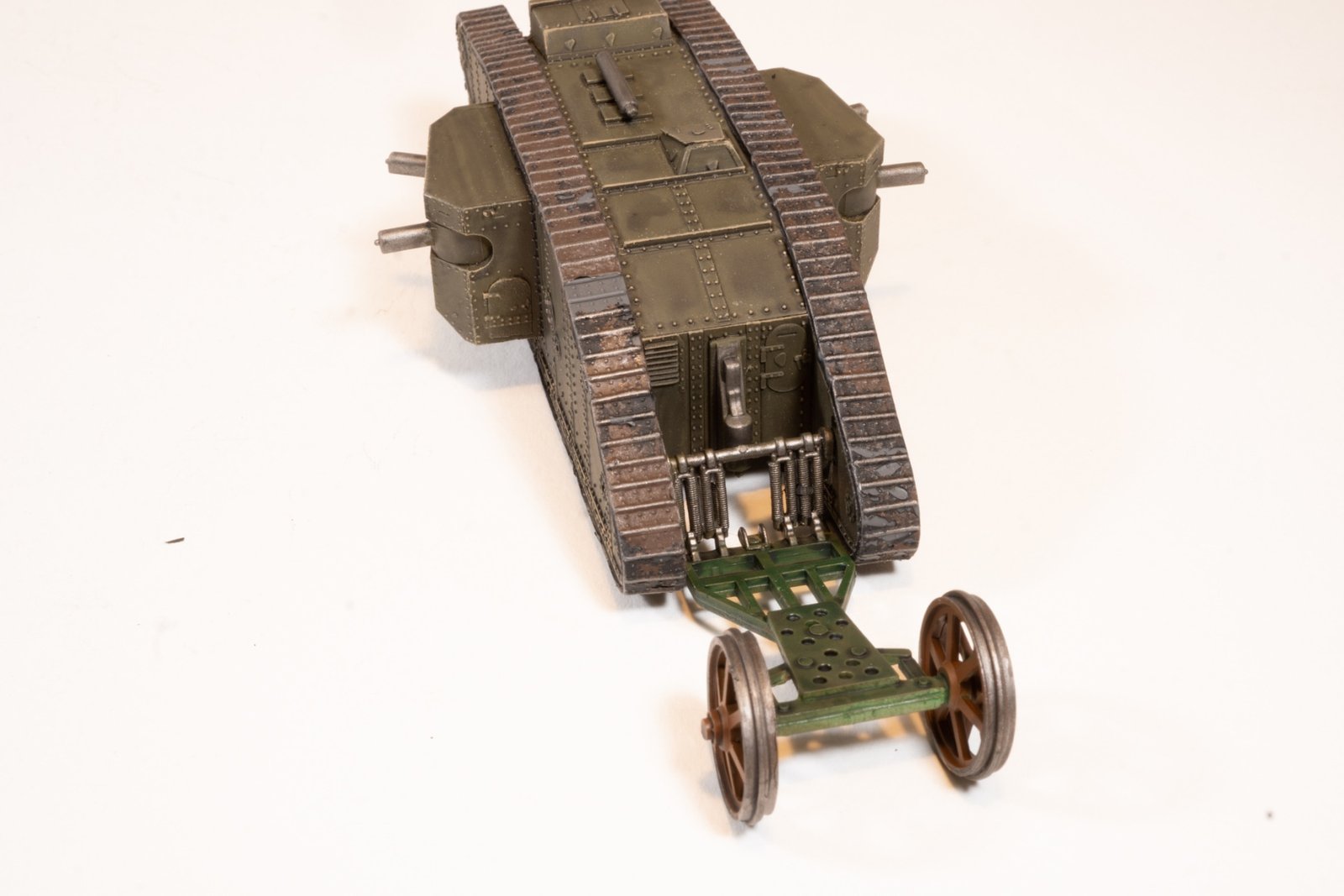
Steering was difficult, controlled by varying the speed of the two tracks. Four of the crew, two drivers (one of whom also acted as commander; he operated the brakes, the other the primary gearbox) and two “gearsmen” (one for the secondary gears of each track) were needed to control direction and speed, the latter never more than a walking pace. As the noise inside was deafening, the driver, after setting the primary gear box, communicated with the gearsmen with hand signals, first getting their attention by hitting the engine block with a heavy spanner. For slight turns, the driver could use the steering tail: an enormous contraption dragged behind the tank consisting of two large wheels, each of which could be blocked by pulling a steel cable causing the whole vehicle to slide in the same direction. If the engine stalled, the gearsmen would use the starting handle – a large crank between the engine and the gearbox. Many of these vehicles broke down in the heat of battle making them an easy target for German gunners. There was no wireless (radio); communication with command posts was by means of two pigeons, which had their own small exit hatch in the sponsons, or by runners. Because of the noise and vibration, early experiments had shown that radios were impractical, therefore lamps, flags, semaphore, colored discs, and the carrier pigeons were part of the standard equipment of the various marks.[12]
During the First World War, British propaganda made frequent use of tanks, portraying them as a wonder weapon that would quickly win the war. They were featured in films and popular songs.