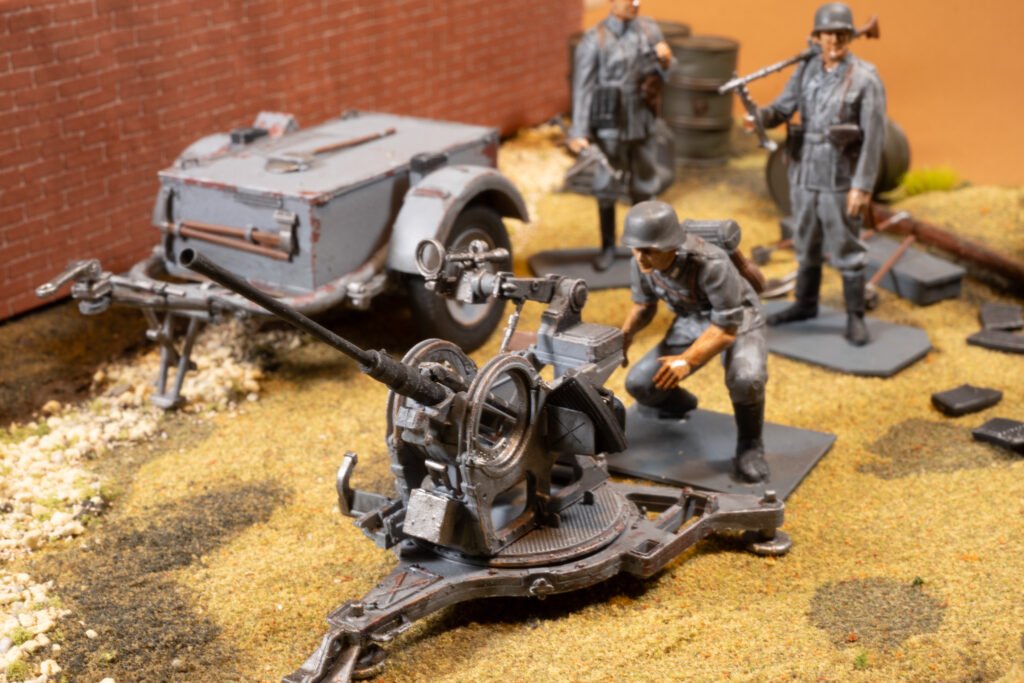
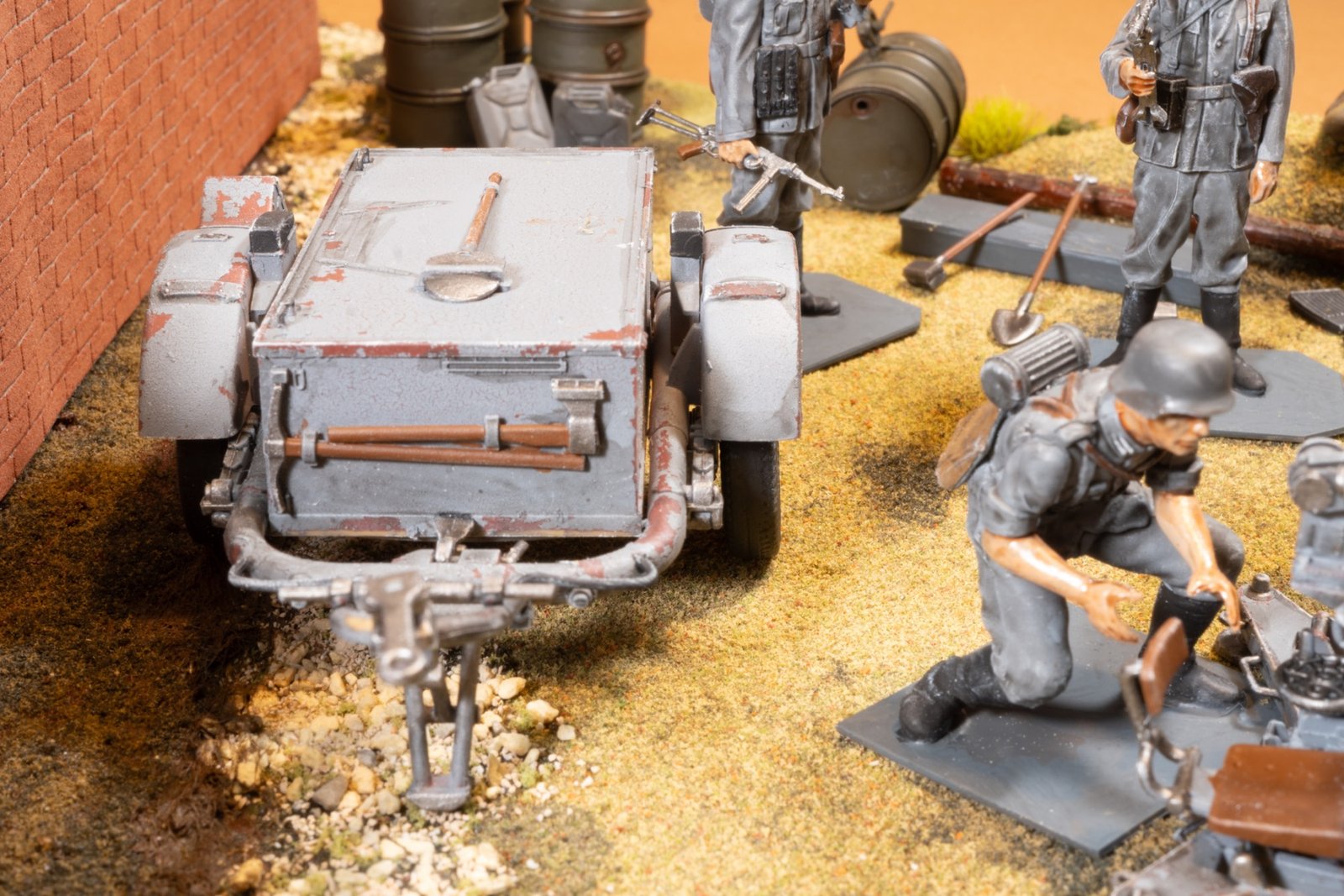
Set-up could be accomplished by dropping the gun off its two-wheeled trailer, “Sonderanhänger 51” (trailer 51) and levelling the gun using hand cranks. The result was a triangular base that permitted fire in all directions.
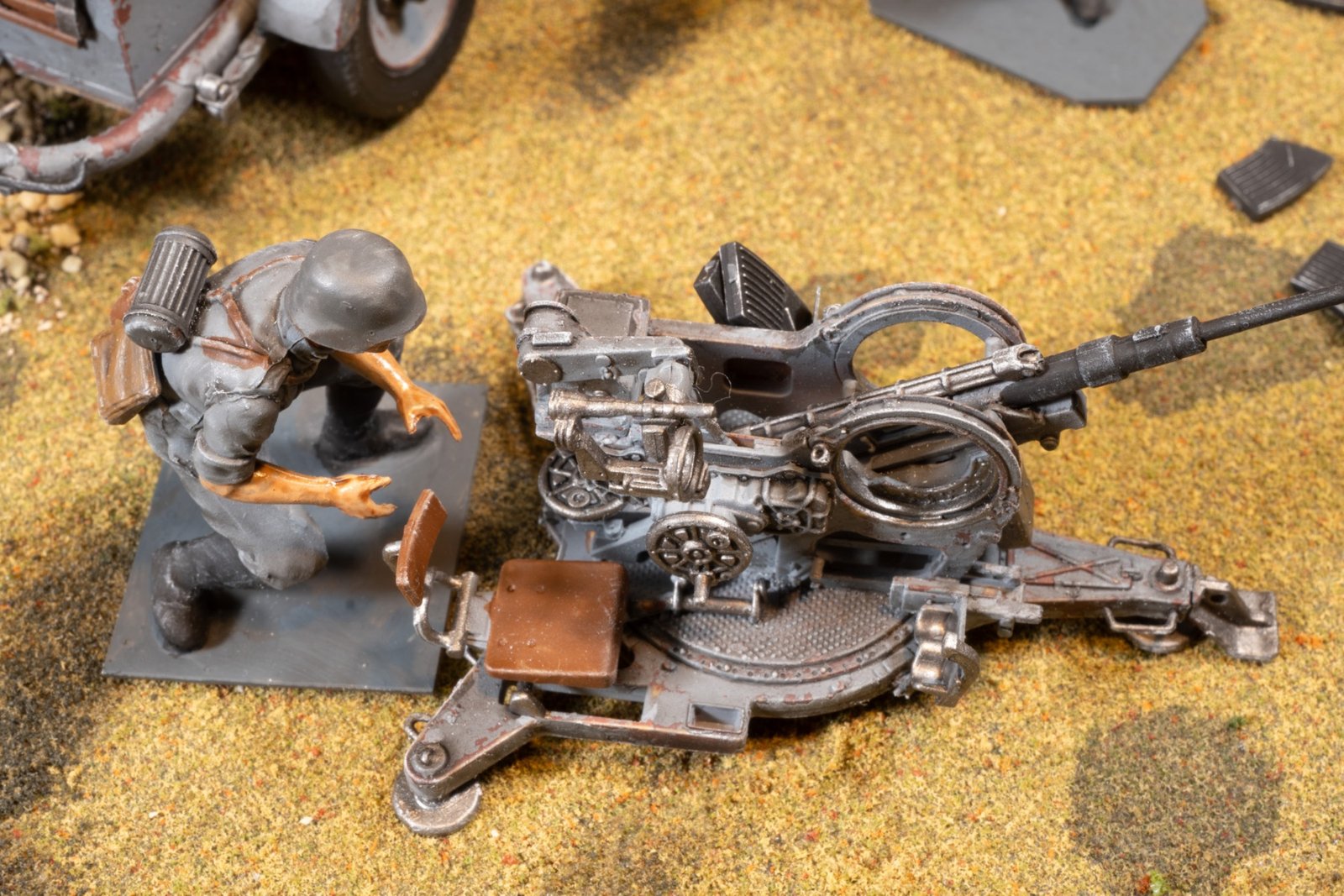
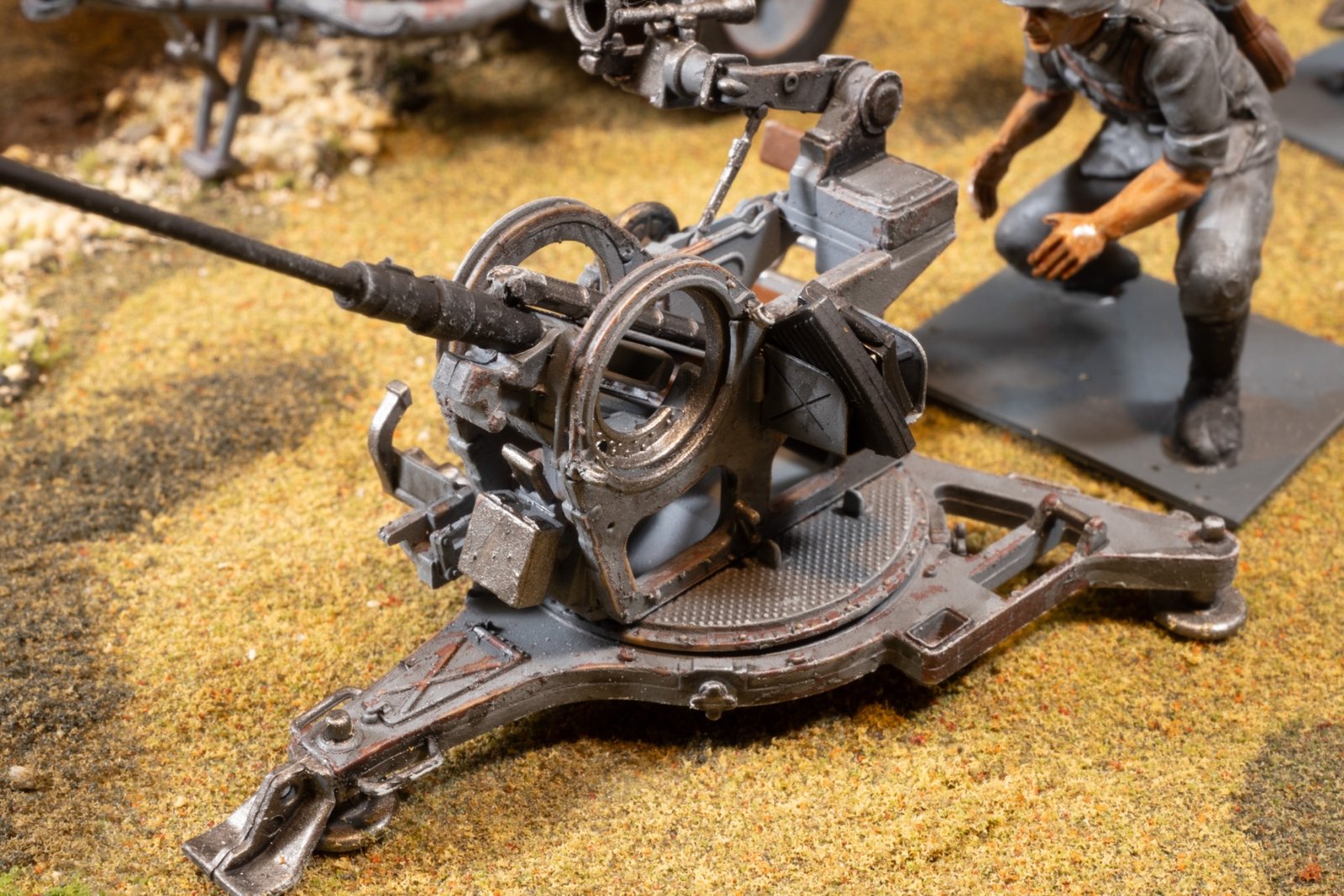
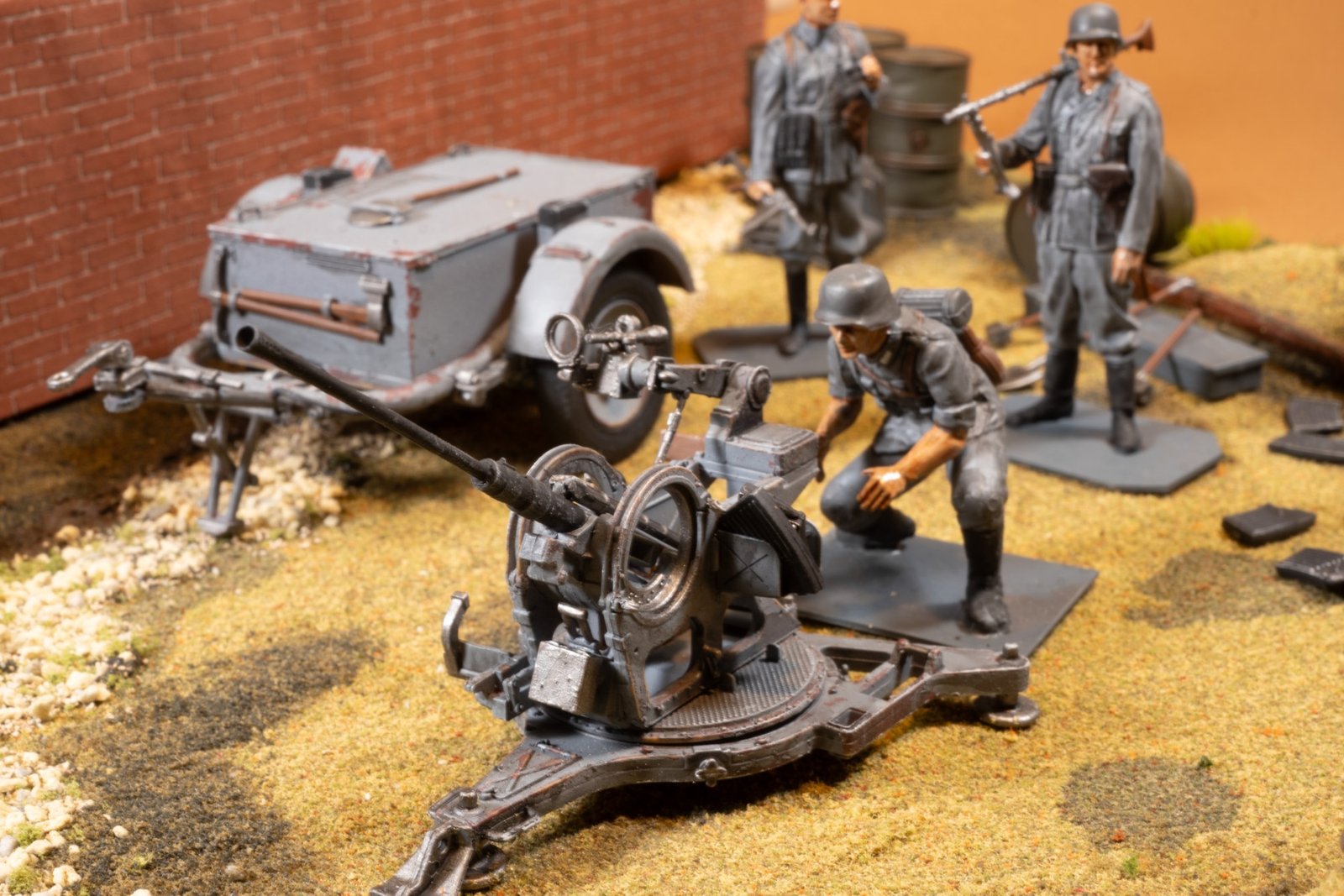
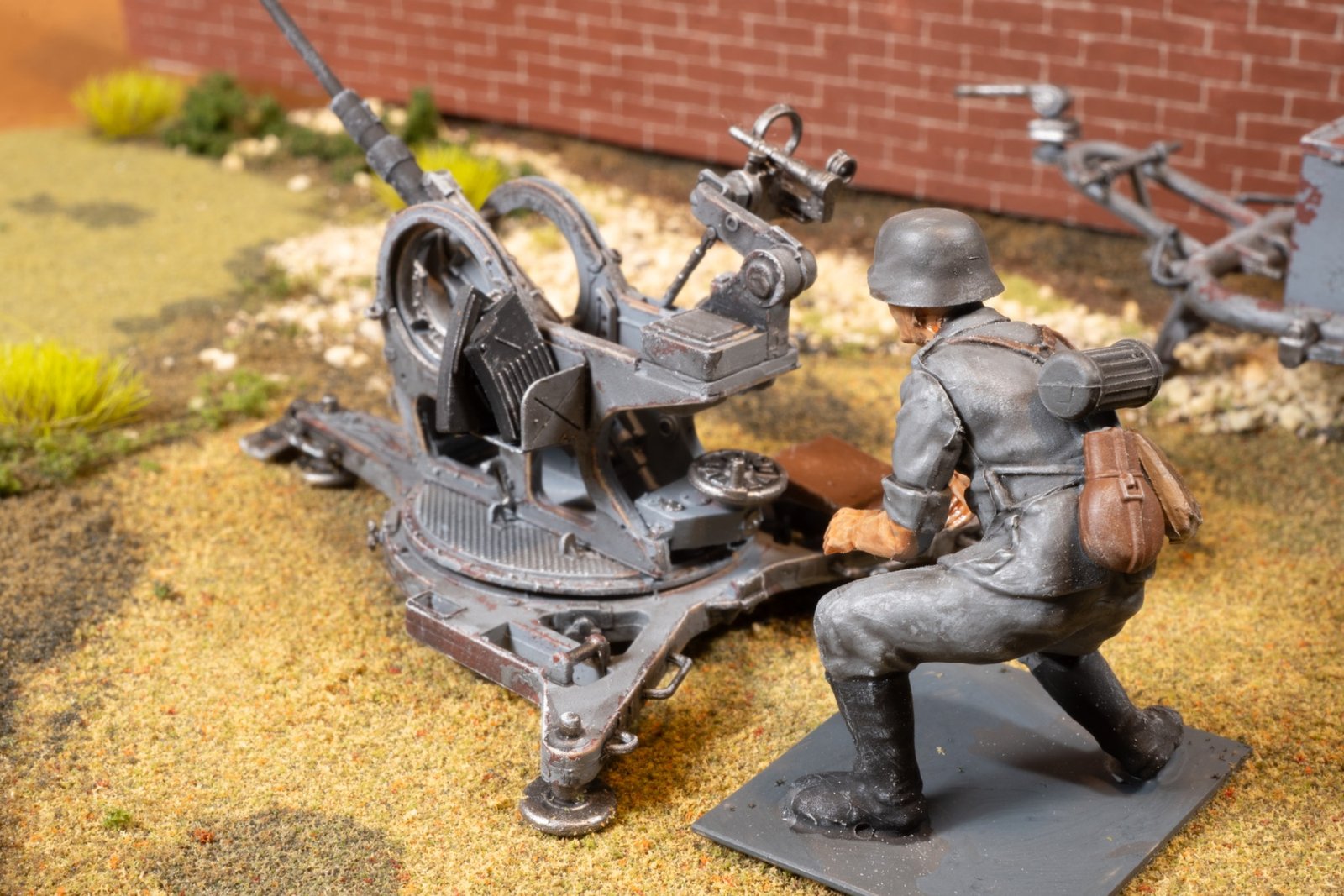
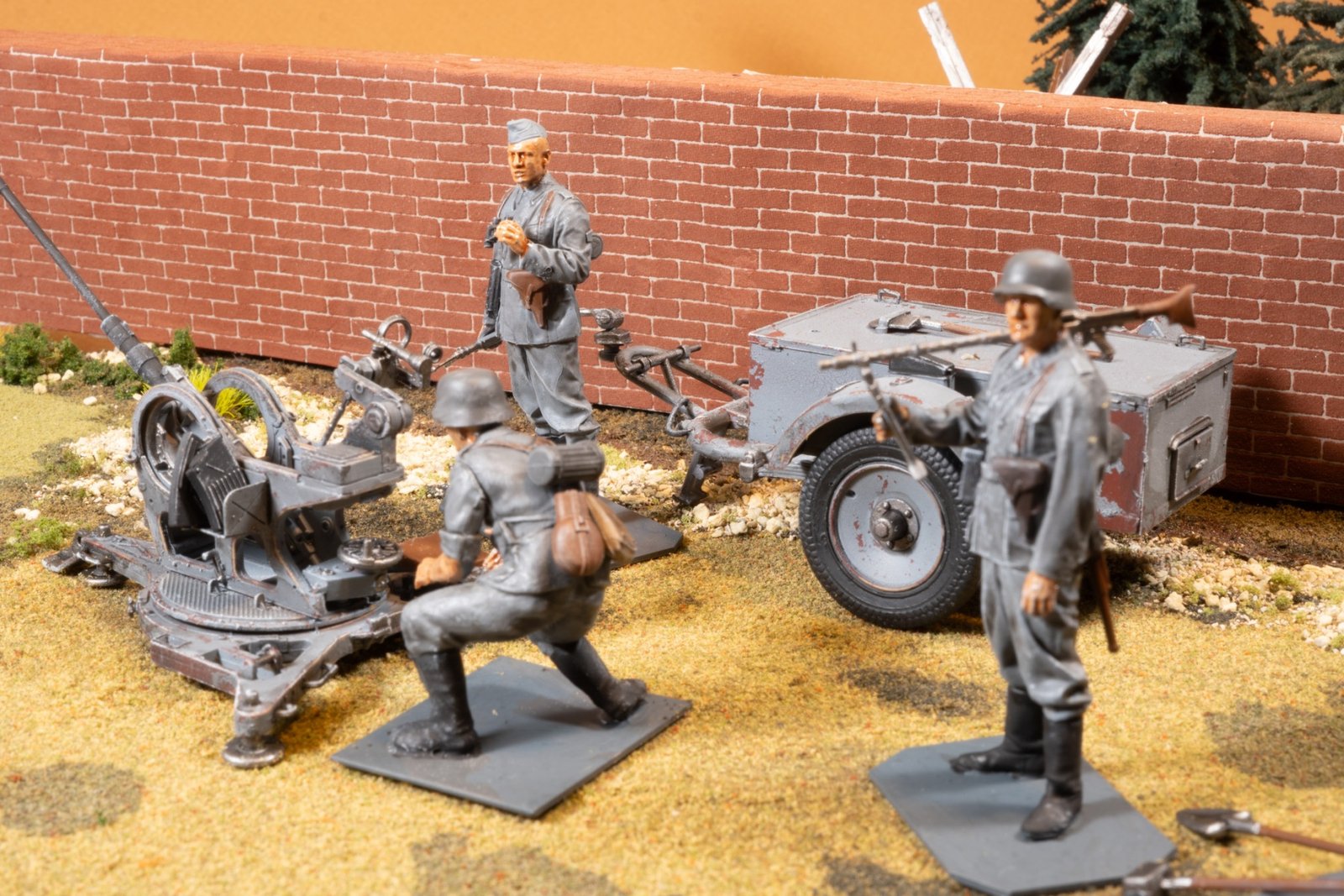
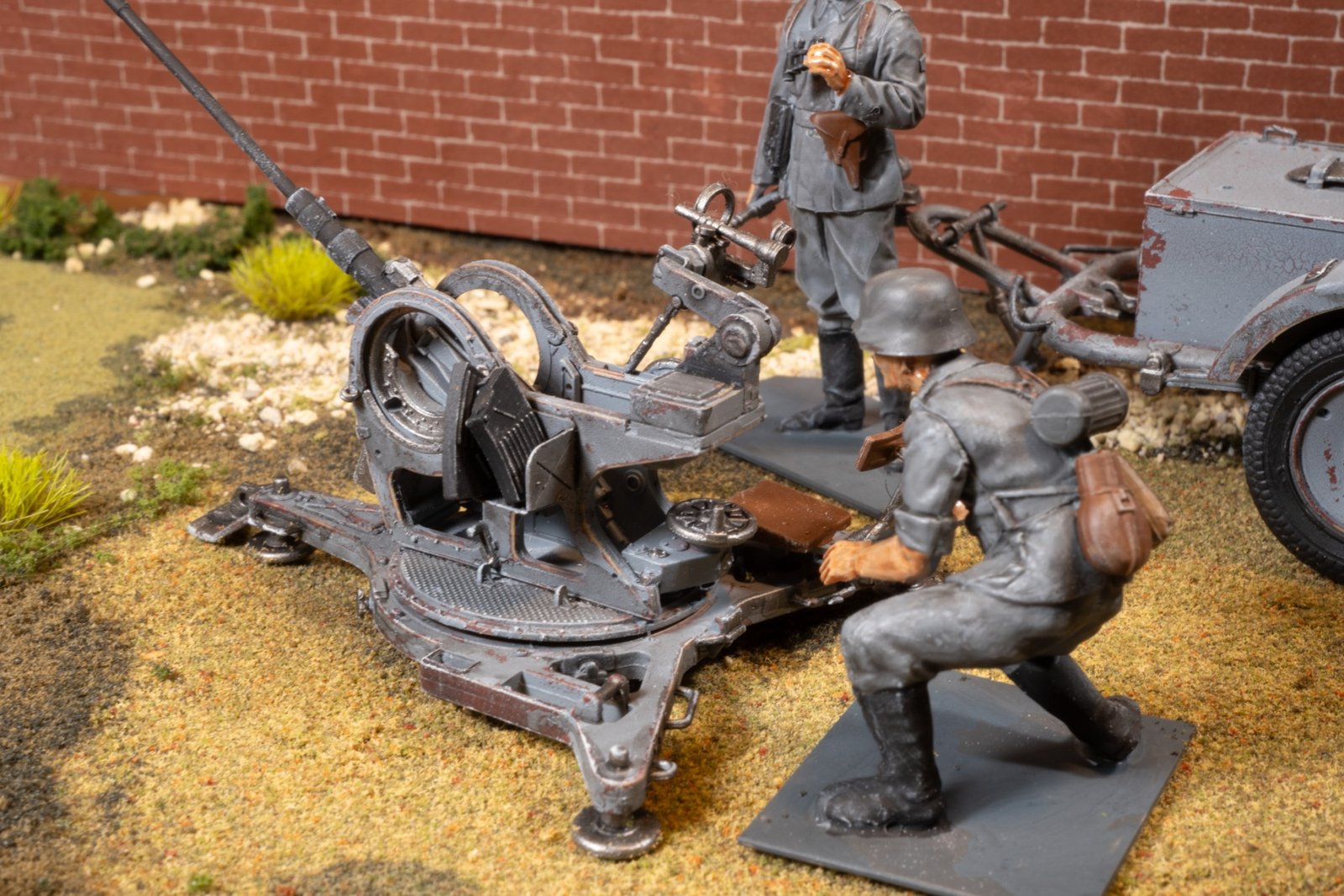
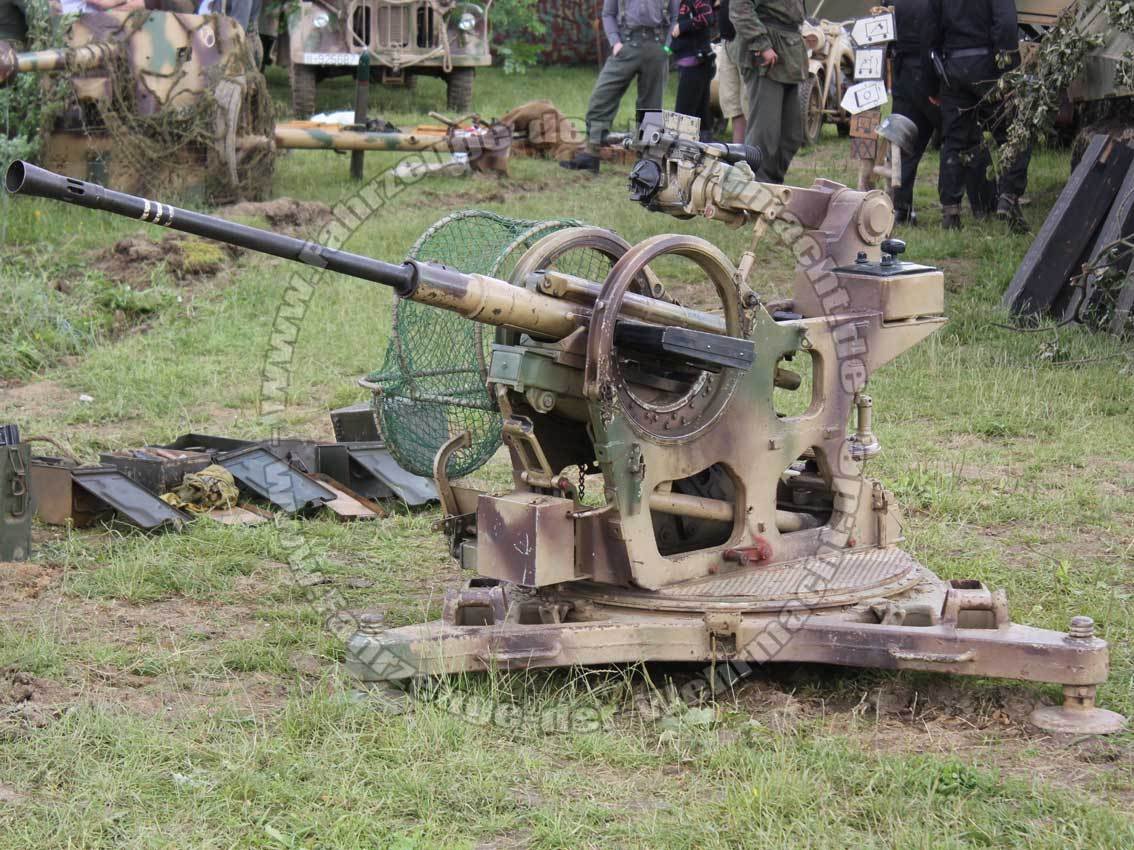
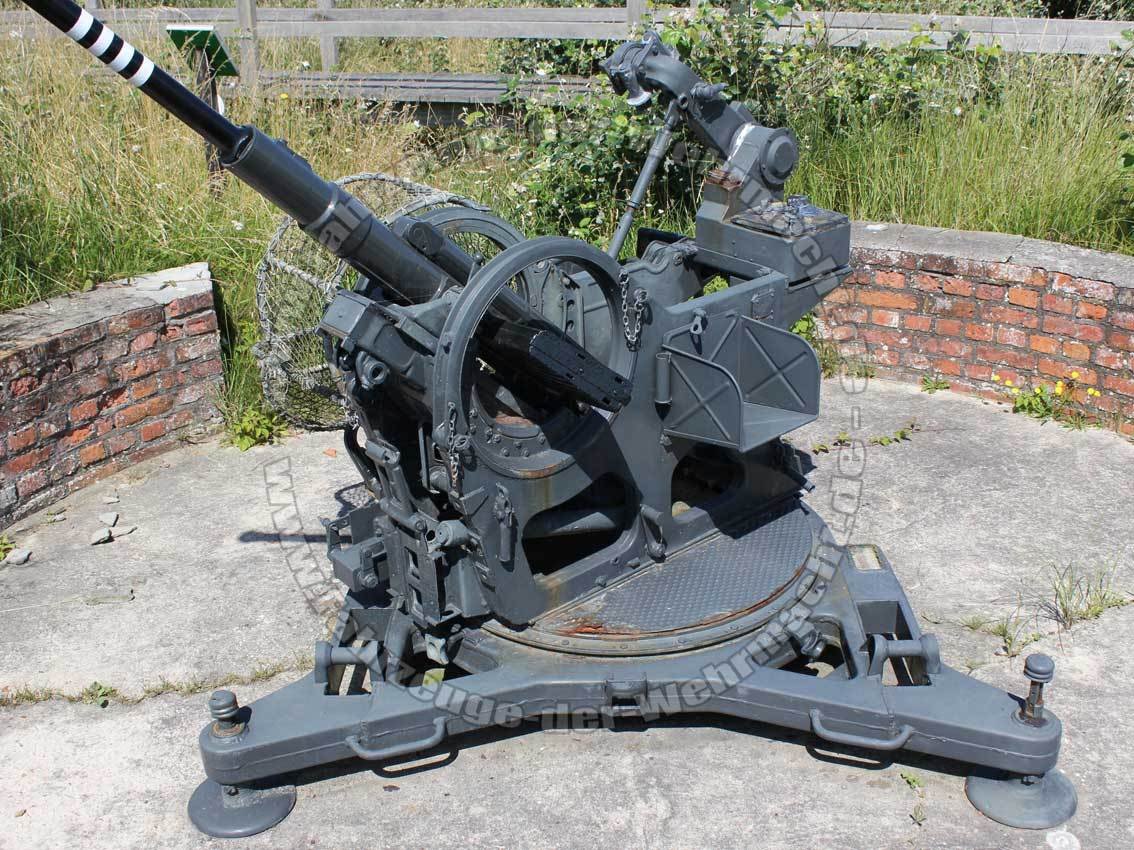
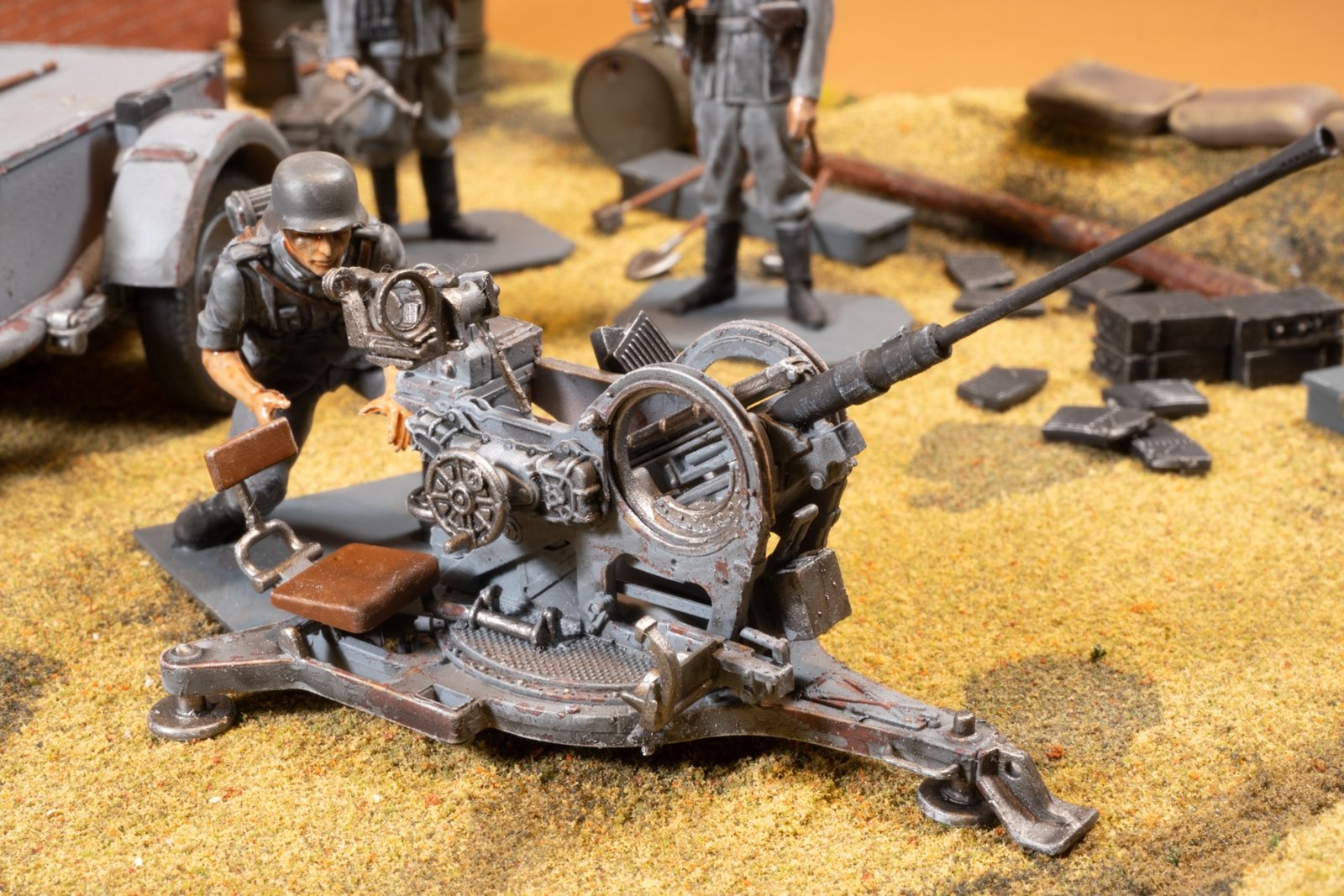
But the main problem with the design remained unsolved. The rate of fire of 120 RPM (rounds per minute) was not particularly fast for a weapon of this calibre. Rheinmetall responded with the 2 cm Flak 38, which was otherwise similar but increased the rate of fire by 220 RPM and slightly lowered overall weight to 420 kg. The Flak 38 was accepted as the standard Army gun in 1939, and by the Kriegsmarine as the C/38.
The Flak 30 (Flugzeugabwehrkanone 30) and improved Flak 38 were 20 mm anti-aircraft guns used by various German forces throughout World War II. It was not only the primary German light anti-aircraft gun but by far the most numerously produced German artillery piece throughout the war. It was produced in a variety of models, notably the Flakvierling 38 which combined four Flak 38 autocannons onto a single carriage.
Crew required – 5 total.